Venezuela: Dictatorship, democracy, and other considerations?
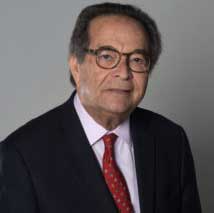
By: Luis Beltrán Guerra G. - 26/04/2026
Share:


In April 1810, specifically on the 19th, Venezuelans decided to end the colonization established by Spain on August 3, 1498, by virtue of having discovered and consequently conquered the beautiful lands bathed by the Caribbean Sea. This act was formally documented in the Declaration of Independence of July 5, 1811, a little over a year later. It's worth noting that Francisco de Miranda and Simón Bolívar had not yet drifted apart. They were still close friends, to use the slang of Venezuelan, and particularly Caracas, slang. Don Francisco was no longer recognized as a military or revolutionary leader, evidence that even honors can be lost. He was the one who uttered the infamous phrase, "Chaos, chaos, chaos, these people know nothing but how to cause chaos," and was on his way to La Carraca prison.
The discovery of Venezuela, a logically complex task, began on August 3, 1948, with the third voyage of Christopher Columbus, an event that would bring with it the conquest of the territory found, a long process. The prevailing practice was that “discovered lands were appropriated,” the foundation of the so-called “doctrine of discovery,” which, in principle, promoted the teaching of Christianity for the benefit of the inhabitants of the conquered territories. The Vatican has argued that there were abuses in the way religious education was conducted, even resorting to slavery, a practice foreign to the Catholic faith. It should be noted, however, that the media reveals that Jorge Bergoglio, Pope Francis, used to say during his Eucharistic journeys, “I humbly ask forgiveness, not only for the offenses of the Church itself, but also for the crimes committed against the indigenous peoples as a result of the conquest of America.” An objective assessment of the matter, in the opinion of many, should instead consider the enormous benefits the Church has brought to humanity. To err is human, it must be remembered.
A rational view, then, is that Venezuela has experienced both "the conquest and the resulting colonial period," and also independence from conquering Spain, also known as the "Mother Country" for those who do not deny its highly beneficial nature. It should be noted that the independence movement has faced serious obstacles: 1. We have attempted, at least five times, to establish ourselves as a republic: First, 1810-1812; Second, 1813-1814; Third, 1819 - creation of Gran Colombia; Fourth, 1830 - separation from the last; and Fifth, with the promulgation of the 1999 Constitution, incidentally the only one approved by popular vote, albeit with little success; and 2. A considerable number of Heads of State have been chosen through undemocratic means. Consequently, the low number of those elected by popular vote should not surprise us.
However, it should be noted that, according to the prominent historian Tomas Straka, Venezuelans have voted continuously since 1830. Nevertheless, he acknowledges that not all elections have been considered fair, and that decades of authoritarianism and electoral fraud have also occurred. The dean of historians, Elías Pino Iturrieta, maintains that democracy in Venezuela was maintained during the three-year period from 1945 to 1948, before being overthrown by a dictatorial regime for a decade. It was fortunately restored in 1958 by the Punto Fijo Pact, the longest period of democracy in the country's history.
Regarding this democracy, it is interesting to consider the opinion of the academic Allan Brewer Carias, who asserts without doubt that one of the best contemporary constitutions in force in Latin America is that of Venezuela, promulgated on January 23, 1961, the result of a consensus among the various political forces and actors of the early 1960s. It must therefore be described as a genuine Political Pact of a generation with more than 20 years of political experience, which capitalized on the spirit of unity and concord that arose from the overthrow of the reigning dictatorship. Thus emerged a pluralistic text that represented the aspirations of all Venezuelans (Editorial Jurídica Venezolana, Caracas, 1984).
The Punto Fijo democracy is recognized for its merits, like those of the most efficient systems. It is, therefore, difficult to answer the question: Why was he deposed? The answer would be less complicated if the coup d'état led by Hugo Chávez had been successful, as it could then be included among those that have occurred not only in Caracas, but throughout the Americas. More than one person would have resorted to the Latin American idiom "what's one more stripe on a tiger," resigned to the fact that one more inconvenience does not change the gravity of the situation in a country with a history of difficulties. But what is unusual is that this reaction could not have arisen in the face of the Commander's massive electoral victory, which made him President of a government he himself described as revolutionary and author of a new Constitution approved through a popular referendum. A movement, strictly speaking, atypical, the source of a government that ended up lasting a little over four decades, which undoubtedly further complicates the rationale of this chapter.
It is an urgent duty, in the interest of honesty, to point out that a series of circumstances led to a strange regime, the benefits of which are difficult to identify. The situation became acute as a result of disagreements between the United States and Venezuela, and today Venezuela is governed, as mentioned in previous essays, through a “protectorate, tutelage, or co-governance” under the presidency of the United States. History, we must bear in mind, has subjected us to a variety of systems, all in the pursuit of political, economic, and social well-being, namely: 1. Discovery, 2. Colony, 3. Independence, 4. Dictatorship, 5. Democracy, 6. Tutelage, 7. Protectorate, and 8. Co-governance. And this in the face of an electoral scenario to choose the First Magistrate and the members of the legislative and judicial branches, starting with the Supreme Court of Justice, alternatives whose possibilities, both in design and in implementation, would depend on "the approval of the North".
It would not be surprising if Maria Corina Machado, representing the opposition, and Delcy Rodríguez, currently in charge of the Presidency, were to run in the elections.
The electoral scenario, which is appropriate for considering, among other things, the following points: 1. A country without self-criticism and ethics is condemned to ambiguous political management, a lukewarm and weak opposition, and a people without hope; and 2. Dignity must take precedence over the permanence and honor of a government, which depends on thorough investigation, a transparent and public explanation of the whole truth, and measures of justice at any cost. These are conditions for the sovereign when casting their vote.
Finally, we Venezuelans should rid ourselves of Sisyphus, the first king of Corinth, an ambitious and cruel ruler who did not hesitate to use violence to stay in power, felt no shame in deceiving people by breaking the rules imposed on mortals, for which he was rewarded with the historical punishment of the great stone.
But let's not end up like Miranda, repeating the word "bochinche" three times.
«The opinions published herein are the sole responsibility of its author».