Is Venezuela on the path to true politics?
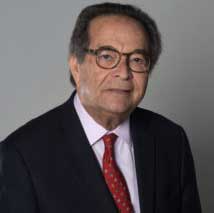
By: Luis Beltrán Guerra G. - 17/05/2026
Share:


It is written, and in just a few pages, that the task of determining what constitutes "true politics" leads, prima facie, to the repetition that historically there have been two opposing perceptions. One analyzes the nature of society, government, and the causes and optimal forms of human organization, taking into account both individual and collective well-being. This perspective demands a decisive dose of "virtue"—that is, integrity, ethics, modesty, and excellence. The second perception seems to be inspired by the utopian nature of the first, conceiving of politics as a devious and deceptive practice, whereby those who conduct it, in order to achieve their objectives, resort to any mechanism, regardless of its morality.
In a historical and scientific context, the authorship of the first is usually attributed to “Aristotle” and the second to Nicholas Machiavelli.”
A third, which could be considered intermediate, is the most common; it takes a little from both, leaving these as trends. Its consequences are unsatisfactory.
It is within the context of this ambivalence that we are tasked with gathering evidence to determine whether Venezuela today is truly on the path of "true politics" and thus moving away from "bad politics," in which it has sadly lingered, as several chapters of its history reveal. It is encouraging that El Nacional, a historic Venezuelan newspaper founded in 1943, reports that Marco Rubio, the U.S. Secretary of State, has reiterated that the transition in Venezuela will culminate in elections, but with the sound caveat that the current priority is to first guarantee economic and operational stability in the country. In other words, without the latter, it seems unrealistic to consider the former.
The British Broadcasting Corporation reiterates the view that, for the US government, the noble South American country is primarily compelled to achieve political, economic, and operational stability, without which a serious democracy cannot be built. Perhaps, one might ask, without intending to offend, the North perceives Venezuela as a place of disorder, confusion, chaos, and even anarchy. And that this allows for a more precise understanding of the provision to which the Secretary of State refers, according to which "the marketing of Venezuelan oil and its derived resources are subject to US control." The BBC also attributes this assessment to the President of the United States himself.
The preceding paragraphs reiterate, without a doubt, the protectorate, tutelage, and shared governance between the United States and Venezuela. Consequently, it would seem advisable for both the government and the opposition, for the sake of the Venezuelan people's well-being, to understand this, and for the greater good of a republic that demands to enjoy its privileges.
Divine Providence would seem to have heard the prayers, as there are signs suggesting a reality characterized, among other things, by:
1. The decision of a world power, in principle the first, to establish a government and who is to lead it,
2. A Constitution with a validity of approximately 27 years, in which the executive, legislative and judicial powers are established, specifying their powers and limits,
3. The executive, legislative and judicial powers at the national level, as well as the state governments, their legislative assemblies and the municipalities, which are certainly called upon to address enormous local problems of considerable interest to the inhabitants.
Given Venezuela's conviction to live in a democracy—considered by Winston Churchill and others to be the most suitable system, as evidenced by the diverse attempts made to achieve it—it is quite exciting that María Corina Machado, representing the "Vente Venezuela" movement, which unites a decisive majority in the fight for democracy, has proposed to Delcy Rodríguez, with whom the United States coordinates governmental co-responsibility, that she join the process of institutional change, that is, the transition to democracy.
The message was shared by the Nobel Peace Prize winner in an interview with Christiane Amanpour on CNN.
The leader of the Vente Venezuela party also added that in the National Armed Forces, “more than 80% of its members desire a transition to democracy,” a particularly interesting mention, given the countless chapters in our history that reveal an almost pathological vocation of the military to the exercise of power, a source that must be described as nourishing the opposite of the path of good, rational, and true politics.
There seems to be no doubt, in the interest of frankness, that we should reiterate the Aristotelian view of the individual as a political being, possessing the gift of rhetoric, persuasion, and a concern for the common good, due to the need to live in community. Therefore, the art of governing must be perceived as a cooperative activity in pursuit of this much-desired good. This is a far more benevolent assessment than Machavelli's, for whom politics is not geared toward cooperation, but rather toward conflict stemming from individualism. His conclusion is that anyone wishing to engage in politics must be prepared to venture down the "path of evil." The science of politics becomes the science of power, as is often said by those who criticize it—and there are quite a few of them.
God willing, if we Venezuelans have suffered this, we will understand that it is time to change, which means objectively analyzing what is the right way and comparing it with what we do, keeping in mind that it doesn't take much to fall into Machiavelli's practices.
The serious conclusion, therefore, would give the impression that Caracas is trying to abandon Machiavelli to be led by Aristotle.
The best demonstration of acquiring a suitable methodology for dealing with the ever-tempting predicament is healthy political debate, which can only be achieved by reconciling both sides—those of the provisional government and those who aspire to replace it—under democratic principles. The application of justice would not be forgotten, but it must be objective. This has been the case in the not-so-distant past in noble Venezuela, and particularly under the democracy established by the 1961 Constitution.
And why not bring up the fact that the pages of the country's history reveal that "acquiring" an appropriate methodology to address the evident crisis leads us to recall that, starting in 1961, a party-based democracy governed Venezuela for almost 40 years, during which a respectable number of heads of state, parliamentarians, and judges were elected by popular vote? Equanimity, which linguistically refers to as "the ability to maintain a stable, serene, and balanced attitude in the face of life's various situations," is perhaps more necessary in politics than in other areas. It serves as a guiding light for President Rodríguez and the Nobel Peace Prize laureate, encouraging them to look at the objective reality of Venezuela and the urgent need to love it by leading it down the path of democratic certainty.
We are confident that it will contribute to the democratization that we so desperately need.
"Let's get to work," President Carlos Andrés Pérez, founder and defender of democracy, to whom Venezuela will forever be indebted, used to say. Please allow me to write it down.
«The opinions published herein are the sole responsibility of its author».