Democracy, Transformation of the Global Order and the Future of the Western Hemisphere
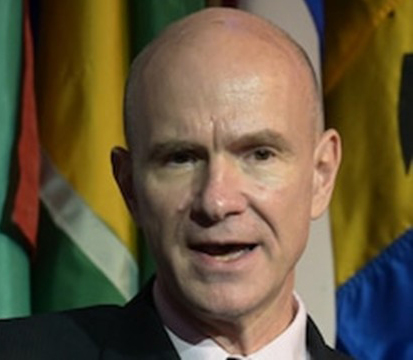
By: Robert Evan Ellis - 30/07/2026
Share:


Good afternoon. It's an honor for me to be with you here today, to be inducted as a member of the Board of Directors of the Inter-American Institute for Democracy. I am honored both for what the organization represents, and the distinguished people who form part of this group.
I would especially like to thank Carlos Sanchez Bersain and Rodolfo Milani. I also greatly appreciate the organization's efforts to publish my newest book, “Chinese Engagement in Latin America: New Patterns and Challenges” which will available soon on Amazon, and through the organization.
For me, today’s event invites me to reflect on the meaning of democracy, and the dramatically changing environment impacting Latin America and the broader world, including the U.S. The views expressed herein are strictly my own.
In the interest of clarity and precision, I am going to read from my remarks, which I will also be publishing, and do so in English.
I begin with a warning: This isn’t a “feel good” speech about democracy. Rather, it is a series of reflections that I feel compelled to share, with some trepidation, and for which this occasion provides the ideal opportunity.
There is a convergence of forces currently transforming the global environment, which together pose grave risks to our democracy, prosperity and security. Those risks are greater than I have seen at any time in my professional career. They are also reinforced by a reluctance to openly talk about some of them, as well as associated political dynamics that prevent us from effectively addressing the dangers as a society.
In the context of the coming storm, never before has it been so important to express with clarity the value of our ideals of democracy, individual liberty, and limited government, within a framework of rule of law.
Never before has it been so important to embrace and fight for the conditions that enable democracy to prevail, including a culture that values respect for democratic rules, education, and tolerance…And to wage that struggle for democracy with a spirit of decency.
Stresses on Modern Democracy
I grew up at the end of the Cold War, at a time that Francis Fukyama called “the end of history.” It was a “never truly real” moment, when it was possible to believe in the inevitable triumph of democracy over totalitarianism.
Today, Democracy, and the faith and values that underpin it, are under grave stress. The arriving storm can be felt in the polarization of our societies, and the willingness in too many places to accept the “bending of the rules” to achieve results.
In a disturbing poll by Latinobarometro, half of those surveyed in Latin America said they would support a leader who could deliver results, even it were necessary to adopt non-democratic solutions to do so.
The peoples of Latin America, as elsewhere, have long been disillusioned with the inadequate performance of their governments, particularly with respect to their material needs and insecurity.
Recent elections in Ecuador, Chile, Colombia and Peru were dominated by these issues, especially insecurity. The corruption, endemic to the region, fueled partly (but not completely) by drugs and other transnational criminal flows, undermines that democratic institutions can make things better.
Beyond these commonly cited stresses, it is important to highlight the multiple detrimental impacts of technology on democratic health, despite its benefits, as well as the adverse role played by the People’s Republic of China (PRC).
The hyperconnectivity of the internet, and today’s social media has expanded the interchange of perceptions and discourse among people, but also distorted and atomized it. It has done so through self-selected groups of interest, and bias…as well as through the algorithms that feed users on platforms like TicToc and Instagram.
Artificial Intelligence has greatly expanded content and facilitated information gathering, yet also fed public cynicism by making the fabrication or distortion of content easy, and even routine.
If technology has done more to erode, than to promote, the community discourse that is vital for a democracy, its application in practice has arguably, also empowered state control, at the expense of the individual. Nowhere is this more visible than in the PRC, where cameras with facial recognition, linked to citizen financial and other data, internet controls, and public transportation, have all made reality of what philosopher Jeremy Bentham called the “Panopticon.”
Such technology has enabled levels of state control over society that the former government of the former Soviet Union only aspired to.
Even beyond totalitarian pioneers such as the PRC, the combination of connectivity, big data, observation technologies, and the simultaneous monitoring of hundreds of millions of people, made possible by Artificial Intelligence, together give the State unprecedented knowledge over our activities, including the ability to identify behaviors of individuals that the State approves or disapproves of.
It also gives the state the ability to reward or punish those people through its control over their access to the digital world, which is fundamental for communication, transportation, medical care, buying food, and nearly every other aspect of modern life.
The sharing of such technologies by PRC-based companies with their authoritarian allies, including Cuba, Venezuela and Nicaragua, has extended the life of authoritarian regimes. One example is Cuba’s use of Chinese-supplied telecommunications architectures to cut off protesters from each other in July 2021 and “repress” its way out of that crisis.
In addition to the effects of technology, it is important to talk about the adverse impact of the PRC on democracy, and attitudes toward it. The “perceived example” of the PRC, complimented by the “messiness” of contemporary democracies, is shaping the discourse in Latin America and elsewhere, about the appropriate role of the State in the economy, and the limits that should be placed on it.
I grew up during the cold war, with my thinking about the role of the State in society shaped by authors such as George Orwell, Ayn Rand, and Milton Freedman. Such authors articulated with clarity the inherently malevolent effects of empowering the State, at the expense of the individual.
Although U.S. democracy had difficulties, in that era, the contrast between American society, with its cultural vibrancy and economic, and technological achievements, versus the soul-crushing, grey oppression of the Soviet Union and Mao’s China, were self-evident.
Today, for many in the “TicToc generation” that did not grow up with that experience, “Communist China,” shown through the lens of Youtube influencers, is a world of shiny skyscrapers, fast clean trains and digital payment systems.
Sadly that vision often contrasts unfavorably with the aging, graffiti-covered infrastructure of New York and Detroit, and a U.S. political system that appears polarized and dysfunctional, making more threats than offering benefits.
Reflecting such perceptions, a recently released survey by AMLAT Radar shows that for the first time, Latin Americans see China, not the US, as the best model for development. 36% chose the PRC, an increase of 7 percentage points over the prior 2022 survey. Meanwhile, those electing the US fell 13 percentage points. We finished in third place, even behind Japan.
Principles of a Healthy Democracy
In the context of stresses, is important to emphasize that a “healthy democracy” is not just about “voting”. It requires several interdependent attributes:
1. The protection and empowerment of the individual, including freedom of economic choices and their consequences,
2. The limitation of government, and
3. A framework of the rule of law.
Beyond these fundamentals, the survival of democracy is facilitated by a culture committed to certain enabling ideals. These include:
1. Support for democracy itself, and the adherence of the rules required to sustain it,
2. Support for the accumulation of accurate information and knowledge, and
3. Mutual respect among the diverse members of the polity.
Protecting and empowering the individual is the necessary cornerstone of democracy. Without reasonable protection from state and other coercion, and without security in the economic base created by the individual’s efforts, sincere democratic expression is not possible.
The history of authoritarianism, from the Soviet Union, to Cuba, Venezuela and Nicaragua, is replete with regimes not only depriving individuals of the physical ability to vote and communicate, but also making the costs of expressing their true political feelings too great to risk, or just economically impossible.
Because democracy is about more than votes and the physical ability to communicate, healthy democracy requires the limitation of government. This includes meaningful checks and balances, and the rule of law.
The history of the “hijacking of democracies,” including in Venezuela, Nicaragua, and Bolivia, involves populists who bend the rules, then legislatures or judiciaries who, intimidated by the “mandate” of the newly elected leader, hesitate to fully enforce the law.
That combination allows populists to install their own cronies in the judiciary, prosecutors’ office and other key posts.
Populists then consolidate their power by altering or imposing laws, and “weaponizing” the judicial system, including selectively investigating and prosecuting opponents, firing those of questionable loyalty in the bureaucracy, and defunding or eliminating organizations that dare to oppose them.
Countries such as Venezuela where there is a dominant extractive sector, or others, where there is not a private sector independent of government leverage, are particularly vulnerable to such hijacking. There, once the government controls the primary ways for making a living, it becomes hard to dissent, while still feeding your family.
Finally, democracy requires not just principles, but a culture that nurtures its defense. My own beliefs on this are shaped by my graduate work on the rise of fascism that made the Holocaust possible. They were also shaped by my work years later, on the hijacking of democracy in Venezuela, Ecuador, and Bolivia, home of many of my mentors and friends, who over the years, also became exiles.
In each of these cases, and others, the hijacking of democracy is enabled by disillusioned populations who have lost faith in “playing by the rules” to get results. In this, the poor of the “rancheros” surrounding Caracas, are not so different from my neighbors in now opioid and fentanyl-blighted Ohio, where I grew up.
When the Populists bend the rules to get results, and the “establishment” complains, it is the failure of enough disillusioned people to get upset that is decisive. The populists are allowed to change the rules, install their cronies in key positions, and consolidate power. The price of standing up against becomes ever greater, and by the time enough people get upset enough, it is too late.
It is also important to highlight the role of resentment and intolerance in this downward spiral. The populist modus operandi is to convince their followers that some “other” is to blame for their suffering. They fabricate facts that bolster that narrative and to argue their policies are working. By the time enough loyal followers feel things have gone too far, it is too late.
Throughout history, those the populists blame vary, according to the era, and by their ideology: the Jews, corrupt elites, Yanqui imperialists, Muslims, immigrants, or the “woke.”
As populations become more polarized and confused, information and respect are critical in inoculating them against the fabrication of grievances and the dissemination of fictions to hijack democracy.
The Present Global Environment
In the context of these thoughts about democracy and populism, I turn now to the troubling dynamics transforming our current global environment, focusing on six interacting forces:
1. Accelerated deterioration of the Rules-based International Order,
2. Technology as an Enabler of Small State Blackmail,
3. Economic Transformation and Job Displacement,
4. Technology Driven Military Revolution,
5. The Geopolitical Transition to a Dominant PRC, and
6. One or More Major Geopolitical Shocks.
Accelerated deterioration of the Rules-based International Order. The deteriorating “rules based international order,” however imperfect, was key to the advance of global commerce and progress since the second Word War. That order is now unraveling at an accelerating rate.
As I have written previously, during the past two decades, this unraveling has been driven by the unplanned, but increasingly important, synergy between an increasingly powerful PRC, pursuing its own interests, and a disparate group of illiberal states, from Iran to Venezuela, to North Korea. For these, commercial and other engagement with the PRC provides alternatives to the rules and constraints of the dominant Western system.
Reciprocally, working with illiberal regimes advances PRC commercial, technological, and other strategic objectives. It also helps those regimes survive, in ways that distract and undermine China’s rivals such as the US.
The deterioration of the rules-based order is accelerating. A key, driver is the current US move away from underwriting the institutions of that order, even if many of the criticisms of those institutions are valid. Similarly, US defense of its actions in terms of its “interests” instead of shared norms and rules, may be candid, but is also accelerating the deterioration of those always shaky norms and rules.
Technology as an Enabler of Small State Blackmail. Technology, even while bolstering the power of the state over its own population, has given smaller states and non-state actors unprecedented ability to disrupt and blackmail beyond their borders.
Robert Pape, writing in Foreign Affairs, documents how technologies such as drones now give smaller actors such as Iran or Taiwan, the power to hold international shipping channels at risk, or engage in other forms of “blackmail.”
The same dynamics can be seen with the Houthis with the Bab-al-Mandeb strait, with Ukraine’s fight against Russia, and even with criminal organizations operating in Mexico and Colombia.
The expanded, technology-enabled options for small states and non-state actors to blackmail goes far beyond drones. Criminal groups and others can now threaten companies, and even states, through cyber warfare. This occurred, for example, with the Conti ransomware in Costa Rica.
The proliferation of Chinese open-source AI models such as Kimi and Deep Seek, with the capability to rapidly exploit vulnerabilities in commercial and government architectures, even disabling physical systems, will give even more options to small state and criminal extortionists.
At the same time, cryptocurrencies, coupled with weakening cooperation in an international financial system that is diversifying away from the dollar, will make it ever harder to fund and punish such extortionists, or other bad actors.
Technology Based Economic Transformation and Job Displacement. Mutually reinforcing revolutions in connectivity-enabled big data, Artificial Intelligence, and robotics are transforming the global economy, with enormous political and societal consequences.
The expanding capability of AI-empowered robots, by companies such as Tesla, Unitree or UBTech, often in humanoid, among other forms, is stunning. They are already deployed on factory floors, homes, and even do police patrols in the PRC.
Like the personal computers of the 1990s, the reinforcing advances of hardware and software of these machines in the next decade will change everything.
Models of varying capability are already available for between $20,000 and $100,000, and some for less than $2,000. High-end, humanoid multipurpose robots are now as accessible as electric cars. The cost per hour of a factory robot, financed over its 5-year life, is already less than the salary of a human factory worker in most advanced countries. Those robots now walk themselves to their recharging station, and generally don’t get sick, complain, or unionize.
Before concluding the sky is falling, the global economy will certainly create new types of jobs. Microsoft CEO Satya Nadella suggests that these will likely involve human beings delegating and supervising robots and non-physical AI.
Yet such advances will likely not fully compensate for the scope and rapidity of jobs rendered obsolete. As AI and robotics become cheaper than human labor in areas from programming to legal technical tasks, assembly lines, to housework, it will likely cause jobs for humans in such categories to disappear far faster than the market and governments can generate new positions. Training and relocating the displaced humans is another problem altogether.
This mass displacement will create political shocks and fundamental questions about the adequacy of market-based economic systems to accommodate the human suffering of such tectonic shifts. That tension will drive even more populist and authoritarian alternatives to democracies under stress, not meeting expectations.
Ironically, Latin America may suffer displacement more gradually than more developed economies, since its labor costs are relatively lower, and the technology services sectors that AI and robots will displace, are less prominent.
Still, in Latin America, robots that will displace agriculture and mining workers, to allow the more efficient exploitation of the region’s resources, are already on the way.
Technology Driven Military Revolution. As a complement to economic impacts, a military revolution will be enabled by the synergies between big data, AI and robotics be. It will be both transformational and deadly. Ironically, the wars unleashed by the economic and social displacement I just described, will likely be the demonstration ground for the new military capabilities.
Much of the first 14 years of my own professional career focused on the “Revolution in Military Affairs.” In the 1990s we used to wargame how the convergence of new technologies, operational and organizational concepts would transform the nature of warfare, thinking of the (then) distant world of 2025. Now seeing how much of that anticipated future came to pass, the military reality on the next horizon is just as possible, and disturbing.
In addition to the swarms of autonomous systems we are already seeing, in the air, on the ground, sea, undersea, and underground, we can anticipate two layers that will add to the chaos and unpredictability: Autonomous battle management systems will analyze developments and make take lethal actions faster than humans can monitor them. Meanwhile, information warfare on all sides will seek to corrupt or spoof those platforms and management systems. In other words, tremendously lethal effects will be happening faster than humans can understand, all sides will be actively trying to screw up the logic of their opponents’ systems, and a lot of really bad things will happen before humans figure out it is all going wrong.
My professional sense, having played these types of issues for 14 years, is that no one quite knows how it will turn out. There are a lot o really smart people trying to think through both technical, and big picture questions, but in the end, a lot will come down to real conflicts that expose unforeseen interactions, at great cost of human lives, treasure, and governments.
In the wake of those deadly surprises, the victors, the vanquished, and the rest of the world, will scramble to exploit or cover the vulnerabilities that are exposed.
Geopolitical Transition to a Dominant China. It is highly likely, albeit not guaranteed, that in the coming two decades, the PRC will overtake the US, through some combination of its advances in economic, technological and military capabilities and strategic influence.
It is possible, although not certain, that PRC-based firms will come to dominate AI through the widespread adaptation of their open-source models, commercially deploying them at scale in markets like Latin America, Africa, and developing Asia…even if Western technology is better. Something similar is already occurring with Chinese companies in the renewable energy, telecommunications, EVs and other sectors.
Complimenting and reinforcing this possibility, PRC advances in quantum computers could also be revolutionary. These could provide a leap in computational speed. Through that, in areas like decryption, it could give the Chinese Communist Party unparalleled access to the secrets of Western firms and governments.
Beyond AI and quantum computing, PRC-based companies such as Unitree and UBTech may also come to dominate the global robotics industry. As in AI, this would likely involve deploying government subsidized, initially mediocre products at scale, bringing down costs and bringing up quality until Western rivals such as Tesla are marginalized in the market. Indeed, something similar happened to Tesla vis-à-vis BYD in EVs.
The recent ban of PRC-built robots from the U.S. market illustrates the U.S. government is already concerned about this.
As I just suggested, in this new struggle over AI and robotics, Latin America, like other developing regions, is likely to be an arena of strategic competition. That is because PRC-based companies, blocked from access to the US and European markets, will likely focus on the developing world to build volume and corner markets, just as they did with manufactured products including autos and consumer electronics, and later, EVs, solar panels, and other technologies.
In the defense arena, even while the PRC locks in its advantages in sectors like AI, quantum computing, and robotics, it will also continue to leverage its enormous scale advantages in manufacturing, as it has done in shipbuilding. As seen in military shipbuilding, its industrial base will allow it to build far more, cheaper.
Eventually, with the help of its extensive global espionage activities, it will also slowly overcome the US qualitative advantages in different areas.
Yet shipbuilding is yesterday’s example. I worry about China’s ability to leverage its domination of the civilian robotics market to produce millions of humanoid soldiers, quadruped combat systems, and other future autonomous aerial, maritime, and ground systems, more, cheaper and better than U.S. defense contractors.
If my analysis seems grim, it is important to emphasize that many in the PRC believe that they are on a path to surpass the U.S., even while recognizing the many things that can go wrong.
The PRC is very conscious of the opportunities and risks of “managing” the “global power transition” it sees itself currently in with the U.S. As such, it is proceeding with caution, albeit also with confidence.
These attitudes of cautious confidence are already fueling PRC assertiveness around the globe, particularly where it feels its military and economic position is dominant. This is particularly true in the Pacific, with its maritime claims and its militarization of reefs and shoals in the South China Sea.
In the Western Hemisphere, in the not distant future, I worry that such confidence could change China’s current posture of deference to the US, and deference to the sovereign decisions of its Latin American partners.
Current PRC coercion against the Panamanian state over the sovereign decision of Panamanian courts to remove Hong Kong based Hutchison from two ports may highlight where things are going.
It is not hard to imagine a confident PRC, not many years from now, seeking military bases and formal cooperation agreements with Latin America’s next generation of anti-U.S. populist regimes.
Beyond Latin America, that same growing confidence will also likely lead China’s Communist Party to act decisively to end the autonomy of Taiwan. Doing so would allow PRC leadership to assert its “national rejuvenation” in time for the Chinese Communist Party’s 2049 celebration of the 100th anniversary of its takeover of the mainland.
Whether or not such action spawns a major war, or simply Western capitulation, the end of Taiwan’s autonomy would mark a “before” and “after” in the PRC’s transition to global dominance.
One or More Major Geopolitical Shocks. Driven by, or complicating the other disruptions we have discussed, it is more likely than not, in the next decade or so, global dynamics will be transformed by one or more “shocks.”
These could include a major war arising from a PRC move against Taiwan. Alternatively, it could arise from an escalation of Russia’s fight with Ukraine and Europe, or the current situation in the Middle East.
Another option for such “shocks,” is a possible major nuclear exchange. This could involve any number of international actors who have, or might soon have them. These include Russia, Iran, India, Pakistan, or even Israel. Nuclear deterrence is already weakened by complacency, China’s nuclear buildup, Russian and US abrogation of past nuclear treaties such as START, plus the expanding number of global nuclear actors. Nuclear deterrence will further be eroded by the expanded tension and uncertainty of the coming new world I am describing here.
Other global shocks could also include a major new pandemic even more disruptive and devastating than Covid-19. The institutions and channels for medical collaboration in the international system have been already debilitated by distrust and defunding.
The world may also face a significant escalation of cyberattacks, enabled by AI, impacting not only the global financial system and infrastructure for sustaining human life, but also impacting the automation and robotics that will increasingly be part of daily life
Western Hemisphere Outlook
The outlook for the Western Hemisphere is a reflection of the trends I have discussed today. Still, let’s begin with the positive: There are currently an unprecedented number of governments in the region disposed to work with the United States, although each for its own reasons. That cooperation, however, may be more fragile than it appears.
The incentives for the Lula government in Brazil to moderate its embrace of the PRC, the BRICS, and various leftist causes, could vanish if Lula wins the election in October and becomes an 80-year-old last term President with scores to settle.
Similarly, the incentives of the leftist MORENA government of Claudia Sheinbaum in Mexico to cooperate on security, tax and China issues, could also dramatically change with the possible end to USMCA, or if the U.S. government names the sitting MORENA party as an entity supporting Foreign Terrorist Organizations such as the Sinaloa or Jalisco Nuevo Generacion (CJNG) cartels. During my conversations last week in Mexico City, this is exactly what some of my colleagues’ fear President Trump might do, with devastating financial and other consequences for MORENA.
Beyond these two questionably friendly governments, the region’s democracies are already under enormous pressure. Things will get worse, due to the dynamics we have examined today, including the possible fracturing of the global economy, disruption of production, expanded criminality, increasing extortion options for state and non-state actors, plus the expanding relative power of the PRC vis-à-vis the United States.
Over time, if the current group of US-allied Latin American governments cannot show tangible benefits to their people from their partnerships with the US and associated choices, we will likely see a new swing to the left in the region. That will create the risk of new anti-US populist governments opening doors to the PRC and other extra-hemispheric US adversaries.
In that future, as new populist governments defy the US, a now more powerful and self-confident PRC may be bolder in its own outreach to them this time around. It may be more willing to defend its populist partners economically, and perhaps even militarily, against future US pressure, in ways it is not willing to do today.
Recommendations
There are no easy solutions for the challenges the US, Latin America and the rest of the world faces on democracy, security, prosperity and other issues. My purpose is not to offer inspiration or reassurance, but to advance four principles that I believe can help to navigate the coming challenges:
1. Build Resilience into Political and Economic Systems,
2. Strengthen Institutions and Transparency,
3. Nurture Key International Partnerships, and
4. Articulate the Value of Democratic Principles and Enablers.
Build Resilience into Political and Economic Systems. It is vital for both the U.S. and other governments to build more resilience into our current political and economic infrastructure. While we can hope to avoid the shocks to come, we must prepare to endure them without economic collapse or breakdown of democratic governance.
Such potential crises include the disintegration of global supply chains and economic contractions, technology-fueled job losses, expanding violence and criminality, and the sociopolitical stresses that will accompany it all.
Strengthen Institutions and Transparency. We must strengthen our governance institutions at all levels, including those of our partners. This means ensuring both greater transparency and technical capacity. Part of doing so should be prioritizing education, which is the cornerstone of both economic adaptation and the defense against populism.
Our strengthening of institutions must not, however, stop at national borders. We must also invest in a new generation of multilateral institutions and partnerships. We must rebuild intelligently and judiciously, ensuring that those institutions do not become lost in the pursuit of utopian visions and projects of unproven value. Rather, they must be laser-focused on strengthening our ability to coordinate against shared threats and challenges, including transnational criminality, and to fight the progressive erosion of the rules-based international order.
Nurture Key International Partnerships. As a compliment to working together through strong, transparent institutions, in the international domain, we must particularly privilege the health of those partnerships which are key to the struggle against aggression and authoritarianism. This includes partnerships through which like-minded democratic actors coordinate in economic and technology, as well as political and military domains.
For me, priorities should include respectful collaboration with Europe, particularly NATO. It should also include working, constructively with, and avoiding unnecessary threats toward, our democratic partners in Asia and elsewhere.
Within this realm, such partnership also requires defending Taiwan as the last line against the gathering darkness of PRC power.
Articulate Value of Democratic Principles. Beyond technical and institutional actions, it is imperative that we live and clearly articulate the value of our ideals of democracy, individual liberty and the rule of law.
The coming world will be one where governments in crisis will be tempted to look to the example, and maybe backing, of an increasingly wealthy and powerful PRC, and authoritarian solutions in general.
As states consider embracing authoritarianism to stave off near term economic hardship, insecurity and political disorder, we must provide a constant reminder of the repeated lessons of history: empowering the state at the expense of the individual predictably and consistently leads to oppression and misery. Liberty is eventually regained only at tremendous costs.
If I may end by focusing on a core concept, it is “decency.”
I greatly respect the courage, values and leadership of those who are part of the Interamerican Institute for Democracy in this struggle for democracy, and what healthy democracies means for the region.
As each of you know, democracy does not always mean agreeing on the path our governments should take. Nor does it mean we agree on the religious values or key choices in our lives.
Still, at its core, Democracy requires respect from each of us, toward the others, regarding the choices that we make, so long as those choices do not impinge upon those others. Keeping democracy healthy thus means managing our differences, and the inevitable frictions involved in making collective choices with decency, remembering that we are all human…at least for the moment.
I am truly honored and look forward to working with you as a member of your board.
Thank you.
«The opinions published herein are the sole responsibility of its author».