What happened to feminism?
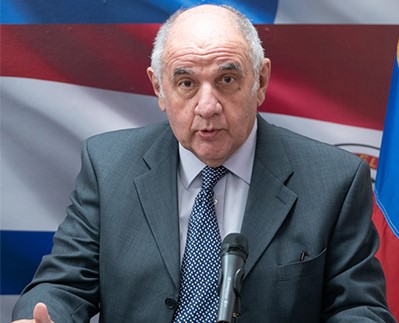
By: Ricardo Israel - 01/01/2024
Share:


He simply encountered the oldest and most persistent phobia in the world, Judeophobia, and they began to walk together, but, like everything, it has its own history, with origin and development.
It did not happen suddenly, the feminist movement had already attracted attention with its general silence regarding the death of Mahsa Amini, the 22-year-old Kurdish girl, who died in police custody after being arrested by the morality police in Iran, for not wearing the hijab or Islamic veil properly in September 2022. For many it was an unexpected, perhaps wrong attitude. Until now.
The lack of criticism of the ayatollahs' abuses was striking, since the movement showed great tolerance for the violence of the Iranian regime towards women, since they openly criticized the treatment of women in the West, and groups from different countries shared a strong condemnation of what is happening in some of the countries where there is greater concern to close the gender gap, but almost no protests were registered for what was happening in many Muslim countries. Due to the personal danger, travel to Tehran was not requested, but at least the issue was included in the protests that take place in democratic countries to bring discrimination to the foreground, but it was difficult to understand why something much more serious was not mentioned, since that the status of women as second-class citizens was not something marginal, but one of the characteristics of the system, whether in Iran or Saudi Arabia.
Therefore, there was already a precedent for the silence that took place in Israel, not only with the death of 1,200 people and the kidnapping of around 250 hostages, since what happened included the widespread use of rape as a weapon against women of different ages and conditions, in addition to the murder of children, women and the elderly, which was received by international feminism with a silence so strong that it was thunderous.
Later, when the streets of American and European cities were filled with sympathizers in favor of terrorism and not its victims, the participation of those who identified as feminists in the parades marks a before and after for the movement. In comparison to Al Qaeda or ISIS, where there was no support for acts of terror, this time instead of being horrified by the massacre (let's not forget it) that caused the invasion of Gaza, in the streets there was open sympathy for Judeophobia in universities elite and by jihadist movements, whose first victims would be precisely movements such as feminism or sexual minorities that revolve around groups known by the letters LGTBIQ+, illegalized and frequently hanging from light poles in Iran and other Islamic countries, where Homosexuality is a crime.
What was happening? Is it an exaggeration to conclude that the snake came out of the egg and that again - and once again - the difference lies in the fact that the Jews now appear? Not all, but a significant percentage. Furthermore, they take place in the streets and classrooms of the USA. Big difference, and another surprise that this situation brought us, since it occurred precisely where the Jews felt very safe. It was unexpected, for everyone. Perhaps also for the organizers of the massacre and also those of the marches.
In addition to Judeophobia and the surprising support for terrorism that had attacked so many women, there was no doubt that themes of hypocrisy and double standards were also expressed in relation to countries where all state power was used to repress women and sexual dissent. , especially in comparison with the most consolidated democracies.
Before October 7, the feminist movement was also asked to be more involved, to use all its activism potential to criticize with greater energy and visibility what was happening in Europe, where there are entire neighborhoods where the police do not even enter, as is also applied among Muslim immigrants Sharia law over national law, where “honor killings” by family members continue to be practiced, for example, France. Also the case of the press, fundamentally the so-called progressive one, which in Sweden or Spain does not mention the origin or nationality of rapists, when, for example, they consider that it affects their position or narrative on illegal immigration. In other words, the once proud Europe denies itself with do-goodism and moral superiority. The feminist movement also does it in the name of political correctness and to the detriment of female victims.
Before October 7, it also drew attention to how another novelty had emerged from within a movement that had represented enormous progress in essential equality among human beings, since the egalitarian ideas that it had historically defended were fought internally by a deviation which seemed to me to be a minority, known as “feminism”, where there was no longer a struggle to have access to the same goods under equal conditions, but rather a kind of feminine simile to machismo was sought, which was to propose, not the essential equality between genres, but the superiority of some over others.
It was in any case a legitimate debate, which required that if the previous answer to whether all masculinity is toxic, since hembrism only reinforces gender roles, acting as an inverted mirror of machismo. For others, this approach was wrong, since the proposal that was criticized was just a form of positive discrimination that sought to level the playing field.
Personally, it caught my attention that in comparison to the so-called liberation that I had known as a university student in the 70s of the last century, I had the impression that there were signs of repression of desires in the new feminism, in relation to what that he had witnessed.
Finally, as a movement of social change, a strictly political view of some noted elements of sex or gender struggle, biological or social, as a true substitute in the new Marxism for what had been the class struggle in the orthodox. Perhaps, it was just that, just as the loss of prominence of the working class had coincided with the loss of importance of that social sector in the economy, perhaps these developments were occurring only because they had coincided with changes in society, such as the loss of importance of the traditional family.
All of the above was part of a legitimate debate, so, in any case, it did not attract my attention too much, since any massive movement of these characteristics had historically always had imbalances within it. It had also happened with deviations from democracy, as well as in racial issues or sectors such as indigenous people or workers.
Before October 7, there was also a movement towards equity instead of equality, seeking to ensure a quota system not for women in general, but for the elite of the movement. The most important change was that rather than putting women on equal terms with men at the starting point, what was desired was to guarantee a result, for example, access to company directories or elected political positions, even if the votes did not allow his election, in other words, putting his hands in the polls, since “ensuring a result” conflicts with the substance of a democracy. Furthermore, it represented a change in terms of objectives that had always been equality among women themselves, to a scenario where the economic and social fruits were preferably only for an elite and could hardly be for working women.
The drift towards elitism was also visible in the sometimes ruthless criticism of those women who, by personal or religious choice, had voluntarily decided to dedicate themselves to the home. It even appeared in the rejection of the proposals that this work was so valuable to society that it was unfair that it was not remunerated, so this payment should come from general taxes, also guaranteeing retirement or pension for these women.
However, the entire previous debate loses importance with what is happening today, that is, it pales as something minor, compared to what we have witnessed since October 7. In other words, what is happening now has to do with the ethical foundations of a movement that received support and applause, so the question is whether there is still room for Jewish women in the movement, certainly not because of their last name, but for feeling as such and proud of their belonging, feminists yes, but also as Jews, which also includes Israel.
It is difficult to understand the acceptance of mass rapes of women of all ages, that hurtful instruments were inserted into vaginas, that breasts were cut with knives, that women were burned alive, and in at least one case, a fetus was removed from inside. of a pregnant woman and slit her throat afterwards; shootings of women in front of their children and vice versa. We know all this because it was recorded on video by the perpetrators themselves.
The silence in the face of what happened is also too violent in relation to an entire history, which goes back centuries in the past, a magnificent story that today is seriously questioned, and in order not to make the antecedents too distant, let us place the silence in the face of what happened on October 7 within the framework of the Declaration of the Rights of Women and Citizenship of 1791 or the First Conference on Women's Rights of 1848, and historical advances such as the right to vote in South Australia in 1894, and although New Zealand had granted it in 1893, they could not vote until 1919. Or the ratification of the 19th amendment, the constitutional right to vote, in the USA in 1920.
In that same sense, the first law decriminalizing abortion in the Soviet Union in 1920, or Sweden declaring equal pay in 1947, without distinction, and although it has not materialized there or anywhere, it must be seen in perspective of a right not yet achieved, in the same way, that the fact that crime exists is not an argument for not respecting the legal or social norms that punish theft.
The list is long and the above is just an example of what has been done, and, therefore, of how much remains to be done. For this reason, what is happening is serious since it questions ethical foundations that should be sacred for a movement of the importance and influence of feminism. No matter how many debates and differences there are, one should never cross the line of right and wrong, that is, what has to do with morality and ethics.
Debate is even welcome when it coincides with generational or agenda changes, but the path taken is not always necessarily the best. An example is the regression that is argued to exist, when spaces hard won by women recede by having to compete with those who, despite legitimately opting for another gender other than the one at birth, are, however, biological men, to whom It is almost impossible to beat them in sports like weightlifting or swimming. This would affect life projects, income and sports scholarships for women who have dedicated themselves to a goal for many years. In other words, good intentions can end up denaturalizing the very essence of sport, that is, its egalitarian, democratizing roots, and could end up being an unintentional concession to patriarchy, one of the largest in a long time, by actually preventing female athletes can win.
I understand that we are in a period where many certainties are being questioned, where the issue of intersectionality has penetrated, that is, that inequality is configured systemically when social factors such as gender, race or social class overlap. Identity has also entered with force, that is, those traits that differentiate the individual or group from others. This was noticeable in the hearings to designate Ketanji Brown Jackson as the last woman to join the US Supreme Court in 2022. Concepts that were previously taken for granted are changing in such a way that, in the confirmation hearing of the Senate, a senator asked him: Who is a woman? and although she could have jeopardized her nomination, the applicant did not want to answer the question directly.
Intersectionality and identity have entered this and other debates, bringing with them a danger that could also affect democracy, that something similar to castes emerges, where designations and appointments end up being made based on race and gender, thus The search for equality can end in a search for privileges or degenerate into a kind of transaction between groups with the power to grant them.
All this is part of the debate of the times we live in about the role of women in the 21st century. However, for the same reason, the attitude of many feminist groups towards October 7 is violent, since this type of crime was probably selected by the terrorists not only because it was the day in which the most Jews died since the Holocaust, but also because It coincided with the type of violence that was suffered in Nazi concentration camps. In other words, it is legitimate to disagree on the issue of Israel and the Palestinians or accept the statement of how complicated it is to solve it, but October 7 has no complications whatsoever, it is civilization versus barbarism, it is simply wrong to support what happened that day. It is a moral position against evil. Spot.
Nothing, for example, justifies why UN-Women took 50 days to react to Hamas sexual violence. Likewise, it is not secondary that it happened in Israel, since there has not existed nor does there exist a country in the Middle East, where this level of equality between men and women is mostly found, nor that Tel-Aviv is one of the cities in the world where the Gay Pride March is given greater relevance.
Furthermore, it is not fully understood how modern Israel was recreated without total equality between men and women, in the kibbutz movement that served as a precedent for the future State as well as its participation in the Armed Forces that ensured its independence. Furthermore, he also anticipated the Me-Too movement when former president Moshe Katzav was sentenced in 2011 to seven years in prison for sexual assault of subordinates while in office, a sentence drafted by an Arab judge who argued what would be known as that when A woman says no, it means no.
Israel was created with the participation of many socialist Jews, culturally Jewish rather than religiously Orthodox, who among many achievements also managed to ensure that a dead language or only dedicated to ritual like Hebrew reappeared in glory and majesty in daily life, but simply Israel modernity would not have been possible without the role of women, therefore, it is particularly unacceptable that the feminist movement has distanced itself from this pain. And it is not appropriate for the good-natured discourse or the biased criticism of the Israeli bombings (nothing about Hamas) to seek to draw a line between Israel and the terrorism that wants to destroy it.
The feminist movement contributed to humanity benefiting from women's contributions in talent and ideas, improving the world by moving towards equal rights as a goal to achieve. As the purpose has not been completely achieved, since there are various asymmetries that include the cultural, we were in the presence of a debate of planetary characteristics, which is now asking different questions, but still without an answer two months later, and which will not be able continue moving forward, since the hypocrisy and double standards demonstrated question its ethical and moral foundations.
In conclusion, better than other movements, feminism should understand how much of the rejection of Israel was and is due to the fact that the equality guaranteed to men and women, Jews, Arabs, Muslims, Druze, is one of the factors that most bother those who hate the Jews and the very existence of the only country where they are the majority.
@israelzipper
Ph.D. in Political Science (Essex), Law Degree (Barcelona), Lawyer (U de Chile), former presidential candidate (Chile, 2013)
«The opinions published herein are the sole responsibility of its author».