Venezuela: Anatomy of a Narco-State — Part II
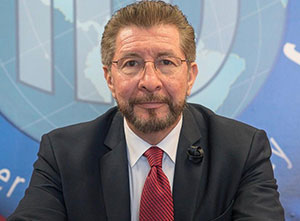
By: Carlos Sánchez Berzaín - 11/12/2025
Share:


By Sabina Nicholls/Dialogue
December 05, 2025
In the first part of this interview, Carlos Sánchez Berzaín, director of the Inter-American Institute for Democracy (IID) and former Bolivian Minister of Defense, offered a diagnosis that reaffirms the hemispheric debate on security and democracy in Latin America and the Caribbean. Sánchez Berzaín highlights how Venezuela has ceased to be a failed state and has become the operational epicenter of a continental criminal machine, a regime that, he warns, coordinates transnational crime and is sustained by drug trafficking networks and irregular structures that protect and promote it.
In this second part, the analysis enters an even more disturbing area because criminal convergence no longer operates in isolation. It is fueled and expanded by the intervention of China, Iran, Russia, and North Korea—extra-regional actors who, warns Sánchez Berzaín, use this illicit framework to project their influence and advance geostrategic agendas that accelerate political and security destabilization throughout the hemisphere.
The former minister argues that Latin America is not merely heading toward a scenario of global hybrid warfare; it is already immersed in it. Covert espionage bases, opaque military agreements, control of strategic minerals, and the infiltration of critical infrastructure now form a chessboard where narco-terrorist regimes and their extra-regional allies confront democracies. The outcome, he warns, will depend on swift and decisive action because the geopolitical clock is ticking.
Dialogue: Extra-regional actors, such as Iran, have forged alliances with the Venezuelan regime and infiltrated its institutions and military structures. How does this infiltration process operate, and to what extent has Venezuela become a platform that allows Iran and other extra-regional actors to project influence, indoctrinate, and exert territorial control within the hemisphere?
Carlos Sánchez Berzaín, director of the Inter-American Institute for Democracy (IID) and former Bolivian Minister of Defense: The narco-terrorist axis comprised of Venezuela, Cuba, Nicaragua, and Bolivia functions as a platform for expanding external interests, and the most significant case in terms of terrorism is Iran. Its influence has been so profound that it has managed to introduce cultural and religious changes in the populations where it operates. It is important to remember that Iran is a theocratic dictatorship, and it exports that influence with surgical efficiency.
Bolivia is the clearest example. At the beginning of the century, there wasn't a single minaret in the country. Today, Iran operates a national television network, manages religious centers in various regions, and has even modified daily habits such as gastronomy, introducing Mediterranean dishes that were unknown two decades ago. The point is not to judge whether this is good or bad, but to acknowledge the level of penetration and political influence it represents.
Iranian intervention reached a critical point when it took control of the so-called ALBA Anti-Imperialist School, created by Evo Morales to replace the US-backed counterinsurgency training camp specializing in counterinsurgency warfare. Ahmad Vahidi, then Iran's Minister of Defense and wanted by Interpol for his alleged involvement in the AMIA bombing in Argentina, participated in the 2011 inauguration. His presence in Bolivia was an unmistakable sign of the kind of alliances that were being consolidated. That school ultimately became a center for indoctrination and training for terrorism, operated by Cuba and Iran and supported by agreements signed under the Arce administration following high-level meetings in Havana.
In Venezuela, the situation is even more serious. There are areas where the Iranian presence has gone beyond mere influence and has become total control. Iran operates with strategic freedom, occupying spaces within the state apparatus and using these territories as a logistical, political, and military platform to project its influence throughout the region. It is one of the most worrisome extraterritorial enclaves of its presence in Latin America.
Cuba also plays a key role, albeit with a more discreet profile. Added to this is China, whose activity has been documented in US Congressional hearings, where the operation of radar and electronic interception bases on Cuban territory has been confirmed. In Nicaragua, the Ortega regime restructured its army with Russian doctrine and technology, now reinforced by China, Iran, and North Korea.
This network forms a cohesive bloc. What we are experiencing, I say, is the first global war, a confrontation between dictatorships and democracies being fought on multiple fronts. In the conflict between Russia and Ukraine, only the visible combatants are seen, but behind Russia are all the dictatorships. Iran contributes drones and missiles, China provides full support, North Korea sends soldiers, and Cuba deploys thousands of mercenaries.
This same dynamic is reflected in Latin America. Territories controlled by narco-terrorist regimes are at the service of these external actors. They are used for whatever is needed, from logistics to political expansion. Impoverished countries, deliberately driven into misery, become extremely vulnerable. With very few resources, terrorism captures entire institutions and encroaches upon national sovereignty. This is how the new axis of global destabilization operates today.
Dialogue: Within this framework, China and Russia have also expanded their influence through so-called cyber cooperation, artificial intelligence, critical infrastructure, and defense projects. If Iran, Russia, and China act as a complementary and mutually reinforcing bloc within the hemisphere, have Latin American governments underestimated the cumulative impact of this cooperation and investment? And, consequently, what does this convergence imply for sovereignty, democratic resilience, and the regional security architecture?
Sánchez Berzaín: Latin American governments have not underestimated anything; they have fallen into the hands of 21st-century socialism, which, due to its need for equipment and financing, handed them over to China, Russia, Iran, and North Korea. This political capture opened the door to an extra-regional penetration that is now overwhelming.
China and Russia control Bolivian lithium, while Iran dominates military agreements and participates in projects linked to nuclear development. We don't know if the uranium leaving Bolivia or the lithium delivered to Russia ends up in Iranian hands, a country that always obtains what it needs to continue enriching strategic materials.
This scenario can only be understood within the framework of a global hybrid war, where two clearly defined blocs clash. On one side, the organized crime bloc, comprised of Latin American narco-terrorist regimes and their extra-regional allies, and on the other, the democratic bloc. It is not a replay of the Cold War, but rather a multidimensional strategic confrontation.
Today, a visible change is finally emerging in concrete actions such as Argentina's decision to reject Chinese aircraft, which are unviable due to their technology stolen from the West, and opt instead for American F-16s. This type of decision already marks a shift that favors the return of private investment, technology, and a Western presence in the region.
The region is beginning to react with a policy grounded in objective reality. It remains to be seen whether this shift comes in time to contain the deepening of the authoritarian bloc on the continent.
Dialogue: If current trends continue—the strengthening of Venezuela as a criminal state, Iran's expansion through proxies, China's penetration of critical infrastructure, and Russia's military alignment—what is the most likely long-term scenario for the Western Hemisphere? Is the region headed toward fragmentation governed by criminal actors or toward an intensified battleground within the global conflict?
Sánchez Berzaín: The two things you're raising aren't future scenarios; they're already happening. It's not that something is developing; Latin America is already a global conflict zone and a zone of criminal control, not only by narco-terrorist states but also by extra-continental powers. This isn't something that "will happen"; it's already happening, it even happened five or ten years ago.
One only needs to look at the scope of Chinese investments, the equipping of armies by Russia, the Iranian bases, and the espionage systems installed in Cuban and Nicaraguan territory. Don't present this to me as a future scenario; it's the present.
Now, with this geopolitical shift, the immediate future does matter, and I'll speak in concrete terms: In 2025, the Venezuelan people must be liberated through the defeat of the Cartel of the Suns. That is a goal with a precise timeline. And 2026 must be the year in which the narco-terrorist groups that hold power in Nicaragua and Cuba are eliminated. If that happens, then we will once again look at the Americas as they were viewed at the end of the last century.
The prediction that emerged from the 1994 Summit of the Americas, and which dominated the 1990s, was that the 21st century would be the century of full democracy, free markets, and development for the continent. But it didn't happen. Instead of moving toward that horizon, we went from a dictatorship and five quasi-dictatorial governments to becoming a region defined by these two stark realities: a fragmentation governed by criminal actors and an intensified battleground within the global conflict. Because that is what Latin America is today: we are riddled with insecurity, human trafficking, and political infiltration fueled by ill-gotten gains.
Dialogue: Finally, what would constitute a true turning point in the confrontation between criminal state actors and the region's democratic and security architecture?
Sánchez Berzaín: The network of narco-terrorist dictatorships must disappear, just as progress is already being made. We are going to see a different Venezuela, because the law is being applied. And the law, when appropriate, is applied with the legitimate use of force. That is the central point.
«The opinions published herein are the sole responsibility of its author».