The irrelevance of the Organization of American States with the option of fundamental reforms or its end
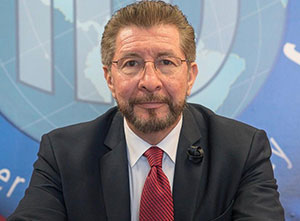
By: Carlos Sánchez Berzaín - 28/06/2026
Share:


The 56th General Assembly of the Organization of American States (OAS), which just concluded in Panama, has demonstrated the irrelevance it has reached due to its failure to meet its objectives and principles. Reduced to a bureaucracy incapable of identifying the regimes in Nicaragua and Cuba as dictatorships, it has served as a refuge for 21st-century socialism, or Castro-Chavismo. A discredited, underfunded, and leaderless OAS has the option of implementing fundamental reforms focused on defending human rights and democracy, or facing its demise.
The First Summit of the Americas in 1994 ushered in a new era of strengthening the OAS by reaching a consensus on an agenda focused on freedom, democracy, human rights, sustainable development, free trade, the fight against drug trafficking and crime, and more. The Americas, comprised of 35 countries, included 34 democracies and the Cuban dictatorship, which was nearing the end of its so-called Special Period following the dissolution of the Union of Soviet Socialist Republics (USSR).
Capitalism had defeated communism, the Cold War had ended, and the idea of a united Americas based on principles of freedom and democracy was the bipartisan foreign policy of the United States, promoted by Republican President George H.W. Bush and continued by Democrat Bill Clinton. Under these conditions, it was predicted that “the 21st century would be the century of full democracy for the Americas” with the restoration of freedom for the Cuban people. Thus was born the Inter-American Democratic Charter, signed in Lima, Peru, on September 11, 2001, the same day that the United States was the target of terrorist attacks on its territory (9/11).
The arrival of Hugo Chávez to the presidency of Venezuela in 1999 led to the reactivation and preservation of the Cuban dictatorship. Under Chávez's leadership, as a capitalist partner with Venezuelan oil and wealth, Fidel Castro, with his methodology of state terrorism for indefinite rule, and Lula da Silva, with the São Paulo Forum, joined forces, producing the populist Bolivarian movement that culminated in 21st-century socialism, or Castro-Chavismo. This movement expanded the Cuban dictatorship to Venezuela under Chávez and Maduro, Bolivia under Morales and Arce, Nicaragua under Ortega and Murillo, and Ecuador under Correa.
The 21st century, envisioned as the century of full democracy in the Americas, ended up being, until 2025, the century of the expansion of the Cuban dictatorship, of narco-state dictatorships that are actors and promoters of transnational organized crime, with hybrid warfare against the democracies of the region, with anti-imperialist discourse, with institutionalized violation of human rights, systematic application of state terrorism as a method of government, forced migrations of oppressed peoples, human trafficking and more.
In this context, the OAS became a central target of the dictatorial expansion that began with the overthrow of Secretary General Miguel Ángel Rodríguez, the former president of Costa Rica falsely accused of corruption and recently acquitted, but who was forced to resign. This was followed by the operation using Venezuelan oil to buy votes (Petrocaribe), culminating in Insulza's appointment as Secretary General (2005-2015). Insulza served Chávez and Castro, violating the principles and objectives of the OAS and ignoring the Inter-American Democratic Charter. The Insulza administration orchestrated the takeover of OAS bodies and institutions, including the Inter-American Commission on Human Rights.
Secretary General Almagro (2015-2025) restored the OAS's true nature with the "Almagro reports" that prove the dictatorship in Venezuela, with the characterization of Cuba as a "prostitute dictatorship," with the attempt to activate the Inter-American Treaty of Reciprocal Assistance (TIAR), and with the recovery of inter-American leadership that fueled the failed hopes in Venezuela with Guaidó and in Bolivia with Añez. Almagro identified and acted upon the objective reality of the Americas, divided between dictatorships of 21st-century socialism and democracies besieged by aggression or controlled by para-dictatorial governments.
In 2025, Trump assumed the US presidency, changing foreign policy and regional and global geopolitics, reflected in the "National Security Strategy" that reinstates the "Monroe Doctrine" with the "Trump Corollary." Operations such as Operation Southern Spear, the capture of dictator Maduro, the elimination of the leader of the Tren de Aragua gang, the activation of the fight against narcoterrorism even in countries with para-dictatorial governments like Sheinbaum's Mexico, Petro's Colombia, and Lula's Brazil, the ongoing ultimatum to the Cuban dictatorship, and the revocation of the visa of Albert Ramdin's Chief of Staff, the current Secretary General of the OAS, due to corruption charges, represent a shift from a pro-dictatorial paradigm to one of freedom.
With the conclusions and agreements of its 56th General Assembly, the OAS signaled a lack of understanding of the geopolitical shift and the current historical moment. Unless it vigorously returns to defending freedom and democracy, clearly denounces transnational organized crime dictatorships, and takes concrete action to end them, it risks perishing due to a failure to meet its objectives. The irrelevance of an international organization is not the end of multilateralism.
*Lawyer and Political Scientist. Director of the Interamerican Institute for Democracy
«The opinions published herein are the sole responsibility of its author».