The Cuban way to become like Haiti
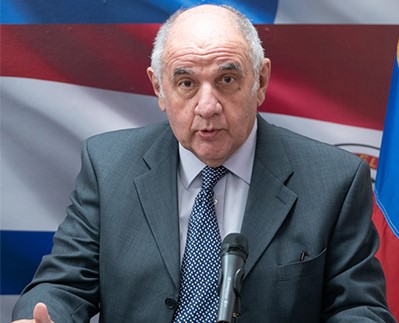
By: Ricardo Israel - 22/12/2025
Share:


Is Cuba the new Haiti? In 1959, it wasn't the most developed country in Latin America (that title belonged to Argentina), but it was certainly among the top. However, by the end of 2025, its multiple crises were taking on a resemblance to Haiti. After 66 years, Cuba was not only the region's leading dictatorship, with such a stifling of even the most basic freedoms that it bore little resemblance to the traditional military or personalist dictatorships so prevalent in Latin American history, but it also resembled North Korea, even in its familial dominance.
Cuba and Haiti share similarities in population and the importance of remittances to family members from abroad, although Cuba surpasses it in the number of people who, in recent decades, have found the conditions so unbearable that they have decided to emigrate as a last resort, even though there have been no devastating earthquakes nor has the country been overrun by criminal gangs. However, it is the government that causes more harm to the population in Cuba than the virtually nonexistent government in Port-au-Prince. Furthermore, despite some difficulties, Haiti has occasionally held competitive elections, something that has not occurred in Cuba since 1959. In fact, on Tuesday, December 2nd, the Haitian government approved a decree that will allow for general elections to be held after years without elected officials due to violence.
The available information shows a clear advantage for Cuba that is not being noticed with the current crisis, since the Gross Product was and continues to be higher for Havana as well as spending on education or health, with greater differences in Human Capital, import-export, percentage of vaccinated population, lower homicide rate or higher life expectancy.
Despite all these advantages for Cuba, the current crisis seems to be having repercussions at every level. It is economic, financial, and demographic, due to the constant emigration that leaves many elderly people and few young people. It is also affecting healthcare, transportation, and basic services like electricity and water, which are in ruins. There is a lack of minimum supplies in hospitals and the education system, and there is a widespread crisis of faith in the model, similar to what happened during the communist collapse in Eastern Europe. The communist party seems to have lost the conviction it once held that only it could govern, as it simply doesn't know what to do. Added to this is something new: abroad, it seems to be increasingly losing the support it once enjoyed in Latin America, Europe, and even among left-leaning sectors of the Democratic Party in the US. This support now appears to be limited to other dictatorships in the region, such as Venezuela and Nicaragua, although it seems that support will only last for a short time in the former case. They have already lost Bolivia.
Everything points to the fact that the underlying problem, if there was any doubt, is related to the widespread inefficiency of the dictatorship and the crisis of a model imposed by force on Cubans, in addition to the complete lack of democracy. The signs of this crisis are so numerous that Cuba's decline seems to point to a continuous and widespread impoverishment, a process of "favelaization," fundamentally provoked by the government, without any responsibility on the part of those whom the regime has been falsely blaming since it seized power, such as "imperialism." Furthermore, while resembling Haiti has another difference, the Duvaliers never spoke of being bearers of light, nor did they claim to represent the "new man," unlike the moral superiority by virtue of which the Cuban dictators claimed to be an example of a better society.
The moral collapse is so profound that even the constant falsification of statistics is no longer believed by a population crushed by the traditional lack of consumer goods, compounded by diseases that were thought to have disappeared but now attack like a biblical plague, and by such a collapse in hospitals that even relatively normal ailments can be fatal due to a lack of basic supplies, leaving even the traditional Cuban humor without patience, thus destroying the myth of the island as a "health powerhouse".
For all the above reasons, and because of the regime's inability to offer even minimal hope of a solution, everything points to a growing resemblance to Haiti and its unresolved problems, leaving as the only path—something that has become more difficult in the US with the new migration policies—the attempt to reach that territory by any means possible, even if it means risking one's life in a shark-infested sea. Adding to this, as reported by the press in the destination areas, collaborators of the dictatorship are now also arriving, such as government officials, judges, and retired repressors, all seeking to reunite with family members—another sign of collapse.
Added to this is the striking difference, the intolerable and growing inequality between the "nomenklatura"—those privileged individuals in government who enjoy power—and ordinary citizens. Furthermore, the rhetoric of "triumphs" in the transition from socialism to communism has vanished, replaced by the reality that power is shared between the gerontocracy of figures like Raúl Castro and Ramiro Valdés. Political power has shifted to those who also wield economic power, namely a group of officers and high-ranking members of the armed forces. These individuals appear to prefer taking money out of the country and depositing it abroad to maintain their personal and family lifestyles. This includes the fact that oil arriving from Mexico and Venezuela is, in some cases, resold instead of being used for the pressing needs of an increasingly impoverished population, who generally survive thanks to remittances from relatives abroad.
The regime appears so beset by problems and lacking foreign currency that it is implementing a new floating exchange rate, adjusted daily to assist those deemed "key players," an exchange rate touted as "competitive." Lest there be any doubt about the importance of the dollar, the dictatorship has had to formalize the partial dollarization of the economy with a new scheme that prioritizes export sectors, while simultaneously acknowledging the liquidity shortage, the drop in GDP, and the lie of a nonexistent embargo. Simply put, today they don't have the dollars to buy anything, except, it seems, for the lavish consumption of the privileged, and punishing those without dollars to access either the stores that sell goods unavailable in the mainstream market or the hotels catering to foreign tourists.
Today, almost everything is coming to light, because even those who usually support the regime in international organizations can no longer deny the images that Cubans themselves are uploading to social media. Moreover, even the international press is now reporting that the regime disguised aid needed to combat the chikungunya and dengue epidemics, transforming it into a request for Hurricane Melissa. They lied, claiming that everything was under control, and should have requested large quantities of larvicides and insecticides through the proper channels, sending a list to embassies and UN agencies instead of acknowledging that the number of cases spread by mosquitoes exceeded the publicly recognized figures by tens of thousands. The list, disguised as aid for the hurricane, was sent 17 days before the situation was officially declared an "epidemic," thus causing unnecessary deaths.
Today, Cuba appears on the list of countries in the region whose economies, according to the UN's Economic Commission for Latin America and the Caribbean (ECLAC), have experienced uncontrollable economic decline and chronic inflation. In Cuba, the average salary is equivalent to just a few dollars, lower than perhaps any other country in the region. The Cuban regime continues to falsify statistics, but with the blackouts and the health crisis, no one in the country believes them anymore. This reinforces the notion that Cuba is more like North Korea, given the complete lack of competitive elections and the absence of any voice, however marginal, in national media.
In Cuba, the current crisis is the responsibility of a military elite that also controls the party through its strong presence in state institutions and the central committee. The question is whether it is terminal in a country where, although there are still no mass demonstrations, undoubtedly, after July 11, 2021, the fear of demanding change, protesting, and identifying the Caribbean variety of communism created by Fidel Castro as the culprit has been lost.
There is no doubt that the widespread collapse, the lack of solutions, and the existence of a crisis manifesting itself on multiple levels coincide with the publication of the US National Security Strategy 2025, which, in its 33 pages, acknowledges what the superpower intends to do and achieve. In this regard, geopolitical definitions clearly emerge, such as its distancing from Europe and a renewed interest in the Western Hemisphere and Latin America, through the reappearance of the Monroe Doctrine via what is called the "Trump Corollary," expressed in Operation Southern Spear. This document provides context for the deployment of the fleet in the Caribbean, the approach being taken toward Maduro and the Venezuelan dictatorship, as well as the policy regarding illegal immigration and the entry of drugs into US territory.
Does the above mean that after Caracas comes Cuba?
The truth is, I don't believe it. Furthermore, everything seems to indicate that the fleet is seeking to intimidate rather than invade, unless they are targeted inbound and outbound attacks. But the objective remains that, after Maduro, power will be handed over to those who won last year's election, the legitimate rulers, the duo of Edmundo González and María Corina Machado. For now, the U.S. is primarily seeking to intimidate and pressure the Venezuelan military itself into handing Maduro over, even if it's just to collect the hefty reward. However, I believe this strategy is missing something that only the U.S. can provide, and for which the opposition to Maduro needs to take a stand. It would be enough for the democratic government to sign international human rights treaties so that the crimes committed by military and police personnel would be considered crimes against humanity, imprescriptible, and not subject to pardon—a problem that has plagued several transitions to democracy in the region.
On the other hand, I believe that in relation to Cuba there is still a prevailing fear in Washington that the fall of the dictatorship will generate a situation such that they cannot prevent the arrival of hundreds of thousands of refugees from the island to Miami, since images still predominate of those who were transported last century by their relatives, many of them American citizens, in private boats that came to pick them up in Mariel.
In any case, my impression is that if there is an end to the Castro dictatorship, due to its special characteristics of stifling any space for opposition, however small and marginal, it will not be the traditional transition that has taken place in the region, not even in Venezuela, since there is no government legitimized by a recent election. Rather, I believe it will be an explosion similar to Nicolae Ceausescu's Romania, which may have a similar origin to the mass demonstration called by the regime itself, where the crowd reacted against the dictator, culminating in an attempted escape, and the subsequent overthrow and execution of the dictator and his wife at Christmas by the military.
Will the Cuban army play a similar role? I doubt it. In Venezuela, the generals are part of the Cartel of the Suns, and in Cuba, they are either members of the Central Committee or manage investments and foreign currency, as well as foreign investment, so there is also corruption. Furthermore, Cuba has been not only the original dictatorship that initiated and still manages the hybrid war against democracy in Latin American countries, as well as against the United States. Latin America suffered guerrilla warfare in the 1960s, and the alliance between Lula and Chávez created the São Paulo Forum to ensure the survival of the Cuban Revolution during the Special Period of the 1990s. Venezuela continues to be dominated by Havana, since even today important decisions are made there.
Moreover, there is evidence that, in the drug trade, Cuban involvement dates back to the 1980s and 1990s, in the link established by the Medellín Cartel with Fidel and Raúl Castro, as well as with the Sandinistas in Panama, in addition to the well-known relationship with Manuel Antonio Noriega, captured in the invasion of Panama in 1989.
The island's role is recounted by the man who established that relationship between Pablo Escobar and the Castro brothers, the former drug trafficker Carlos Lehder, narrated in his book, "Life and Death of the Medellín Cartel," events that also cost the life of Colonel Tony de la Guardia, whom the Cuban dictatorship shot in July 1989, accused of being a "narco," although everything indicates that it was an arbitrary trial.
In any case, the recent publication of the National Security Strategy 2025 suggests that today the U.S. is available for the first time since the installation of Soviet missiles in the 1960s to adopt a more aggressive stance toward the dictatorship, given that the agreements following the withdrawal of those missiles enshrined the principle that Washington would do nothing to overthrow the Havana regime.
So far, this Strategy marks a change in the US not only regarding drugs, but also the protection of its own territory as well as against the Venezuelan and Cuban dictatorships, although for now military intervention is not being considered, but maximum urgency is being exercised to make them collapse from within.
This US position coincides with a major shift in Latin America, where there is an undeniable rightward turn, reflected in elections in Argentina, Ecuador, Chile, Honduras, and other countries. This will undoubtedly have an impact on dictatorships, whose isolation will be reinforced if the right wing wins next year in Colombia and Brazil. Mexico remains an exception, although the cartels that control a large part of that country will surely face strong pressure.
This coincides with two other situations specifically related to Cuba. The total decline that country is experiencing differs from past crises in its dramatic severity. The first situation is both political and ideological, as support for the revolution is becoming uncomfortable for those who were always its automatic defenders, such as the Latin American left or Spanish socialism. However, something is still missing. This remains the case for older generations like Lula, but the new progressive leaders have not yet broken with the Cuban revolution either, as exemplified by Chilean President Boric, who has distanced himself from Maduro but has not yet criticized Havana (although he has made numerous disparaging remarks about Nobel Peace Prize laureate María Corina Machado). There is still a way to go, but the process has begun, since it will be difficult for these sectors to criticize democratic governments while simultaneously defending what continues to happen on the island.
The second element relates to the economic collapse, not only due to its disastrous management, but also because the dictatorship now seems incapable of adapting to a changing international landscape. In the past, they were able to survive the end of the USSR, but now they appear unable to adapt, thus increasing their vulnerability.
A prime example of this is the demonstrated incompetence of the Business Administration Group SA (GAESA), whose quasi-military management model, controlling over 70% of the economy and 95% of national finances, exhibits a level of centralization never seen in any of the numerous military dictatorships that dominated the region in the 20th century. Therefore, the impoverishment of the population has a culprit who not only possesses the characteristics of the one-party nomenklatura but also clearly appears as a new oligarchy—yet another reason for the increasingly difficult defense of a revolution that has devolved into a military oligarchy.
Unlike China, but similar to North Korea, the model prevents the existence of a genuine private sector. Furthermore, Cuba's failure to pay its debts, coupled with the decline in tourism and the burden of an unpayable external debt, has only deepened the crisis, widening the gap between the regime and society. Add to this the palpable erosion of fear in the streets, and the current situation appears not merely temporary, but structural and almost impossible to overcome.
For the exiles, the task seems to be understanding the unprecedented transition process that Cuba may experience, understanding in order to best support the new generations that seem to be mobilizing in search of freedom as an individual emancipatory concept, and preparing for how difficult it will be to rebuild Cuba after the damage that has been done to it, with all the ambiguities and shadows that may appear in the post-dictatorial stage.
@israelzipper
Master and PhD in Political Science (University of Essex), Bachelor of Laws (University of Barcelona), Lawyer (University of Chile), former presidential candidate (Chile, 2013)
«The opinions published herein are the sole responsibility of its author».