The Cuban dictatorship, supported by Iran, China, and Russia, defies the US National Security Strategy and the Trump corollary.
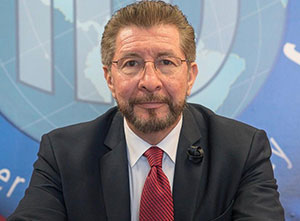
By: Carlos Sánchez Berzaín - 12/07/2026
Share:


Without a people, without an economy, without a narrative, and without options, the Cuban dictatorship continues to exercise state terrorism, holding power for more than 67 years and five years after the popular uprising of July 11. In retreat after its expansion in the Americas as 21st-century socialism, which imposed its criminal model in Venezuela, Nicaragua, Bolivia, Ecuador, and subservient or para-dictatorial governments, the Castro tyranny is sustained by the dictatorships of Iran, China, and Russia, defying the United States' National Security Strategy and the Trump Corollary.
The United States National Security Strategy published in November 2025, section 3 of “The Regions” states: “Western Hemisphere: The Trump Corollary to the Monroe Doctrine. After years of neglect, the United States will reaffirm and enforce the Monroe Doctrine to restore American preeminence in the Western Hemisphere and to protect our homeland and our access to key geographic areas throughout the region. We will prevent non-hemisphere competitors from deploying threatening forces or other capabilities, or from possessing or controlling strategically important assets in our hemisphere. This ‘Trump Corollary’ to the Monroe Doctrine represents a powerful and common-sense restoration of America’s power and priorities, consistent with our national security interests.”
In this context of U.S. national security, the “competitors outside the hemisphere” are primarily the dictatorships of Iran, China, and Russia, which have already been removed from the control and operations they exerted in Venezuela through the Cuban dictatorship. Since the capture of Nicolás Maduro on January 3, 2025, both Cuba and the dictatorships outside the hemisphere have lost Venezuelan oil, ceased their physical presence, their narco-terrorist cover-up, their geopolitical influence, their arms manufacturing and trafficking, their espionage, their regional conspiracy, and more.
Just months after its publication, the United States' National Security Policy has proven to be the security of the democracies of the Americas. This is evidenced by counternarcoterrorism operations such as Southern Spear, the Shield of the Americas initiative, and the almost daily reports of operations against transnational organized crime and narcoterrorism in every country in the Americas, with the exception of the dictatorships of Cuba and Nicaragua. Political and economic support, as well as the participation of U.S. intelligence, police, and military personnel, is growing, with results reflected in the gradual withdrawal of organized crime from politics, as evidenced by arrests, extraditions, and electoral outcomes such as those in Chile and Colombia.
21st-century socialism, as the political figurehead for the expansion of the Cuban dictatorship, is in crisis, but it is neither defeated nor has it ceased to exist. It operates vigorously, entrenching itself in “political oppositions” to protect the infamous legal systems it has imposed and to maintain impunity, as is happening in Argentina against Milei, in Ecuador against Noboa, as is being announced in Peru against Fujimori, and more; there are even more critical situations like that of Bolivia, where Paz has assumed the presidency but not the power, which remains controlled by the narco-state of the transnational criminal organization that, for now, allows it to coexist.
There are democratic governments that have spoken out vigorously against the Cuban dictatorship, but the majority of Latin American democracies maintain a silence that amounts to complicity. The same is true of international relations with Iran, China, and Russia, which have penetrated, established themselves, and grown exponentially throughout Latin America with Cuban sponsorship through the control that 21st-century socialism, or Castro-Chavismo, has exerted in the region over the last 20 years. Latin American democracies maintain their international relations and presence with Iran, with a few exceptions.
Since Maduro's capture, the defeated and expelled Cuban dictatorship in Venezuela knows it is the target, and the United States' ultimatum was clear. But while it buys time negotiating with the Trump administration, Castroism resists with the para-dictatorial governments of Brazil under Lula, Mexico under Sheinbaum, and, having been defeated in Ecuador, Chile, and Colombia, it conspires and destabilizes the same as in Peru, Paraguay, Panama, and Venezuela itself, while retaining control of Bolivia. Through Nicaragua, it penetrates Central America, and so on, in a game of "ceding tactical ground to gain strategic time."
With its extra-hemispheric allies Iran, China, and Russia, the Castro dictatorship is pressuring to damage the image of the American government while continuing to wage hybrid warfare against the United States using mechanisms ranging from disinformation to its expertise in conspiracies, assassination attempts, and escalation of conflicts.
It is said that prolonging the war in Iran protects the Cuban dictatorship and delays US decisions; this may be possible, but the truth is that with the Cuban dictatorship and in Cuba, the dictatorships of Iran, China, and Russia "maintain threatening forces and other capabilities and possess and control assets of strategic importance in our hemisphere," defying the Trump Corollary and maintaining aggression against the United States.
*Lawyer and Political Scientist. Director of the Interamerican Institute for Democracy
«The opinions published herein are the sole responsibility of its author».