The amnesty granted by the Venezuelan dictatorship is intended to give impunity to the perpetrators.
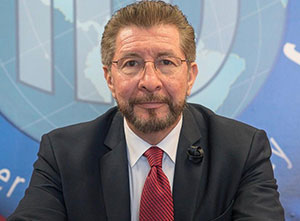
By: Carlos Sánchez Berzaín - 15/02/2026
Share:


Under the guise of “amnesty,” the Venezuelan dictatorship is pushing forward a bill that legitimizes its human rights-violating legislation, legalizes the actions of prosecutors and judges who use the justice system as an instrument of repression and state terrorism, and reinforces the institutional framework of the prison and torture system, thereby protecting members of the narco-terrorist cartel of the imprisoned Nicolás Maduro. With the sophistry of freeing its victims, the Venezuelan dictatorship is granting impunity to the perpetrators.
The establishment of state terrorism in Venezuela, modeled on and operated by the Cuban dictatorship, began by altering laws, criminal offenses, legal procedures, and the powers of authorities to create a penal system that, instead of protecting human rights and society, violates and terrorizes them in order to subjugate them. This led to the introduction of crimes such as "incitement to hatred," procedures such as "preventive detention without a time limit," torture to induce "self-incrimination" or the acceptance of crimes never committed, and even international persecution aimed at exile and disqualification.
This process of transforming the penal system of democracy into the terrorist system of 21st-century socialism is an “iter criminis,” which is “the path of the crime” and “allows us to determine all the crimes that may be associated with a criminal act.” The crimes of impersonation, forgery, violation of fundamental rights and guarantees, false accusations and denunciations, prevarication, torture, murder, deprivation of liberty, character assassination, and more, were committed by the Venezuelan dictator, by members of her cabinet, by her legislators, by her hired assassin prosecutors and executioner judges, by her thugs and torturers, and by the entire apparatus of “state terrorism,” with the prisoners, exiles, and those murdered being their victims.
The so-called “amnesty law” of the Venezuelan dictatorship is the “law of impunity for the executioners” because: 1. It grants pardon or oblivion—and with conditions—for the (non-committed) crimes of prisoners and exiles in order to release or reintegrate them, thus legitimizing false accusations and malicious proceedings; 2. Those who grant pardon are the very ones who committed the long chain of crimes in the substitution of the penal system with a system of state terrorism; 3. It legitimizes and maintains the system of the dictatorship, including its operators, whose impunity is enshrined by ratifying the legality of their criminal actions.
To avoid this situation, the current law must include a new meaning or concept of “amnesty as the nullification of accusations and processes that violate human rights” or be a “nullity law” without using the concept of amnesty as forgiveness or forgetting.
Along this path lies the heroic civil resistance of the women, mothers, wives, and daughters of political prisoners; the composure of the newly mobilized students; and the courageous expression of recently released prisoners demanding “full freedom.” They demonstrate to Venezuela and the world the criminal falsehood of the accusations, imprisonments, torture, and exile of Venezuelans who opposed and continue to oppose the narco-terrorist regime controlled by the Cuban dictatorship.
The strategy of the acting dictator Delcy Rodríguez and her group is to buy time, cede economic ground, feign abandonment of the dictatorships of Cuba, China, Russia, and Iran, demonstrate internal control, and retain political power with a narrative of national reconciliation. The goal is to change those in power so that nothing really changes, or so that change occurs slowly enough to maintain the dictatorial system disguised as a transition, with impunity and full political participation, while simultaneously working to weaken the United States government.
In terms of democracy and transition, the release of political prisoners and the return of exiles are fundamental. The Venezuelan Penal Forum confirms that there are currently 644 political prisoners in jail and thousands more under house arrest. So far, only releases that perpetuate the system of terror imposed by the narco-state of 21st-century socialism have occurred; victims have been released from prison but are not free to move about, travel, or even express themselves.
In reality, not a single political prisoner has been freed in Venezuela, because release with precautionary measures is not freedom. The most notorious case is that of opposition leader Juan Pablo Guanipa, who, after being released, exercised his freedom of expression and was imprisoned again, later being placed under house arrest with constant guard and a prohibition on speaking to the press.
Proof that Venezuela's narcoterrorism continues to use its dictatorial legal system is its "statement" in the Guanipa case, expressing that "the Public Prosecutor's Office requested before the competent court the revocation of the precautionary measure granted to the opposition leader Juan Pablo Guanipa..." and that "the precautionary measures agreed upon by the courts are conditioned on the strict compliance with the obligations imposed..."
*Lawyer and Political Scientist. Director of the Interamerican Institute for Democracy
«The opinions published herein are the sole responsibility of its author».