Restoring social morality as a decisive element of democracy
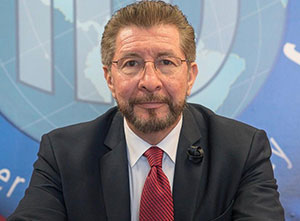
By: Carlos Sánchez Berzaín - 02/11/2026
Share:


The expansion of the Cuban dictatorship under the guise of 21st-century socialism or Castro-Chavismo has destroyed freedom, democracy, the economy, the rule of law, and public safety, but it has fundamentally shattered social morality, altering norms, values, customs, and beliefs in order to subjugate the people. In these times, the recovery of social morality is a priority as a crucial element of democracy.
Morality is “a set of values, principles, norms, customs, and beliefs that a society accepts as correct to guide people's behavior and distinguish between what is considered good or bad, right or wrong, between good and evil.” Social morality is the application of this concept in society with the “main objective of ensuring peaceful coexistence, cooperation, and the general well-being of the community.” Some schools use “collective ethics” as a synonym for social morality.
Social morality “is not static or universal, it varies according to culture, historical period and specific social context” influencing decisions, actions, behaviors, opinions and positions on what we consider “right or wrong, fair or unfair”.
The role of social morality is substantial in the functioning of society because it acts as a "regulation of behavior, promotion of cooperation, legitimization of power, construction of social identity and transmission of values," which are reflected in behaviors such as "respecting the laws, telling the truth, defending freedom, taking care of the environment, respecting cultural diversity" and more.
The morality of a democratic society is not the same as that of a society subjected to dictatorial systems like 21st-century socialism. They have changed social morality in Latin America to legitimize and sustain regimes founded on the concentration of power at the expense of eliminating freedom, statism based on the liquidation of private property and initiative, centralism ending the separation and independence of powers, repression with the systematic violation of human rights, collectivism ending free private, social, and political organization, and more.
Social morality has been altered after a quarter-century of supplanting politics with organized crime in Latin America, extending the more than 67 years of oppression in Cuba, expanding its system in Venezuela under Chávez and Maduro, Nicaragua under Ortega and Murillo, Bolivia under Morales and Arce, Ecuador under Correa, and implementing its methodology in para-dictatorial governments such as Brazil under Lula, Argentina under the Kirchners, Peru under Toledo and Castillo, Colombia under Petro, and Mexico under López Obrador and Sheinbaum. They have supplanted principles, values, norms, customs, and beliefs.
From positions of power and through violent crimes, they have imposed constitutions and laws that, instead of protecting freedom and human rights, violate them. These are the "infamous laws" that have eroded and, at times, eliminated the principles of respect, justice, honesty, and loyalty, supplanting the "rule of law" with "state terrorism" through judicial persecutions based on false accusations and fabricated evidence. They have replaced respect for the law with "solving," the magic word that represents doing anything to survive, imposed as a new morality on the oppressed Cuban people and spreading throughout the Americas.
The commission of crimes from and within positions of power with impunity, stemming from the disappearance of essential democratic elements, has its counterpart in the plurinational narco-state of Bolivia under Evo Morales, who declared: “When they tell me something is illegal, I just do it.” And like him, 21st-century socialists throughout Latin America have done just that, and behind them, several generations have indoctrinated and modified their thinking through changes to education systems and core curricula, public propaganda, rewards for corruption, and the example of impunity.
Impunity destroys social morality and implants a new one that sustains crime. It manifests itself in the extensive chain of crimes and the establishment of narco-states and frauds with untold fortunes and impunity enjoyed by the Castros of Cuba, the Chávezes and Maduros of Venezuela, the Correas of Ecuador, the Morales and Arces of Bolivia, the Ortegas and Murillos of Nicaragua, the Petros of Colombia, the Kirchners of Argentina, and all those who held and hold power under Castro-Chavismo, their associates, families, interest groups, and the entire criminal network.
Socialist social morality supports the commission of highly lucrative crimes, the proceeds of which can be used to pay off prosecutors and judges, spend time in prison but emerge as millionaires, and then buy an image by acquiring media outlets, companies, and even honors with ill-gotten gains, and finance a place in politics and democracy.
It is essential to restore and rebuild social morality by revising educational systems and content, setting a good example for those in power, repealing the laws of the dictatorship, ensuring that there is no impunity, and separating organized crime from political activity. It is urgent to rediscover and transmit to new generations that success is the result of work, study, effort, honesty, loyalty, gratitude, justice, and respect—not of committing crimes with impunity.
«The opinions published herein are the sole responsibility of its author».