Order, security, peace and freedom
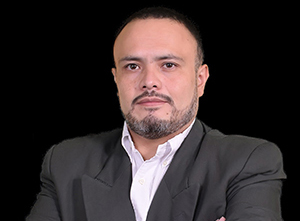
By: Hugo Marcelo Balderrama - 16/12/2025
Guest columnist.Share:


Being Bolivian has a very strange characteristic: living in a time loop, as it seems we are condemned to always repeat the same events, the same tragedies, and the same lying narratives.
For example, just one month after Rodrigo Paz took office, organized crime groups launched a new offensive against national security. Their strategies remain the same: 1) exploit a social problem, 2) provoke law enforcement, 3) incite extreme violence, 4) seek casualties, and 5) portray themselves as victims.
Right now, my hometown of Cochabamba has already seen two deaths due to the garbage conflict in the Quillacollo area. I understand that human life is sacred; no one should die in such violent and, at the same time, absurd circumstances. But can we blame Second Lieutenant Castellón for using his firearm to escape a high-risk situation, or worse, accuse him of the disproportionate use of force?
No, but let's look at the reasons why:
Police officers have a dual responsibility: 1) to maintain public order and 2) to protect their physical safety. Therefore, demanding proportionality from them is absurd, since order is not negotiated, it is enforced, and threats are neutralized. Furthermore, the police were not confronting a group of protesting citizens, but rather a highly trained, violent commando unit. In fact, the local municipal authorities themselves documented the damage inflicted on the access roads. Additionally, video evidence shows how the highway robbers were prepared to burn the officers alive.
This human rights narrative is the business of many NGOs funded by the promoters of globalist agendas. In this regard, Agustín Laje, in his book Globalism, explains:
Internationally, international organizations and NGOs, funded by millions from large philanthropic foundations, are promoting three causes simultaneously: prison abolition, environmentalism, and racial injustice. For example, the Rockefeller Fund states on its website: “We are particularly interested in grassroots organizing, power building, and effective efforts to promote decarceration policies at the national level.”
In Bolivia, Sacha Llorenti was a champion of human rights in the early 21st century. His work consisted of whitewashing the crimes committed by Evo Morales, Felipe Quispe, and other blood merchants. He was also one of those who supported the trials against police and military personnel who had defended the country against the bandits of 21st-Century Socialism during the October 2003 coup. His reward was holding high-ranking positions during Morales's dictatorship and important posts at the UN.
It is obvious that the approach of the human rights advocates is, in reality, in favor of criminals. They are not interested in the people or the nation, only in power.
In closing, Rodrigo Paz, in particular, if he wants to finish his term, has only one option left: to be willing to commit political suicide. That means doing the right thing, even above electoral calculations for the regional and municipal elections, since one cannot be either gradualist on the economy or lukewarm on security. The country needs shock economic measures and a security plan to confront organized crime.
«The opinions published herein are the sole responsibility of its author».