Is a second US-Israeli assault on Iran coming?
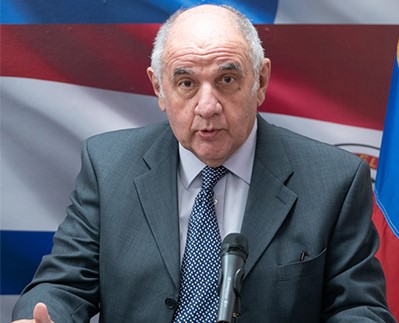
By: Ricardo Israel - 18/01/2026
Share:


Everything indicates that it will happen, and apparently soon. Nevertheless, unless there is a split between the Revolutionary Guard and the traditional armed forces or an unexpected collapse of the theocratic regime, the ayatollahs will survive as the dominant power, although never as weakened as they are now.
On the other hand, if the US does not act alongside Israel as it did in June of last year, the truth is that there are no other countries interested in defending the protesters who have been massacred in the streets. Therefore, in Iran, the fight is not only against religious tyranny, but something difficult to see in the West is taking place: chants in favor of the US and Israel.
It has become clear that Russia and China, as in Venezuela and the Twelve-Day War, are not going to confront the US, while the former European colonial powers continue to sink into irrelevance. Moreover, it is a very different region of the world, where too many people offer opinions based on ignorance, and are therefore repeatedly caught off guard. This is what happened with the armed conflict between the UAE and Saudi Arabia, as they supported different factions. Ultimately, UAE troops had to withdraw from Yemen because, although united against the Houthis, the UAE supported an independence group that ultimately lost, while the Saudis back the internationally recognized government. This demonstrates that, in addition to forming alliances, the petrostates in the Gulf also compete with each other.
In the West, it's also difficult to understand why Egypt, perhaps the most important of the Arab countries, decided to buy gas from Israel, which extracts it from its territorial waters, instead of acquiring it from those Arab countries that have it in abundance. Moreover, the $35 billion deal makes it one of the most significant economic transactions in Israel's history, and it's interesting to read the Egyptians' explanation that they value the country's "stability" and the guarantee of supply. This is part of a new reality where the Arab world supported Israel in its war against Iranian aggression on seven fronts, an aggression in which Iran mobilized its proxies, costing Tehran a fortune and partially explaining its current economic crisis.
As demonstrated in the 12-Day War, Mossad possesses top-notch intelligence on what is happening in Iran, but it is still surprising that both Sunni Arab countries and Israel are advising Trump to be cautious, since above all they fear what will happen the day after, for which the US - as on other occasions - does not seem to have a plan about what would happen if the ayatollahs are ousted from power.
Everything indicates that a US attack is coming, although it's unclear whether the Israeli attack will precede or follow it—that is, whether it will repeat what happened in 2025. On that occasion, Israel attacked first as a delayed response to the attack launched by the ayatollahs the previous year. That attack destroyed Iran's air defenses, helping the US delay the Iranian nuclear program for years. Today, the regime is cornered by the protests, so Israel fears an Iranian attack imitating Saddam Hussein's actions in 1990-91 during the first Gulf War. Faced with the imminent US invasion, Hussein sought Arab support by attacking Israel with Soviet-made Scud rockets, an attack that failed because, at Washington's request, Israel did not retaliate.
When visiting Trump at Mar-a-Lago in late December 2025, reliable sources say that Netanyahu told him that Israel, like the Arab countries, would now recommend caution, for one reason: the fear of the day after, of a scenario of chaos, similar to that which occurred in Libya after the death and defeat of Colonel Gaddafi.
This is not the first time mass demonstrations have erupted against religious tyranny, but the regime seems more frightened than ever. Traditional democratic sectors and young women who reject discrimination have joined forces—and this is how the latest protest began—with sectors suffering from the economic crisis, rampant inflation and corruption, a devalued currency, and infrastructure so deteriorated by lack of maintenance and investment that even the capital, Tehran, was running out of water. This situation is a consequence of sanctions, but above all, of a regime that, in exporting global jihad, has spent money that could have been used for its people on destabilizing the Middle East and sponsoring international terrorism, including the attack on a Jewish organization in the heart of Buenos Aires in the 1990s. Furthermore, Tehran had a privileged presence in Venezuela, as did the terrorists of Hezbollah.
This time the dead number in the thousands and in their massive scale, they seem like a replica of the demonstrations against the Shah that led to the Islamic Republic, although in the fight against the monarchy not only religious people participated, but also other important groups at the time such as the communists and the pro-Western liberals, who were later destroyed in a real civil war that took place in the first years of the new regime, a collaboration that the defeated later regretted.
The difference with the overthrow of the monarchy is that now there is no one to lead the movement in the streets, given its spontaneity. There is no clear leadership that allows us to envision an Iran without the ayatollahs. Nor is this foreseeable with the heir to the monarchy and son of the last Shah, for four reasons: firstly, because having lived abroad for so long he may be disconnected from present-day Iran; secondly, the memory of the monarchy may seem benign today in comparison to the religious context, but there is no doubt that it was a dictatorship whose political police repressed so much that very disparate groups united against it, so the memory is not pleasant; Third, the Pahlavis were a relatively recent dynasty, the result of a British-backed coup, so their legitimacy was questioned; and fourth, what happened in communist countries after the fall of the Berlin Wall could be repeating itself, where heirs to monarchies like the Bulgarian one reappeared only to be rejected, however attractive the idea of a European-style constitutional monarchy might seem to Western ears.
Above all, we must not forget that there is not only the issue of religious and political dictatorship, the struggle between democracy and barbarism, the sponsorship of terrorism worldwide, the constant calls for the destruction of Israel, but also the decades-long intervention in the internal affairs of the surrounding Arab countries, both those of the Gulf and also in Syria, Iraq, and the control of Lebanon through Hezbollah, its interference in Yemen with the Houthis and Shiite militias in various countries.
Above all else, the real fear is that the fall of the ayatollahs will have territorial consequences, since present-day Iran is the successor to one of the most important empires of antiquity, the Persian Empire. When Islam arrived in the 7th century CE, it destroyed an ancient religious belief, Zoroastrianism, which had an undeniable influence on early Christianity. Furthermore, there is a whole national component, since Indo-European dominance affected the national and ethnic rights of Arabs (manifested in the 1980 hostage crisis at the Iranian embassy in London), Azerbaijanis, and others, such as the Movement for the Liberation of Balochistan, which claims that historical territory, even resorting to terrorism. Operating from another Islamic country, Pakistan, they provoked a missile exchange in 2024, in which Iran backed down because Pakistan is a Sunni country and also possesses nuclear weapons. In short, Iran is a great nation with a magnificent history, marred by a distortion: Islamist extremism.
This is what is feared: that the end of such a perverse regime will bring with it the reappearance of many problems to which there is no way to react, just as happened to the US after the second Gulf War, where they easily defeated Saddam in 2003 and although he was hanged by decision of the new Iraqi authorities, at the same time so many internal conflicts appeared that the US was forced to withdraw, and Iraq ended up dependent on and controlled by Iran, its old enemy.
In any case, the current situation is different. The regime remains in denial, failing to grasp the depth of its defeat at the hands of Israel. Not only were proxies like Hezbollah and Hamas subdued, but the defeat in the Twelve-Day War was total, and the regime was unable to defend itself against the bombings, nor could it protect its high command and the group in charge of the nuclear program, who were eliminated. Nevertheless, the leadership has defiantly continued to threaten Israel and the US with missile attacks, while simultaneously maintaining the threat that the missile program and the construction of the atomic bomb will be sustained by domestic industry and scientists. Not only Israel fears an attack, but also the US at its military bases and Arab countries, although the damage in all cases would be limited.
The difference with the past is that the current attitude of the regime is not a product of the old arrogance, but now, it is simply the result of the fear of losing Iran, the one thing they cannot give up, since it is the basis of their power to wage universal jihad, where since October 7, 2023, a national security issue has emerged, since in Europe and the US the streets have been taken over not only by Judeophobia, but by chants against the US, and the very idea of the West.
Everything has gone wrong for Iran, as it has weakened since 2023 while Israel has strengthened, including a healthy economy despite having fought a war on multiple fronts. This is what, according to Israeli analysts, continues to make the Iranian ayatollahs dangerous, since the only thing they cannot afford to lose is their control of Iran, without which they have nothing. This is the reason they have unleashed such inhumane and terrible repression, which the rest of the world has witnessed, even though the regime has cut off the internet, thanks to Elon Musk making his company Starlink's satellites available to the protesters.
Even if the regime survives, it has entered its terminal phase, which could last months or years, but it has nothing left to offer but martyrdom. Today, it lacks the weaponry to wage war against Israel or the US, let alone both, but no one can rule out a limited attack targeting the civilian population, this time with biological or chemical weapons. And although neutralized by Israel, they maintain a respectable drone program, which has proven so vital to Russia in its invasion of Ukraine. The official narrative is quite different, however, where even the Iranian president, moderate compared to the Supreme Leader Ayatollah, claims to be at “total war” with “the US, Israel, and Europe.”
President Trump has placed himself in a position where his statements in defense of the repressed and murdered protesters practically compel him to take military action. In this context, what he considered "good news" (the suspension of court-ordered executions) arrived opportunely, seemingly postponing a previously made decision to intervene—likely a "one-way" intervention, as was the case with both the attack on nuclear sites and the removal of Maduro from Caracas. In any case, there are already events that demonstrate the seriousness of the US, including precedents showing the imminence of action, such as the deployment to the region of ships carrying land, air, and naval assets, and the request for its citizens to leave Iran. However, we will only know the moment of the attack when that silence descends—the kind of silence that precedes the attack, that is, when total control of all communications is established.
In any case, the regime committed an unforgivable error, handing the US and Israel another piece of good news. By activating its entire air defense system, it laid bare its hand regarding how and where it would defend itself. According to NBC, if there is a US attack, "Trump would only consider military action if it delivers a swift and decisive blow against the regime in Iran." For now, according to the US Treasury Secretary, the regime's leaders are reportedly moving their money out of the country. However, there is now a prevailing question among Arabs about such a close ally as the Saudis, the same ally that emerged after the Twelve-Day War. They are asking Washington: who will take power in Iran after the fall of the ayatollahs?
According to them, the US won't do it after its failures in Afghanistan and Iraq, and a small country like Israel simply can't. But as Israel discovered in Lebanon in 2000 and in Gaza in 2005, unilateral withdrawals don't exist in the Middle East; instead, irregular armed groups occupy the spaces abandoned by states, producing even more suffering. Then it was Hezbollah and Hamas; now it could be extremist groups within the Revolutionary Guard.
But the bottom line is that, unlike previous protest movements, now, even though they remain in power, the deterioration and decline of the Islamic Revolution is unstoppable. In my opinion, what is truly remarkable about what is happening in Iran are two things. The first is how the fanaticism and antisemitism of the ayatollahs have ultimately destroyed Iran. There was nothing territorial between Israel and Iran, nor any dispute with a country with which Tehran was allied during the Shah's reign. The rupture was generated solely by Islamist ideology, confirming something that has been observed throughout history: Judeophobia ends up destroying those it hates, where the Islamic Revolution was crushed and consumed by its own hatred. There is ample evidence of this, not only historically but also in the biblical narrative, which records a veritable chronicle of how many empires and regimes, before, during, and after ancient Israel, ended up being defeated, and many of them even disappeared.
The modern version can be found today in Delcy Rodríguez, now under the orders of Trump, who could think of nothing better than to say that the capture of Maduro had "a Zionist tinge" or Boric who bids farewell to the presidency of Chile having changed his mind on many things, except one, his total rejection of Israel and whose statements always confirmed the Judeophobia that motivated him.
The second point concerns a colossal hypocrisy, characteristic of our times. It's the hypocrisy of major international media outlets, renowned universities, human rights organizations, feminist groups, and LGBTQ+ groups that have protested and marched in the streets for other causes, such as Gaza, but have maintained complete silence on the situation in Iran. This is particularly evident in the antisemitism of numerous Hollywood figures. In short, there have been no freedom flotillas or Free Iran movements for the women assaulted by the Morality Police.
This situation also reflects poorly on those who have defended narco-dictatorships like Venezuela's, following the capture of a leader who was not elected but rather a dictator. In Iran, the borders protected a religious tyranny whose fanaticism murdered thousands of protesters without these people offering any criticism. Therefore, we know, even if they didn't say so, what position they would have taken in Venezuela. The point is that there is no article in International Law—I repeat, no article whatsoever—that protects dictatorships or tyrannies under any pretext. The antecedent of International Law is the so-called Law of Nations (and this Roman term refers to people rather than states), which originated in Spain with Father Francisco de Vitoria (1483-1566), one of the forerunners of what we understand today as Human Rights.
Alongside the Iranian tragedy, the situation in Gaza, another tragedy that the ayatollahs have done so much to worsen, seems to be at a crossroads. After the US achieved a ceasefire that undoubtedly saved lives, it has struggled to move toward peace because it has been unable to disarm Hamas or get it to comply with its commitments. This coincides with Washington's announcement of entering the second phase of negotiations. Simultaneously, in Cairo, the first meeting of a Palestinian committee of technocrats took place, tasked with administering Gaza with Hamas's tolerance. Meanwhile, the White House announced the names of the individuals who will comprise the Peace Council, responsible for overall oversight, chaired by Trump himself, and composed of international leaders.
The problem is that there have been previous experiences with technocratic governance in Gaza and the West Bank, even under the Palestinian Authority, without any success in curbing corruption or inefficiency—in other words, bad governance. For its part, the Peace Council, which does indeed include international figures like Tony Blair and Marco Rubio, in its current format resembling a kind of corporate board, has had similar experiences sponsored by both the Arab League and the UN, always with discouraging results. This is particularly acute in Gaza, since no progress is possible until Hamas is disarmed. Otherwise, it becomes difficult for Arab or Muslim countries to deploy troops as long as this terrorist movement maintains its capacity to obstruct or cause harm. Furthermore, it is also impossible to rule out investment in reconstruction while this situation persists.
Could it be that, as on other occasions, Israel won the war but lost the peace? Is a scenario beginning to take shape where the US and Israel are distancing themselves on how to approach the next stages? Meanwhile, Turkey's invitation to Erdogan only adds to the uncertainty. Perhaps this situation exists while Gaza remains almost halved in a new reality: the yellow line of the ceasefire. From the border to that line, the area will remain in Israeli hands, while the entire population towards the sea will remain under Hamas control.
If that were the case, without the disarmament of Hamas, there is no doubt that Israel would have failed in Gaza, so pressure should increase for the prime minister's resignation and the calling of early elections, since, in this case, the responsibility from the point of view of the State of Israel would have a name and surname, and it would be none other than that of Benjamin Netanyahu, the architect of the Israeli response to the Hamas invasion, and where he forced decisions that did not produce the promised result, and for which he should be held accountable.
An Israel that, in the event of another attack, is prepared both to continue trying to eliminate Hamas and to respond to Iran, even more forcefully than in June 2025, and this time not even the “supreme leader” would be immune to reprisals. Furthermore, to Iran's detriment, it would have gained a significant advantage by being the first country to recognize Somaliland, allowing for a much closer Israeli military presence near the Houthis. At the same time, Tel Aviv strengthens its relationship with a neighboring country of Iran, a Muslim country where they are very welcome, as is the case with Azerbaijan, which was important for Mossad operations last year.
In short, these are advantages that have undoubtedly been helped by the rapprochement that has taken place with the Sunni Arab countries in this ever-changing world, where Israel has presented another technological advance, the so-called "Iron Beam", the first operational laser shield capable of intercepting missiles and drones, but with an added benefit, at a cost of pennies of a dollar, unlike current systems that cost thousands of dollars per shot.
Iran and Hamas bring to mind what Carl von Clasewitiz said: "There is only one decisive victory, the last one," since in the Middle East conflicts always seem to lead to new ones.
@israelzipper
Master's and PhD in Political Science (University of Essex). Law degree (University of Barcelona), Lawyer (University of Chile), former presidential candidate (Chile, 2013)
«The opinions published herein are the sole responsibility of its author».