In dismantling the Venezuelan dictatorship, the concept of amnesty must mean the nullification of accusations that violate human rights.
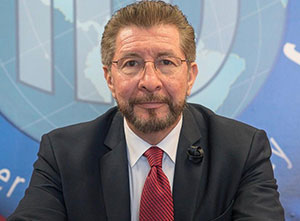
By: Carlos Sánchez Berzaín - 08/02/2026
Share:


The replacement of the rule of law with infamous laws—21st-century socialist norms that violate human rights—is the foundation of institutionalized state terrorism, employing hired assassins as prosecutors and executioner judges in Cuba, Venezuela, Nicaragua, and Bolivia. Dismantling the dictatorship/narco-state in Venezuela urgently requires the release of political prisoners and exiles who are victims of this system. This necessitates broadening the concept of amnesty to include the nullification of all accusations, actions, proceedings, or trials that violate human rights.
The word amnesty comes from the Greek word amnestia, meaning forgetting or forgiveness, and is defined as "the pardon of certain types of crimes, which extinguishes the responsibility of their perpetrators." The United Nations describes it as "a legal instrument that has the effect of preventing, for a period of time, criminal prosecution and, in some cases, civil actions against certain persons or categories of persons with respect to specific criminal conduct committed before the amnesty was granted, or the retroactive annulment of previously determined legal responsibility."
The Encyclopedic Dictionary of Law teaches that "amnesty" is understood as "an act of sovereign power that covers with the veil of oblivion the criminal offenses of a certain kind, concluding the processes begun, declaring that pending ones should not be initiated, or automatically declaring the sentences pronounced or in the process of being fulfilled."
From whatever perspective one studies it, amnesty today is an institution for forgetting or, in any way, pardoning those who have committed crimes. In the current understanding, the essential or sine qua non condition for granting or benefiting from amnesty is the commission of a crime, and its granting or application implies the express or tacit acceptance that crimes have been perpetrated that must be forgotten, pardoned, or in any way no longer punished. Today, innocent people are not granted amnesty.
The problem with applying the legal institution of amnesty as is to political prisoners, those persecuted, and exiles of the dictatorships of 21st-century socialism or Castro-Chavismo lies in the fact that it would be granting forgiveness to victims falsely accused and subjected to infamous legal classifications and procedures, with the aggravating factor that those granting it are the criminals, the human rights violators.
It's a world turned upside down; the victims are forgiven for crimes they didn't commit but end up accepting, and the criminals, the human rights violators, are the ones who forgive, ensuring their impunity, because this meaning of amnesty begins by legitimizing classifications, accusations, processes, and abuses without whose acceptance forgiveness, forgetting, or amnesty is not possible.
Attempting to dismantle a narco-terrorist system with the current type of amnesty is simply playing on the field of organized crime, under its rules and for its benefit. However, since the unconditional release of prisoners, exiles, and political refugees is urgent, what is needed—if the term amnesty is to continue being used—is to broaden the concept with the unequivocal meaning that, for the current situation in Venezuela and according to the facts of objective reality, “amnesty is not forgiveness or forgetting of crimes (that were not committed) and represents the nullity of any accusation, action, procedure, or trial that has been initiated, is being processed, or has been sentenced in violation of human rights.”
The new scope or definition of amnesty for the victims of 21st-century socialism is intended to not accept accusations, crimes, or stigmas that are part of the narrative of character assassination and the foundation of state terrorism implemented in Venezuela, Cuba, Nicaragua, and Bolivia, freeing the victims but not granting impunity to the perpetrators.
An additional aspect concerns reparations for moral, economic, and personal damages to which victims—whether released, imprisoned, exiled, or persecuted—are entitled. If amnesty is framed as forgiveness and forgetting, rather than as the nullification of abusive and criminal actions committed against them, no one will have any right to claim compensation, and the perpetrators, executioners, hitmen, torturers, jailers, and all members of the criminal network will be able to escape criminal and civil punishment. Amnesty as forgiveness or forgetting, rather than as nullification, is tantamount to certifying that the mafiosos of the dictatorship/narco-state acted legally.
The law is dynamic, and its formulation responds to changes brought about by circumstances, times, realities, and social phenomena. This is precisely what is happening now with the need to end narco-terrorist dictatorships by using their own operatives and mechanisms. Therefore, the precise definition and expansion of concepts—in this case, amnesty—are essential to avoid falling into the trap of perpetuating the status quo and impunity.
*Lawyer and Political Scientist. Director of the Interamerican Institute for Democracy
«The opinions published herein are the sole responsibility of its author».