Functional opponents of dictatorships in times of democratic restoration
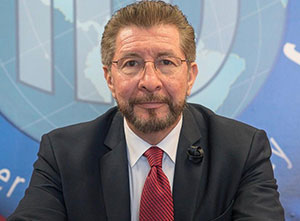
By: Carlos Sánchez Berzaín - 12/10/2026
Share:


The geopolitical shift taking place in the Americas, with the dismantling of criminal organizations that supplanted politics, signals the imminent end of the dictatorships in Cuba and Nicaragua, the dismantling of the dictatorship in Venezuela, the change of government in Bolivia, and the defeat of quasi-dictatorial regimes. The restoration of democracy has not yet been achieved, but it is progressing at a historic moment in which it is essential not to forget the "functional opposition" figures who, while feigning opposition to the dictatorships, actually cooperated with them.
The dictatorships of 21st-century socialism, installed as an expansion of the Cuban dictatorship, in Venezuela with Chavez and Maduro, in Bolivia with Morales and Arce, in Nicaragua with Ortega and Murillo, and in Ecuador with Correa, sought to present themselves as democracies with popular support, violating human rights, eliminating freedom, supplanting the rule of law with state terrorism, nullifying free social and political organization, and establishing electoral fraud as the methodology of their system of "electoral dictatorship in which the people vote but do not choose."
By eliminating all the essential elements of democracy, the dictatorial regimes of 21st-century socialism—with political prisoners, judicial persecution, millions of exiles, torture, the destruction of the party system, and the establishment of narco-states in Cuba, Venezuela, Bolivia, Nicaragua, and Ecuador—presented themselves as democracies. They even went so far as to maintain the narrative of being a new form of people's democracy to mystify the installation and operation of their criminal system, with the purpose of holding power indefinitely with impunity.
In their effort to present the Castro-Chavista regimes as democracies, they fabricated domesticated political oppositions in each country, because one of the characteristics of the democracy they sought to project was pluralism and the existence of free opposition. Thus, the dictatorships had opposition figures who accompanied them in the legislature to simulate their existence and produce "infamous laws," in the recognition of a judicial system that was a tyrant and violated human rights, in the electoral charade, and more, seeking and achieving international recognition for the regime.
“Functional opposition is a sham opposition, a highly lucrative charade of pretending to oppose the regime when in reality they cooperate with it to cover up human rights violations, the absence of the rule of law, the lack of separation and independence of powers, and the absence of democracy.” This is how I defined this dictatorial institution more than a decade ago, adding that “functional opposition members are an essential element of dictatorships; they are part of the corruption, and they are co-authors of the crimes and the disgrace suffered by the people.”
Now that we are in a process that has begun to reverse the control of political power by organized crime, in order to restore the essential elements of democracy, the functional opposition remains intact in Cuba and Nicaragua, supporting anti-imperialist measures and declarations of solidarity with the criminals who are being removed from power and brought to justice. It is good to acknowledge them and not forget them.
It is important to identify the role of Chávez and Maduro's functional opponents in dismantling the Venezuelan dictatorship/narco-state, a process the United States is carrying out through the regime's own cronies. This means using key members of the dictatorship, such as Delcy Rodríguez, who have become operators in a process meant to restore democracy, but in which they seem to be buying time while slowly ceding ground. Are these functional opponents changing?
The functional opponents of Evo Morales and Luis Arce in Bolivia are those whom the regime allowed to be candidates, those who were part of its initiatives and measures, such as the loss of Bolivia's access to the sea at The Hague, and those who received amnesties (Carlos Mesa and Jorge Quiroga) while prisons filled with political prisoners and the exile community grew with innocent victims. Some of them now point to Morales as a fugitive, others protect him or distance themselves from him, some claim to be in the opposition, and others are in the government, which, having received a mandate for change, is proceeding as a continuation of the same policies almost a year after taking office.
There is no doubt that people can change their political position, but what is impossible to accept is the impunity and pretense of those who have participated in corruption, who have been part of a criminal system of taking and controlling power, who have consented and remained silent in the face of human rights violations, who have covered up the crimes of the regime and who have even participated in its staging with historical implications and criminal responsibility.
Ensuring that dictators and members of their criminal organizations are not held accountable is essential for the restoration of democracy and must include functional opposition figures, because they were and are part of the criminal system.
* Lawyer and Political Scientist. Director of the Interamerican Institute for Democracy
«The opinions published herein are the sole responsibility of its author».