Dollarization is the way
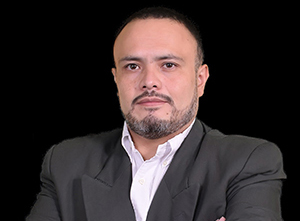
By: Hugo Marcelo Balderrama - 29/07/2026
Guest columnist.Share:


Bolivia is historically an unstable country. Everything has happened here: international wars, civil wars, the lynching of presidents, and several economic crises worthy of study; moreover, we must not forget that we are currently a territory disputed by various criminal organizations. But now let's talk about our current economic situation.
For more than two decades, the model imposed by Evo Morales, Luis Arce Catacora, and a host of Cuban ideologues consisted of an aggressive advance by the state against citizens' freedoms. There were several fronts of attack: for example, the gas revenues were nationalized, pension funds were arbitrarily intervened in, international reserves were savagely raided, and the financial sector was forced to be converted to Bolivian currency. All of this caused the money supply—the amount of banknotes in circulation in the national economy—to increase every year. In other words, what the dictatorship called a "miracle" was merely passive inflation, that moment when newly printed money creates the impression that everything is going very well.
However, as no fantasy can be sustained indefinitely, reality, for almost three years now, tells us that confidence in the local currency has been plummeting, as the exchange rate reached Bs. 15 per dollar, then there was a brief respite where it dropped to Bs. 9.70, although the government insisted on maintaining an official exchange rate of Bs. 6.96. Ergo, the end of the fixed exchange rate was to accept de jure what was already de facto.
Here a question needs to be asked: was it really necessary to devalue the currency as certain sectors insistently demanded?
Short answer: no. The best option was to go the dollarization route.
Dollarization is a process of monetary annulment or substitution, where an economy replaces its original currency with the US dollar, effectively taking the national currency out of circulation. In this regard, Mauricio Ríos García, in his article "Bolivia Can and Should Dollarize in This Way," explains:
The dollarization of Bolivia is not a technocratic fantasy or an academic abstraction reserved for debates among economists. Rather, it is the logical and moral consequence of an economy that, despite the interventionist delusions of the political powers, is already de facto dollarized. The country does not have a genuine national currency, not in economic, legal, or moral terms.
But what does it mean that the Bolivian peso is not a genuine currency?
Simply put, the Bolivian boliviano no longer serves its purpose as a store of value and a unit of account, since saving in a currency tainted by inflation is unsafe, and it also fails to provide us with stable economic calculations. Hence, market prices are constantly rising. In short, and to paraphrase Javier Milei: "the dollar has no ceiling because the boliviano has no floor."
The path to dollarization is short, even shorter than the attempt to save the Bolivian peso:
A simple supreme decree recognizing the dollar as legal tender for entering into contracts and paying salaries is all that's needed. Nor is it necessary to prohibit the boliviano: it's enough for the State to accept dollars for tax payments, sign contracts in dollars, and guarantee their unimpeded use in commerce and public finances.
Law 393 needs to be repealed to restore the financial sector's full freedom to set interest rates based on the amount of available savings. This would eliminate the abusive regulations governing housing and productive loans.
And where will the dollars come from?
Let's clarify something: there are dollars in Bolivia, which is why the market price is 11 bolivianos. In fact, Bolivians have around $10 billion saved—in their pockets, under mattresses, in safe deposit boxes, and in accounts abroad, but not in the national financial system. So, what's lacking is confidence for those dollars to start circulating again.
In conclusion, this is the best time to dollarize, because reality shows us that the Bolivian peso has no confidence whatsoever; it is a dead man being forced to walk.
«The opinions published herein are the sole responsibility of its author».