Difference between coming to power and holding power in 21st-century socialist regimes and narco-states
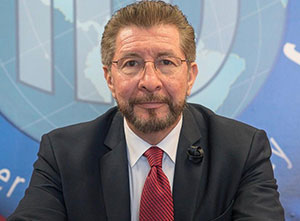
By: Carlos Sánchez Berzaín - 10/08/2026
Share:


21st-century socialism, Castro-Chavismo, or 21st-century communism, under the guise of the left, loses governments in countries across the Americas but retains power through the laws it imposed, the structures and officials it established, the cultural shift it implemented, the bourgeoisies it cultivated, the media it controlled, the justice systems it installed, and the armed and security forces it corrupted. This reality compels us to remember the difference between attaining government and wielding power.
Power is “having the ease, time, or place to do something,” and represents “having more strength than someone else.” Political power, in a broad sense, is “the ability to influence, control, or make decisions in a society or political system. It is the capacity of an entity or individual to affect how decisions are made and actions are taken that affect society as a whole.”
Government is “the act and effect of governing, of commanding with authority, ruling, guiding.” In a restricted political sense, it refers to “the highest organ of the executive power of a state or political community, constituted by the president and the ministers or advisors.” In a broader sense, it refers to the forms of government, which can generally be of two main types: “democracies and autocracies,” that is, “systems of consensus or systems of coercion.”
The Inter-American Democratic Charter establishes as an obligation that “The peoples of the Americas have the right to democracy and their governments the obligation to promote and defend it. Democracy is essential for the social, political, and economic development of the peoples of the Americas.” But this century is marked by the expansion of the Cuban dictatorship, which, beginning in 1999 with Hugo Chávez's rise to the presidency of Venezuela, implemented what turned out to be 21st-century socialism, controlling Venezuela, Nicaragua, Bolivia, and Ecuador (under Correa) through its dictatorial model, and establishing para-dictatorial governments in most Latin American countries.
21st-century socialism supplanted democracy with "electoral dictatorships," using state terrorism as a means of holding power, with people persecuted, imprisoned, exiled, and murdered. Crime replaced politics, creating narco-states and narco-terrorism from the control of power in Cuba, Venezuela, Bolivia, Nicaragua, Ecuador, and in territories, states, or provinces of Mexico, Argentina, Colombia, and more.
The need for simplification presents the process of defeat and the need to end the system of dictatorships/narco-states as a loss for the left against the right in Latin America, but objective reality reveals the true axis of regional and global confrontation: dictatorships against democracies, autocracies of transnational organized crime against freedom and human rights.
In this reality, election winners take office, but in many cases, they do not retain power, which remains under the control of the ousted regime. This leads to ungovernability, weak governments, and, combined with the expectations of societies facing economic and social crises generated by the outgoing regime, as well as conspiracy and criminal activity, the failure of processes of change and the entrenchment of entrenched dictatorships.
When one comes to power after a dictatorial or para-dictatorial regime of 21st-century socialism, it is essential to understand that the popular mandate is to change from autocracy to democracy, from state terrorism to the rule of law, from fear to freedom, from a narco-state to citizen security, from economic centralism to free enterprise and private property, from oppression to the full respect for human rights. These general principles are expressed in concrete actions in every Latin American country.
To seize power after a 21st-century socialist regime, I insist that—at the very least—it is essential:
The elimination of the legal structure of state terrorism must include, in cases such as Cuba, Bolivia, and Nicaragua, constitutional restoration, and in general, the changing of laws that established judicial bodies that acted as executioners and hitmen, puppet legislative bodies, and armed and security forces without democratic doctrine; the reinstatement of laws and procedures for combating drug trafficking and an adjustment, based on respect for human rights, of the entire legal system, with special attention to education, which has been manipulated for decades.
No impunity is justice. It means that human rights violators, perpetrators of crimes against humanity, traitors to the nation, narco-terrorists, torturers, and, in general, perpetrators of all crimes stipulated by the democratic penal system, must be held accountable for their actions under the rule of due process, which they have never recognized.
Banning criminals, organizations, and organized crime parties from political activity is a protection of equality, which is the basis of freedom.
*Lawyer and Political Scientist. Director of the Interamerican Institute for Democracy
«The opinions published herein are the sole responsibility of its author».