Conspiracy in Bolivia to maintain the narco-state and grant impunity to Evo Morales and his criminal group
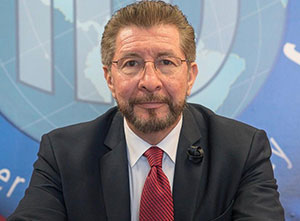
By: Carlos Sánchez Berzaín - 17/05/2026
Share:


In Bolivia, power belongs to 21st-century socialism or Castro-Chavismo, installed by its local operator, Evo Morales, a system in which none of the essential elements of democracy have existed for almost 20 years.
President Rodrigo Paz has taken over the government, but not the power, and is the victim of a conspiracy that seeks to overthrow him in order to maintain the narco-state and the impunity of the "boss" Evo Morales.
The confrontation is "organized crime against the Bolivian Nation," and the only option is to end the laws of the dictatorship, not accept impunity, and remove the criminal operators from politics.
The violation of people's rights and freedoms through marches, blockades, demonstrations, criminal aggressions, attacks, massacres, murders, suppression of public services and various forms of terrorism, with a narrative of sectoral or social demands, is the methodology of transnational organized crime which, under the guise of populism and leftism, has supplanted politics with organized crime which, in the 21st century, has installed narco-terrorist governments in Latin America.
Throughout this century, Latin American governments have been forced to either participate in or submit to 21st-century socialism; that is, to become satellites of the expanding Cuban dictatorship, with its main base in Venezuela. It was in this context that Evo Morales, the leader of the illegal coca trade, came to power in Bolivia in 2006 and, in 2008, imposed—through falsification, bloody massacres, the subjugation of the opposition, bribery, and fraud—the so-called Plurinational State, which is the institutionalization of a narco-state, the loss of sovereignty, and the guarantee of impunity.
Reaching the presidency in this plurinational system offers only two options: continuity, within the system of organized crime; or change, threatened by violence and overthrow. In 2019, President Jeanine Áñez opted for continuity, and the plurinational state system—which never lost power—first recognized her, then refused to recognize her, and subsequently imprisoned her. Given this precedent, President Rodrigo Paz opted for change in international policy, but internally he did not consolidate power: he remained solely in control of the government, which those currently in power now seek to seize from him.
Evo Morales and his criminal group are responsible for more than two decades of falsification, treason, the construction of a narco-state, drug trafficking, state terrorism, human rights violations against political prisoners and exiles, torture, murders, and bloody massacres, such as the one at the Hotel Las Américas, certified by the Inter-American Commission on Human Rights; sellouts, corruption, child abuse, destruction of the economy, and embezzlement of public and private reserves… They have committed every crime under the Bolivian Penal Code and international treaties.
With these proven facts, just six months after Rodrigo Paz assumed the Plurinational Presidency, Evo Morales and his criminal group—the power brokers and, at the same time, the perpetrators of the great national tragedy and crisis—accuse and violently present Paz as responsible for the situation they themselves created. This is nothing new, because it is simply a repetition of their transnational practice of committing crimes, murdering, and massacring, and then accusing and persecuting their victims.
Faced with a crisis as grave as Bolivia's, there are two ways to proceed: "gradualism" or "shock therapy" (implementing radical changes). If the country has solid institutions and a politically consistent government, the gradualist approach might have a chance; however, in a plurinational state, with institutions governed by laws imposed to establish a dictatorship, the result is a rapid and violent reaction to maintain the narco-state and grant impunity to its leaders.
The conspiracy and attempted coup by Evo Morales against Rodrigo Paz will not succeed because the international geopolitical order has changed. The 2003 coup, which forced President Sánchez de Lozada to resign, was directed and orchestrated by Cuba and Venezuela, and supported by Lula of Brazil, Kirchner of Argentina, Toledo of Peru, and others, in a context of growing Castro-Chavismo and US withdrawal. This is the complete opposite of the present, in which we see the dismantling of the Venezuelan dictatorship, the ultimatum to the Cuban dictatorship, and the support of democratic governments for Rodrigo Paz, who is part of the "Shield of the Americas," created precisely to combat organized crime.
Bolivia requires radical changes that restore the “Bolivian nation,” end the plurinational narco-state, cease impunity, reestablish the republican order of justice and independence of powers, the electoral system, and more. The conspiracy and coup d'état we are witnessing marks the failure of the gradualist approach thus far observed in President Rodrigo Paz.
The underlying issue is that in a democracy, consensus and agreement are always possible, but when organized crime has supplanted politics, the alternative is to prevail or fall. The first step to defeating the criminal group in Bolivia is the arrest, trial, and conviction of its leader, Evo Morales, with the end of the narco-states.
*The author of this article is a lawyer, political scientist, and Director of the Interamerican Institute for Democracy
«The opinions published herein are the sole responsibility of its author».