Bolivia, let the waste continue

By: Hugo Marcelo Balderrama - 13/07/2026
Guest columnist.Share:


The 40% devaluation of the Bolivian peso against the dollar, or what was also called: "end of the fixed exchange rate", confirms de jure what was already de facto, the loss of value of the Bolivian peso.
But, as with many other economic matters, it is necessary to clear up confusion and break down prejudices, so let's get to work:
First, a fixed exchange rate is not the same as price controls, much less a subsidy for the dollar. The Bolivian peso is a fiat currency issued by the Central Bank of Bolivia. Therefore, a fixed exchange rate implies two things: 1) a safeguard to curb the uncontrolled issuance of Bolivian pesos, and 2) the issuing entity's commitment to honor its debt in a certain amount of dollars. It is a mechanism to incentivize saving and, especially, to safeguard private property.
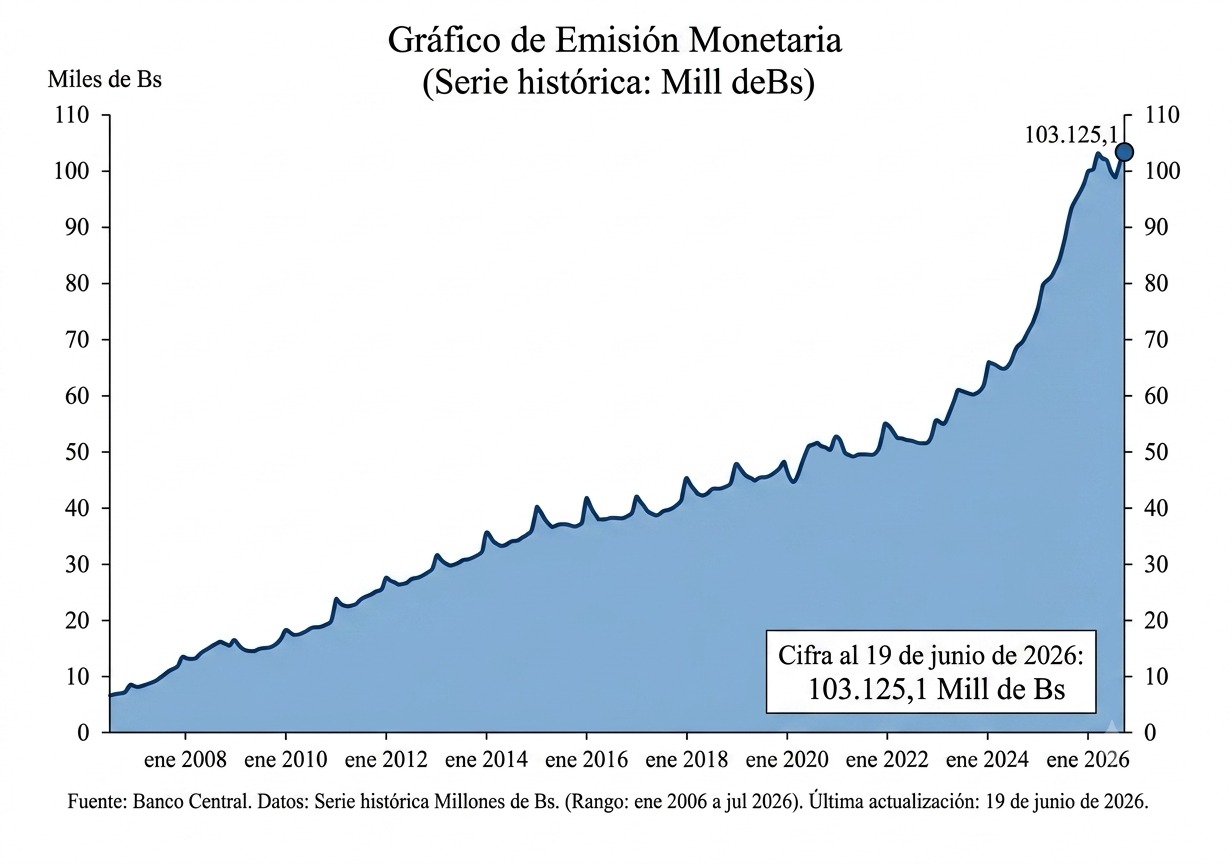
Therefore, the problem was never the fixed exchange rate, but the excessive money supply, which grew steadily since 2006, as can be seen in the graph below:
Second, a flexible exchange rate is not the same as a free foreign exchange market; rather, it is an interventionist mechanism that gives the State more power to manipulate the currency. To put it simply, the Central Bank of Bolivia will provide us with currency of lower value and poorer quality, inefficient as any state monopoly would be. In this regard, Mauricio Ríos García, in his article "Nominal Devaluation in Bolivia," explains:
Nominal devaluation means exactly that: allowing the government to pay a lower amount and quality of debt than it originally committed to. It is not a neutral adjustment. It is a way of partially repudiating the promise made to those who accepted Bolivianos as a means of payment, savings, or contract. The State delivers less real value than it committed to when it issued that currency.
Third, devaluations do not boost exports, much less growth. On the contrary, by devaluing the currency, they make saving more difficult. Furthermore, observable reality shows us that the nations that have most devalued their currency have only exported poor people, for example, Venezuela.
Finally, the devaluation won't magically make dollars appear in bank accounts, since the foreign currency savings that citizens held in the financial system have been channeled into wasteful government spending since 2014. In short, dollar depositors face a dilemma: if they withdraw dollars, they encounter the existing shortage, but if they convert them to bolivianos at the new exchange rate, they receive more worthless currency. Whichever way you look at it, the government has stolen part of our wealth.
In conclusion, the only thing we Bolivians are sure of is that Rodrigo Paz's government will continue the wasteful spending started by Evo Morales and strengthened by Luis Arce.
«The opinions published herein are the sole responsibility of its author».