Bolivia is experiencing a permanent war
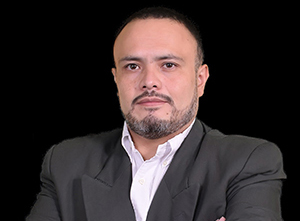
By: Hugo Marcelo Balderrama - 12/05/2025
Guest columnist.Share:


After the fall of the Berlin Wall, we in the West thought that totalitarian threats were a thing of the past. However, that was nothing more than a very naive romanticism, as Fidel Castro, China, and Russia itself had other plans. For them, the war hadn't been lost, just a battle. Their strategy was to take one step back, then two steps forward.
In fact, the Sao Paulo Forum, founded by Lula da Silva and Fidel Castro in 1990, served as a catalyst for the relentless reinvention of socialist militants around new revolutionary banners and fetishes, such as indigenism. Their goal was the same as that of the agitators and guerrillas of the 1970s: to seize power and establish socialist systems in the Americas. However, they made adjustments to their method: first, they seized public opinion and then took up arms.
This was the methodology they used to overthrow the governments of Mahuad in Ecuador, Duhalde in Argentina, and Sánchez de Lozada in Bolivia. Regarding this, Douglas Farah, a specialist in transnational crime, explains:
Fidel Castro advised both Hugo Chávez and Bolivian President Evo Morales, in meetings in 2006, to avoid armed revolution in favor of using the electoral process to gain power and then change their countries' constitutions and legal structures, ensuring they could govern in perpetuity.
Therefore, seizing power is not the end point, but rather a first step, a constant march, as Mao Tse-tung would say. Then comes the gradual attack on all social institutions: families, schools, private businesses, and voluntary associations, including churches. The ultimate goal is to place everything under the control of the state apparatus.
In this sense, Arce Catacora's establishment of a 10% increase in the minimum wage and a 5% increase in the base salary is not a mistake stemming from his poor economics; it is a deliberate and well-planned attack on Bolivian society. This attack is in line with nationalizing the currency, increasing bureaucracy, offering poor health services, and strengthening unions—in reality, gangs at the service of the dictatorship.
The consequence of this state of permanent civil war is an ever-deepening crisis. Propaganda tries to disguise it. We are always told that the country is progressing economically and industrially and that the situation is the envy of the region, but the reality is that we are sliding from one crisis to another. Furthermore, there have been growing shortages of food and fuel as a tribute to incompetence and malice. These are not mistakes, but well-planned crimes.
The MAS is constantly threatening the country. They know that the closer they get to total control of Bolivian lives, the more necessary terror and extreme violence will become. This brings us to the next point: revolutionary semantics.
The lie about a healthy and thriving national economy is spread to deceive ordinary Bolivians; they see us as enemies. These pronouncements are not intended to express the truth, but rather to serve the MAS dictatorship as a weapon of war. Let's not expect solutions from the regime; its objective is not to put the country on the path to development, but to manage poverty. That's why they left us without dollars, suffocated us with taxes, and impoverished us with inflation.
Nor should we be surprised when they build large buildings and expand the number of state-owned enterprises. Yes, it's wasteful, but at the same time, it's a show of power; they're shouting in our faces that they're rich and we're miserable. Remember, the regime isn't interested in economic efficiency, but in propaganda. However, the worst thing is seeing a population subdued and resigned to waiting in lines for fuel and bread.
At the current pace, the Orinoca Museum, the Casa del Pueblo, and abandoned buildings will become the adornments that decorate the mausoleum of what Bolivia once was.
«The opinions published herein are the sole responsibility of its author».