Amnesty and other verbs
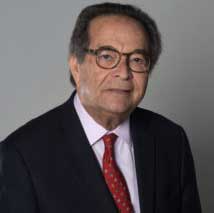
By: Luis Beltrán Guerra G. - 15/02/2026
Share:


In the long Venezuelan history since the establishment of democracy with the 1961 Constitution, there has been no issue that has not been raised for and against the atypical regime that began, as a result of the ousting of Carlos Andrés Pérez from his second presidency of the Republic, a consequence of a coup d'état that took place on April 11, 2002. To date, more than two decades have passed.
The issue today, brimming with emotion, concerns an amnesty law, drafted, in principle, at the request of the United States, within the context of the shared responsibility agreement with Venezuela following the recently implemented Operation "Southern Spear." We understand that "the North" has demanded that the government led by Delcy Rodríguez release the political prisoners detained by the regime presided first by Hugo Chávez and later by Nicolás Maduro. A dual interpretation could be given to the "North's" demand: that the requested freedom be granted immediately, that is, by opening the prison doors, whose symbol seems to be the "Helicoide" prison. The other plan, devised by the government, was initially determined to act in accordance with its interpretation of the constitutional and legal guidelines. This led to a draft Law of Amnesty and National Reconciliation, whose primary characteristic is its 13 articles—an exception in Venezuela, a country known for its numerous articles, perhaps due to the conviction that this is the best way to ensure compliance. These laws have been somewhat ironically referred to as “regulatory laws.”
The request from the "giant of the north," which can be described, in principle, as a "tutor" in relation to Venezuela, a country under its tutelage, following the already publicized event of the arrest of Nicolas Maduro on January 3, 2026, gives the impression that the Venezuelan government has realized that "to grant amnesty" is a verb, the conjugation of which corresponds to the Venezuelan Presidency in cohabitation with the legislative power, that is, "the national assembly," in principle, a novel designation attributed to it by the Bolivarian constitutional text of 1999, the reason, in principle, for the draft law whose content has alerted the beneficiaries of the "measure of grace" to pardon crimes, often of a political nature, extinguishing criminal responsibility collectively. Perhaps, one might ask, governments are unaware of the complexities in the conjugation of the transitive verb "to grant amnesty," which is why they resort to other verbal typologies in order to administer, with exaggerated rigidity and for their own convenience, "the pardoning of the sentence of those accused as political criminals," a typology that, in almost all cases, lacks frankness.
Indeed, we read that a person is considered a political prisoner if they are detained in violation of their freedom of thought, conscience, religion, expression, information, assembly, or association, and that the duration of the detention is disproportionate. The detention has been imposed for purely political reasons, unconnected to any defined crime. Furthermore, it is written that the individual is detained in a discriminatory manner compared to others, and through unfair procedures related to the political interests of the authorities. It is also argued that, for a decisive majority, imprisonment for political reasons is a violation of the human rights to freedom of conscience and expression, and evidence of being a fabrication, given the nature of the regime that defines and punishes such practices. The trials of political prisoners are so atypical, it is also stated, that in a significant number of cases, they recount their experiences. Some of these accounts have become widely recognized reference texts. Defining and punishing acts as political crimes is more serious than it seems, which is why it is consequently true that conditioning "amnesty" with respect to them must be, at least, simpler than punishing them.
Academic Ramón Escovar León has published an excellent essay in the newspaper El Nacional regarding the draft law presented to the National Assembly—presumably by the interim presidency—in which he outlines the series of requirements that must be met concerning the granting of freedom to political prisoners under the amnesty. The conditions are so complex that those granted amnesty will be few and far between. The law professor argues that for “coexistence and peace among Venezuelans”—the literal purpose of the legal text—not to be reduced to “a rhetorical device,” a long and arduous road must be traveled, accompanied by immediate, comprehensive, and coherent decisions to, among other actions, dismantle the legal framework that for years has served to persecute political dissent. Laws such as the Law Against Hatred, the Simón Bolívar Organic Law, the Law on the Oversight of NGOs, and the Anti-Blockade Law, among others, have operated, in practice, as tools for the judicialization of the adversary. As long as this framework remains intact, in Escovar's view, any amnesty will necessarily be insufficient. An argument, in this writer's opinion, that is entirely correct. The assertion that the proclaimed reconciliation must translate into verifiable facts is also pertinent: a society without political prisoners and without those barred from holding public office constitutes its starting point. Finally, we share Escovar's assessment that the State ceases to treat certain individuals as citizens with rights and instead considers them enemies to be neutralized. In this system, the adversary is not judged by what they do, but by what they represent or think. The amnesty suggested, if not ordered, by the US presidency gives the impression that it must be handled with appropriate dynamism. The bill, if passed, could be a serious problem.
If we may offer a point, which President Delcy Rodríguez is surely aware of, we would say that “politics, when treated pejoratively, which is by no means occasional, is distanced from its scientific conception. That is, from the “set of plans, systems, methods, customs, and conduct of a government.” It is often expressed as the “art and science of governing.”
Likewise, regarding those labeled as political prisoners, from the beginning of Hugo Chávez's presidency to the end of Nicolás Maduro's, one could count on one hand those whose conduct could be classified as political crimes. The vast majority of those detained, if judged objectively, should have been at home long ago. Committing crimes, friends of the government, is a serious matter, and playing with the classification of certain behaviors as crimes, rather than fostering seriousness among those in power, leads them to govern by force. And worse still, far removed from popular sovereignty.
The examination that is often made of politics is not without logic, since it, both from the point of view of those who lead it, as well as in what concerns the recipients of its provisions, produces consequences in "the people", whose components are linked together by common ideals.
Finally, Madam President, allow us to suggest that God and the Nation would reward you for the necessary foresight to grant amnesty to those incongruously labeled as political prisoners. It would be a definitive contribution to the harmony that Venezuelans demand. It does not help to treat certain people as enemies to be neutralized, a system in which, as has been written, the adversary is not judged by what they do, but by what they represent or think.
Finally, you have not been asked to make a request that would place you within the hypothesis of “the 9 martyrs of Cartagena,” whose source dates from December 6, 1815, when, after the capture of Cartagena by Pablo Morillo following a 106-day siege, the Spanish general Francisco Tomás Morales issued an amnesty decree. Four hundred survivors accepted it, some of whom he had beheaded, others shot, and others taken prisoner. Among those executed, who had accepted the amnesty, were those whom history now knows, with your consent, as “the 9 martyrs of Cartagena.”
«The opinions published herein are the sole responsibility of its author».