After the regimes of 21st-century socialism, good governance is essential.
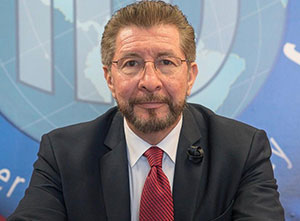
By: Carlos Sánchez Berzaín - 05/07/2026
Share:


Transnational organized crime, which supplants politics and wields power through narco-terrorism, is being defeated in the Americas. We are witnessing historic actions to end the dictatorships in Venezuela, Cuba, and Nicaragua, while para-dictatorial candidates are being defeated in Ecuador, Honduras, Chile, Bolivia, Costa Rica, Peru, and Colombia. Twenty-first-century socialism may relinquish the government but not the power, as it maintains its laws, impunity, and remains a political force. To restore democracy, good governance is needed to take power.
Over the past 25 years, every Latin American country has fallen victim to the supplanting or erosion of its democratic systems by the transnational operation known as 21st-century socialism, which is simply the expansion of the Cuban dictatorship using Venezuelan resources to facilitate the penetration of extra-hemispheric dictatorships. In more than two decades, constitutions, fundamental laws, electoral systems, economic and regulatory institutions, the institutional framework of the armed forces and police, security systems, foreign policy, organs of public power such as the judiciary, mechanisms for appointing judges and magistrates, contracting systems, and more have been altered.
In countries like Venezuela, Bolivia, Ecuador, and Nicaragua, the institutional and legal systems correspond to the structure of 21st-century socialism, with infamous laws that violate human rights, with mechanisms that make the essential elements of democracy disappear, with sophistry, substitutions, and methods that simulate democracy when in reality they suppress it.
In countries like Argentina, Peru, Colombia, Chile, Honduras, and more, 21st-century socialism has installed its operators in the justice system, the armed forces, police, and security systems, to the point that when a change of government occurs, the greatest opposition consists of the real impossibility of exercising power, leaving the ruler forced into agreements that guarantee impunity and the permanence of organized crime in politics.
In countries like Colombia, Peru, and Bolivia (the three most important cocaine producers in the world), they even control part of the national territory with narco-terrorist organizations presented as unions or federations of coca producers, with guerrillas like the FARC and the ELN, or with organizations that present themselves as social or peasant, which in reality break national sovereignty by creating fiefdoms or mini-republics where the government simply does not exercise power.
In every case and country, 21st-century socialist regimes use as a strategy to prevent the new government from governing, maintain their power structure and their operatives in order to undermine, defeat, overthrow, or replace the new government. It is a permanent conspiracy using the system they have established, which the new government lacks the resolve or capacity to dismantle, thereby ending the criminal presence in politics and restoring the essential elements of democracy.
Governance is “the capacity to govern,” the “quality of being governable.” It is the “capacity of a government to exercise authority, implement policies, and guarantee order, stability, and development within a state.” Governance “is evaluated in terms of stability, effectiveness, and legitimacy.”
I reiterate that to end the regimes of 21st-century socialism and restore democracy in all Latin American countries, at least three conditions are necessary: the elimination of the dictatorial legal structure, the end of impunity, and the outlawing of organized crime in political activity and participation. Under the legal structure of 21st-century socialism, it is impossible for a democratically elected government to be governable, and if it survives, it will be at the cost of granting impunity and tolerating the continued presence of criminal organizations in politics, as demonstrated by the governments of Macri in Argentina, Lasso in Ecuador, Kuczynski, Bolívar, and others in Peru, and Áñez in Bolivia.
After more than two decades of dictatorial rulers and governments, tolerant of deinstitutionalization and sacrificing the essential elements of democracy, the presidents and governments that replace 21st-century socialism in Latin America must be good governments.
Good governance in the current reality is at least the return to the validity of the essential elements of democracy and republican institutions as a system that allows respect for human rights, without political prisoners, without those persecuted or exiled, with legal certainty, restoring the rule of law, dismantling narco-states, confronting the economic, security, and confidence crises, and getting out of corruption and its consequence, impunity, which is a sign of complicity.
The population has hope, but it needs to feel change both in the political and social superstructure and in daily life. It needs to regain confidence and believe it can live better. Each country has specific problems, but the citizens' demands are the same. Some countries are achieving this, others are not, and some still face the challenge. It's not easy, but there is no alternative.
«The opinions published herein are the sole responsibility of its author».