Venezuela: Anatomy of a Narco-State — Part I
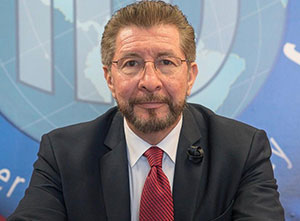
By: Carlos Sánchez Berzaín - 03/12/2025
Share:


Venezuela is in check. What began as a failed state under Nicolás Maduro's regime has transformed into a functioning criminal machine that threatens regional stability. This is the assessment of Carlos Sánchez Berzaín, director of the Inter-American Institute for Democracy (IID) and former Bolivian Minister of Defense, who offers an unflinching diagnosis of this transformation and its geostrategic implications in an exclusive interview with Diálogo.
Based on verifiable facts and years of regional monitoring, Sánchez Berzaín asserts that Venezuela has consolidated itself as a criminal state, surpassing all the thresholds of a narco-state through the capture of its institutions by corruption and drug trafficking networks, the co-optation of the Armed Forces, and the dependence on illicit economies that today sustain the regime's hold on power.
The scope, he warns, is hemispheric. Maduro has projected a transnational criminal network that operates in alliance with Colombian cartels, irregular armed groups, terrorist organizations, and extra-regional actors such as China, Iran, Russia, and North Korea. This structure, consolidated over the last decade, Sánchez Berzaín warns, constitutes a strategic threat that has transformed Latin America into a battleground dominated by criminal governance networks.
Dialogue: You have described narcoterrorism, that alliance between terrorist violence and the criminal economies of drug trafficking, as the most cruel form of aggression against the peoples of Latin America in the 21st century. However, this threat is not new. What has changed compared to narcoterrorism in the 20th century, and why do you consider it to be the greatest threat to the region today?
Carlos Sánchez Berzaín, director of the Inter-American Institute for Democracy and former Minister of Defense of Bolivia: In the 1980s, we witnessed the rise of narcoterrorism in Latin America with guerrilla groups such as the Revolutionary Armed Forces of Colombia (FARC), the M-19, and the National Liberation Army (ELN) in Colombia, which transitioned from ideological guerrillas to becoming producers, protectors, and traffickers of drugs. The same occurred in Peru with the Tupac Amaru Revolutionary Movement (MRTA) and Shining Path. These are the clearest examples of narcoterrorism in the 20th century.
And what characterized this narcoterrorism? It was a localized phenomenon. These organizations could control small or even large areas, they carried out armed violence, kidnappings, and murders, but they remained territorially confined. Despite their capabilities, they did not control any state or country.
What changed in the 21st century? Narcoterrorism ceased to be a localized phenomenon and supplanted politics through criminal activity, taking the place of entire countries like Cuba, Venezuela, Bolivia, Nicaragua, and Ecuador. Thus, criminal actors began to operate as subjects of international law, with diplomatic immunities and privileges, but without ceasing to be narcoterrorist structures.
The best example is the Cartel of the Suns. The recent shift in US foreign policy has been precisely to restore its criminal character and remove its status as Venezuela's international representative.
This has had an enormous impact on the region's security and democratic stability. In 1994, when the first Summit of the Americas was held, there were 34 democracies and only one dictatorship, Cuba, which was also on its last legs. But with Chávez's rise to power in 1999, the 21st century became a period of expansion for that dictatorship, which not only replicated itself but also created narco-states and criminal networks that presented themselves as legitimate governments. From there, they waged direct aggression against the region's democracies.
All of this falls under the contemporary concept of hybrid warfare. Narcoterrorism is one of its manifestations, along with forced migration, the infiltration of common crime, human trafficking, and even the financing of candidates who are aligned with these structures.
Dialogue: Within this framework, Venezuela has been identified by various researchers and analysts as a cocaine hub, a result of the close relationship between the state and criminal organizations, thus consolidating Nicolás Maduro's regime as a true narco-state or "criminal state." How does this influence extend to neighboring democracies, what mechanisms erode or destabilize their institutions, and what risks does it pose to regional security?
Sánchez Berzaín: The Venezuelan case is, above all, the result of the expansion of the Cuban dictatorship. Venezuela is a narco-state satellite of the Cuban dictatorial system, and this is not conjecture, it is an objective reality; that is to say, it is a fact verified and verifiable on multiple levels.
When Hugo Chávez came to power in 1999, he came to the aid of a dying Cuba going through its "Special Period." From that moment on, a kind of troika was formed, with Chávez contributing the capital in the form of Venezuelan oil and wealth, while Fidel Castro contributed the know-how of a regime that, since 1959, had accumulated decades of repression, executions, the creation of guerrilla groups, invasions, protection of terrorists, hijacking of airplanes, and proven links to drug trafficking. Cuba was, in fact, the first narco-state in the hemisphere.
With Chávez, the 21st century began under the narrative of a supposed “Bolivarian movement,” which in reality turned out to be the international expansion of the Cuban dictatorship. And paradoxically, the best thing that happened to this project was Chávez's death. While he was alive, he was the undisputed leader thanks to the resources he controlled. This wealth financed mechanisms like Petrocaribe, through which the votes of Caribbean countries in the OAS and the United Nations were guaranteed.
Using the same strategy, they advanced across South America: Kirchner in Argentina, Lugo in Paraguay, Mujica in Uruguay, Evo Morales in Bolivia, Correa in Ecuador, Ollanta Humala in Peru, and a growing influence in Colombia with Juan Manuel Santos. This is the political map of 21st-century socialism.
Two events are key to understanding this 25-year history. First, the death of Chávez, which unleashed an internal dispute between “Venezuelan Castroism”—represented by Nicolás Maduro—and “Venezuelan Chavismo” of Diosdado Cabello. Maduro won. And from that moment on, Venezuela formally became a political colony of Cuba, something that hadn't happened while Chávez led the project. Just look at the images from that time; Castro seemed like Chávez's assistant, not the other way around.
In this new context, Venezuela became Cuba's geopolitical and logistical platform, leveraging its geographic location, infrastructure, and wealth. From there, the cocaine hub was established, a transnational operation coordinated with the FARC in Colombia, the Correa government in Ecuador, the Evo Morales regime in Bolivia, Nicaragua, and, of course, Cuba.
There are documented facts that confirm this. During Chávez's presidency, and while Evo Morales was president of Bolivia, it was revealed—and reported in the international press—that Bolivian Air Force planes were transporting cocaine directly to the presidential ramp at Maiquetía Airport in Venezuela. This was corroborated by a Bolivian Air Force officer, then-Colonel Marco Antonio Rocha Venegas, who testified in the United States, where he now lives under protection.
This is how narco-states operate. And this is also how narco-terrorism consolidates itself, emerging when 21st-century socialism takes control of much of the region.
Within this context, narco-states and the strategy of narco-terrorism develop, where drug trafficking is conceived as a weapon of aggression. Fidel Castro and Che Guevara stated this as early as the 1970s: drug trafficking was an instrument of struggle.
From the Cold War we moved to subversive warfare, then to irregular warfare, and today to hybrid warfare. Within this context, attacks against democracies in the region, such as Colombia, Ecuador, Peru, and Chile, materialize through forced migration, drug trafficking, terrorism, gang operations, and the Tren de Aragua (Aragua Train) scandal.
Today the threat has crossed all borders, with the enemy already identified and within the framework of a hybrid war that points to Venezuela, Nicaragua and Bolivia as the main epicenters of this aggression.
Dialogue: At what point did Venezuela cease to be a problem of internal politics, border or regional concern, and become a direct threat to international stability?
Sánchez Berzaín: Venezuela became an international threat when oil revenues began to run out. Venezuela was a very rich country, but the expansion of the Castro-Chavista project, which sought to politically control all of Latin America, demanded enormous resources.
When oil revenues are no longer enough, a decisive transnational corruption mechanism emerges, exemplified by the Lava Jato case. [Lava Jato was the largest anti-corruption investigation ever conducted in Brazil, which uncovered a massive bribery and money laundering scheme centered on the state-owned oil company Petrobras, construction companies, and high-level politicians.]
When that avenue also runs dry, the regime resorts to the most profitable path: drug trafficking, because no other business can compete with it, especially when it operates from within the government itself. And then a key phenomenon occurs: it's not that "the drug traffickers took power," but rather that those already in power became the mafia. They subordinated organized crime and went on to lead that criminal conglomerate to sustain their political project.
This occurred because the expansion of 21st-century socialism required increasingly more money, not only to finance Petrocaribe, but also for massive operations such as sustaining multiple political campaigns. It was a transcontinental project that needed unlimited resources.
Ultimately, the expansion of narcoterrorism follows a logic: to weaken democracies, attack democratic leadership, destroy party systems, and simultaneously finance the rise of its own leaders. When legal funding is no longer sufficient, drug trafficking becomes the primary source.
Venezuela was already a narco-state under Chávez, but the turning point came with his death. When Cuba assumed total control of the project, drug trafficking deepened, became systematized, and institutionalized. That is the moment when Venezuela definitively ceased to be an internal matter and transformed into a global threat.
Dialogue: Venezuela has set alarming precedents by facilitating passports and identity documents for extra-regional agents, creating channels for identity laundering and covert mobility. What patterns of criminal facilitation are being replicated in the region based on the Venezuelan model, and what risks does it pose for Latin American states to become transit hubs for these types of operations?
Sánchez Berzaín: This is nothing new. Cuba did exactly the same thing in the 1960s, 1970s, 1980s, and 1990s. What seems new in Venezuela today is nothing more than the open—and now institutionalized—replication of a historical practice of Castroism.
For decades, Cuba was a haven for terrorists and international fugitives. In the 1980s and 1990s, a Cuban passport could "convert" anyone's identity, and the island charged for protecting criminals. Venezuela didn't invent this; it replicates it because Cuba orders it to. Since Maduro came to power, he has acted as a puppet of the Cuban regime, and that's why all of Cuba's historical criminal practices—networks of false identification, protection of terrorists, identity laundering—now appear as a "Venezuelan creation," even though they are not.
History is clear. Who protected Colombian narco-terrorist guerrillas in the 21st century? Cuba. Where was the agreement between the FARC and the Colombian government signed after the people rejected the pact in the plebiscite? In Havana. What is happening with Venezuela is simply a shift of the criminal axis: the hub is moving from Cuba to Venezuela, where it becomes more visible because Venezuela is a large, strategically located, wealthy country with international influence.
This pattern is not only replicated in Venezuela: it extends to Bolivia, Nicaragua, and other regimes within the same bloc. In Bolivia, Iranians are "reidentified," drug traffickers are protected, and documents are granted with absolute discretion. There are documented cases: one of El Chapo Guzmán's sons was involved in an accident in Santa Cruz while training to be a civilian pilot. Last year [2024], a scandal erupted when it was discovered that a drug trafficker—Masset, still a fugitive—was living in Santa Cruz, owned a soccer team, and shared activities with high-ranking government officials. When the press exposed him, the authorities facilitated his escape.
Shortly afterward, the second-in-command of Comando Vermelho, Brazil's second most powerful narco-terrorist group, appeared in Santa Cruz. And in Argentina, Minister Patricia Bullrich denounced the arrival of Iranians with Bolivian passports who didn't even speak Spanish. It's a complete system: falsified documents, criminal protection, covert movement, and transnational networks operating with an appearance of legality.
What is the greatest risk? That political power will be supplanted by organized crime. That is the core of the problem. What is expected? That this year the Cartel of the Suns will lose its ability to subjugate the Venezuelan people, and that this will trigger the fall of the other remaining active centers: Cuba and Nicaragua. Bolivia is in the process of dismantling its operations, but it requires support.
When these four narco-terrorist dictatorships cease to be “subjects of international law,” the structure that empowers them will also collapse, and I'm referring to diplomatic immunities and embassies transformed into centers of conspiracy, espionage, and criminal protection. Cuba's embassies have always been like this; now so are those of Venezuela and Nicaragua. Faced with this, how can a democracy defend itself if it must recognize diplomatic privileges for those who are attacking it?
The example is clear: during Correa's presidency, Ecuador was at the center of the "narco-suitcase" scandal, involving a diplomatic bag sent to London containing cocaine. This illustrates the level of criminal infiltration that has become institutionalized under this model.
Dialogue: Given the unprecedented level of coordination between criminal state actors and transnational crime, this year we have seen an increase in terrorist designations against transnational criminal organizations, from Mexican cartels to the Tren de Aragua and the Cartel of the Suns. This marks a true turning point in the confrontation between criminal states and the region's democratic and security architecture. What are the practical implications of this shift?
Sánchez Berzaín: The real turning point isn't in the appointments, but in the shift in U.S. foreign policy, which is producing a change in geopolitics—the politics applied to the territory of the Americas. The United States is reshaping the regional map, with countries like Argentina, Peru, Paraguay, Uruguay, Panama, Costa Rica, the Dominican Republic, and even Bolivia aligning themselves with this strategy. Although others remain on the sidelines, the geopolitical shift is already underway.
And the consequences are evident with simultaneous anti-narcotics operations. We face an unavoidable dilemma: either governments protect narco-terrorism, or they fulfill their basic duty to enforce the law.
That is the first change: the geopolitical reconfiguration of the hemisphere. The second is the restoration of democratic foundations. This entails restoring freedoms and rights currently violated by narcoterrorism; rebuilding the rule of law demolished by infamous laws designed to shield organized crime; restoring judicial independence; and guaranteeing free political organization so that criminal structures cannot become political parties or instruments of power.
Unlike in the 1990s, when drug traffickers financed politicians, as happened in Colombia with the case of Ernesto Samper, today drug traffickers hold the power. Nicolás Maduro in Venezuela, Miguel Díaz-Canel in Cuba, Evo Morales in Bolivia, and Daniel Ortega and Rosario Murillo in Nicaragua are not infiltrators; they are heads of narco-terrorist structures. Pablo Escobar's dream has been fulfilled, where we no longer speak of corrupt politicians, but of states captured by organized crime.
The designations, in that sense, are merely the surface of a much deeper change. For the first time in many years, the region has clearly identified the adversary, and that adversary is narcoterrorism, with the Maduro regime as its operational hub.
What matters now is not rhetoric, but results. And these are already beginning to emerge. The most evident case is Chile, where, after the assassination of Venezuelan Lieutenant Ronald Ojeda Moreno, an opponent of the Nicolás Maduro regime, by the Tren de Aragua gang, the State reacted decisively and adopted a genuine strategy to combat transnational organized crime. In the end, what will be crucial is measuring actions, not just appointments.
Dialogue: The Caribbean is often left out of the debate, but it is a strategic area for transnational criminal networks. Has the Caribbean become a mirror of the advance of organized crime linked to these regimes? What are the most evident signs that the region is absorbing the consequences of this criminalization of politics?
Sánchez Berzaín: The Caribbean is, in reality, a direct reflection of what happens on the continent. If Central or South America catches a cold, the Caribbean gets pneumonia. That's the magnitude of the impact. Today, the region is immediately experiencing the consequences of a transnational criminal ecosystem.
The key to reversing this trend is to remove organized crime from political power and return it to its rightful place: law enforcement. When crime is no longer embedded in government structures, no state is subservient to these mafias, and the application of the law becomes both possible and effective.
That was the scenario in the 1990s: localized, identifiable, and legally amenable narcoterrorism. Today, however, the law faces obstacles such as “diplomatic immunities” that protect criminal operatives.
The truth is that the Caribbean and the entire hemisphere will be in a better position when crime is removed from politics. Today, organizations like the Tren de Aragua operate under the protection of the governments of Cuba, Venezuela, and Nicaragua. A member of the Tren de Aragua seeking refuge can go to a Cuban, Venezuelan, or Nicaraguan embassy.
When crime returns to its true dimension—that of criminal activity—and is no longer protected by state structures, law enforcement ceases to be an impossible battle and regains its effectiveness. That is the path that must be followed.
PART II
In the second part of this interview, Carlos Sánchez Berzaín examines how Venezuela, along with other allied regimes, has become a central stage in global hybrid warfare. From the operational penetration of Iran and its terrorist networks to the strategic influence of China and Russia in infrastructure, technology, and critical resources, the region, warns Sánchez Berzaín, is now a strategic hub of transnational destabilization.
«The opinions published herein are the sole responsibility of its author».