Shield of the Americas, a new security paradigm
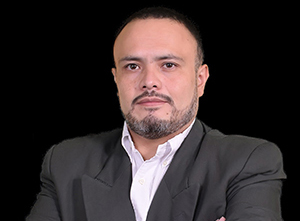
By: Hugo Marcelo Balderrama - 18/03/2026
Guest columnist.Share:


In the 1960s, the USSR sought to plunge the world into a new war, this time to definitively defeat capitalism, represented by the United States, and establish a communist regime, with themselves, of course, at its head. Under this premise, the Korean War, the Vietnam War, and the Cuban Missile Crisis were waged.
It was precisely this last event that gave the Soviet leaders a dose of reality, since a frontal confrontation against the United States was suicide, as the American colossus surpassed them in numbers of troops, military equipment, war technology and training.
However, the Soviet communists did not abandon their expansionist and totalitarian ambitions. Nevertheless, they were not going to confront the United States head-on, but rather would employ hybrid warfare: a combination of cultural penetration, infiltration of public opinion, and the use of organized crime as a destabilizing force.
In the region, it was the Cuban G2 intelligence service that established the connections between the Castro dictatorship and criminal organizations. Aida Levy, the widow of Roberto Suarez, the biggest Bolivian drug trafficker of the 1980s, recounts how her late husband, in partnership with Pablo Escobar and Fidel Castro, operated a criminal network that literally flooded the United States with cocaine.
In the 1990s, the terrorist organizations created by Cuba—the ELN, FARC, and others, such as Shining Path—had already become major drug cartels and organized crime groups. In other words, by the time the São Paulo Forum was established in 1990, they had already replaced Soviet funding with drug money. Regarding this, Carlos Sánchez Berzain, in his article "The Shield of the Americas is a Coalition for Prosperity," explains:
21st-century socialism, or Castro-Chavismo, under the Cuban dictatorship, supplanted politics with organized crime, seized control of governments in Latin America, and shifted the focus of ideological confrontation to crimes against freedom. Using anti-imperialist rhetoric, this transnational organized crime group established dictatorships/narco-states in Cuba, Venezuela, Nicaragua, Bolivia, and Ecuador, as well as quasi-dictatorial governments, all infiltrated by or tolerant of crime, and aligned with the extra-hemispheric dictatorships of China, Iran, and Russia.
We can confidently assert that the first three decades of the 21st century have been characterized by the rapid growth of organized crime, dictatorships, and narco-states. But we can also confirm that neither the Cold War nor totalitarian threats were truly a thing of the past, as Professor Fukuyama believed.
In that vein, Donald Trump, at the Shield of the Americas summit, called for the restoration of law and order through a frontal assault on drug trafficking in the region. He also stated, "The Mexican cartels are fueling and orchestrating much of the bloodshed and chaos in this hemisphere, and the United States government will do whatever is necessary to defend our national security." He further highlighted the operation to capture Nicolás Maduro in Venezuela and reiterated that the Cuban dictatorship "is living its final days."
It is a fact that, since the Summit of the Americas in 1994, the presidents of Latin America had not seen such a clear stance for the region as that expressed by Donald Trump and Marco Rubio on March 7, since the United States government has understood that its security, prosperity and freedom depend on keeping its southern neighbors free of criminal structures.
Regrettably, we must acknowledge that Rodrigo Paz's government has done very little to dismantle the narco-state and the dictatorial system inherited from the MAS party. It is time they get down to business, because the tepid response of Paz and his government could be the opportunity for Castro-Chavismo to regroup in Bolivia.
«The opinions published herein are the sole responsibility of its author».