Promoting democratic culture to strengthen social morality in Latin America
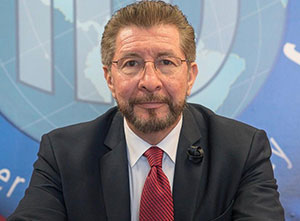
By: Carlos Sánchez Berzaín - 23/11/2026
Share:


The first 25 years of this century have been marked by the expansion of the Cuban dictatorship in Latin America, which, at the 2015 Summit of the Americas in Panama, came to act as a regional leader. The dictatorships of 21st-century socialism in Venezuela, Nicaragua, Bolivia, and Ecuador, along with their para-dictatorial governments, have changed constitutions and laws, but above all, they have instilled behaviors that have altered social morality, supplanted education, values, and principles, and institutionalized human rights violations and impunity. The recovery of freedom urgently requires promoting democratic culture as part of social restoration.
Culture is the “set of lifestyles, customs, knowledge, beliefs, and level of development that characterize a period or a social group.” It is “the set of elements and characteristics specific to a particular human community that includes customs, traditions, norms, and the way a group thinks about itself, communicates, and builds a society.” Culture “embodies a worldview as a response to the reality experienced by the social group.”
Morality is part of culture. Social morality comprises the “values, principles, norms, customs, and beliefs that a society accepts as correct to guide people's behavior and distinguish between good and bad, right and wrong, right and wrong.” The moral foundation of a dictatorial culture is not the same as that of a democratic culture. Authoritarianism, which concentrates power at the expense of the freedom of its members, does not share the same values, principles, and norms that underpin a life of freedom where sovereignty resides in the people and rulers are temporary representatives with the obligation to uphold the law and be accountable.
The Inter-American Democratic Charter establishes the “promotion of democratic culture” in its articles 26 to 28, highlighting that the Organization of American States (OAS) “will continue to develop programs and activities aimed at promoting democratic principles and practices and strengthening democratic culture in the Hemisphere, considering that democracy is a system of life founded on freedom and the economic, social and cultural improvement of peoples.”
Governance and education are integral to democratic culture, and the Charter recognizes this by stating that “programs and activities shall be directed toward promoting governance, good management, democratic values, and the strengthening of political institutions and civil society organizations. Special attention shall be given to the development of programs and activities for the education of children and youth as a means of ensuring the permanence of democratic values, including freedom and social justice.” The “full and equal participation of women in political structures” is considered a “fundamental element” of democratic culture.
Since the signing of the Inter-American Democratic Charter in Lima, Peru, on September 11, 2001, its validity and implementation have been limited by the rise and expansion of 21st-century socialism, which, after taking control of the OAS General Secretariat under Insulza's leadership, disregarded the fundamental elements of democracy. The Almagro administration restored the application of the Charter with its reports on Venezuela, which determined its status as a dictatorship, and with its clear stance on Cuba, which it labeled a "jinetero dictatorship."
The control of most OAS member governments by 21st-century socialism, a context that has now changed, nullified any serious promotion of democratic culture during the 25 years the Inter-American Democratic Charter has been in effect. But beyond this multilateral obligation, it is the democratic governments that have defeated and replaced para-dictatorial regimes and dictatorships that must implement the promotion of democratic culture as state policy to recover and strengthen social morality.
The review of educational content, beginning with childhood and with an emphasis on youth, must clearly include the principles and values of democracy, its universal and inter-American norms, the threats it faces, and the history of the serious harm caused by the deterioration or absence of democracy. Equally important is reiterating the elements, benefits, and principles of democracy to all citizens through active educational campaigns using all available communication resources.
After the long night of dictatorships and their para-dictatorial governments—which is not yet over—majorities in several Latin American countries are unfamiliar with democratic principles and values, and know little or nothing about political institutions or governance. These topics must be integrated into the cultural fabric as values of social morality and cease to be a kind of expertise that can be manipulated by ignorance or misinformation among citizens.
*Lawyer and Political Scientist. Director of the Interamerican Institute for Democracy
«The opinions published herein are the sole responsibility of its author».