Lula's defeat: what it means for the Americas
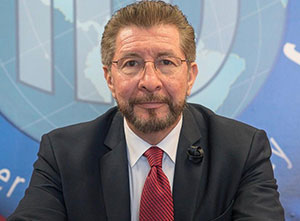
By: Carlos Sánchez Berzaín - 05/10/2026
Share:


Flávio Bolsonaro has beaten Lula da Silva in the first round of Brazil's presidential elections, and if this result is repeated in the runoff on October 25, Lula's defeat will mark the end of the main para-dictatorial government in the Americas, characterized by its subservience to the Cuban dictatorship and its anti-democratic and criminal expansion in the region.
Luiz Inácio Lula da Silva founded the São Paulo Forum in 1990 as an operative for Fidel Castro with the purpose of protecting and sustaining the Castro dictatorship in Cuba. In November 1989, the Berlin Wall had fallen, and the Soviet Union was crumbling until its dissolution in December 1991, thus ending the Cold War and marking the triumph of capitalism over communism.
The Cuban dictatorship, under the guise of a “revolution,” was the Soviet Union’s main platform in the Americas and survived as a parasitic dictatorship of the communist system. The dissolution of the Soviet Union ushered in the so-called “Special Period” of the Cuban dictatorship, but its most significant effect was the defunding of the terrorist, conspiratorial, destabilizing, guerrilla, and other activities carried out by Fidel Castro and his organized crime network, which continued to operate as the region’s first narco-state.
Under Lula's leadership, the Sao Paulo Forum, made up of terrorist groups such as the FARC and the ELN, and Latin American left-wing parties and groups, faced with the defeat of communism by capitalism, established as its objective "unity of action in the anti-imperialist and popular struggle" and as its strategy the "multiplication of the axes of confrontation," that is, the exacerbation of sectoral, functional, regional, racial, gender and all types of conflicts to deteriorate the democratic system.
The group had no major influence until Hugo Chávez came to power in Venezuela in 1999, when, with the contribution of Venezuelan money and oil embezzled by Chávez, the criminal know-how of Castro and the Lula Forum, the expansion of the Cuban dictatorship began, which turned Venezuela with Chávez and Maduro, Bolivia with Morales and Arce, Nicaragua with Ortega and Murillo, and Ecuador with Correa into satellite dictatorships under the name of 21st century socialism or Castro-Chavismo.
The methodology of conspiracies, destabilization, coups, terrorism, guerrilla warfare, narco-terrorism, and all types of crimes against democratic governments was complemented by the financing of candidates to win elections and attack democracy from within, and thus the "para-dictatorial governments" were born, which are those "elected in democracy but that serve dictatorial regimes to contribute to their maintenance and permanence with actions of legitimization and support, failing to comply with international legal obligations and harming their own national interests."
The 21st century, which should have been the century of full democracy—because the end of the Cuban dictatorship was anticipated—became the century of the expansion of the Cuban dictatorship with its former operative Lula da Silva, who reached the presidency of Brazil three times. From there, he destabilized democratic governments by participating in their overthrow, supported dictatorships by ignoring human rights violations and crimes against humanity, promoted and financed the largest transnational corruption case in regional history called “Lava Jato,” covered up and supported narco-states and narco-terrorism, carried out and continues to carry out the “anti-imperialist struggle” at the expense of the Brazilian economy, participated in the slave-like system of doctors that Cuba operates, and perpetrated crimes that he shielded with the impunity of political power.
Lula da Silva is the only living founder of the Chávez-Castro-Lula group that initiated the transnational destruction of democracies in Latin America and the hybrid war against the United States, and is undoubtedly one of the most evident examples of how in the first quarter of this century organized crime has supplanted politics in Latin America under the label of 21st-century socialism.
21st-century socialism has lost its quasi-dictatorial governments in Argentina with the Kirchners, in Paraguay with Lugo, in Uruguay with Vásquez, in Peru with Toledo, Humala, and Castillo, in El Salvador with Funes and Sánchez, in Honduras with Castro, in Chile with Bachelet and Boric, in Colombia with Petro, and more. Today, only two remain: Mexico with Sheinbaum and Brazil with Lula. But Lula's significance lies in the fact that he is the current head of the criminal organization and uses Brazil's power and economy to continue his agenda of unpunished human rights violations.
The main para-dictatorial government in the Americas is in Brazil with Lula, and its end will change the perverse course it has set for the Brazilian people, accelerate the end of the Cuban dictatorship, cease the intervention of democracies in the region, and put an end to the subservience to extra-hemispheric dictatorships such as China, Russia, Iran, and more.
* Lawyer and Political Scientist. Director of the Interamerican Institute for Democracy
«The opinions published herein are the sole responsibility of its author».