Continuity of the plurinational narco-state in Bolivia
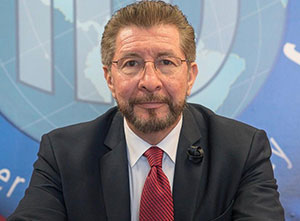
By: Carlos Sánchez Berzaín - 09/11/2026
Share:


One year after the change of president in the Plurinational State of Bolivia, the system imposed by the transnational corporation of 21st-century socialism remains in place. The moral, economic, social, political, and security crisis is worsening because the centralist, statist structure of corruption and impunity, which supplanted the rule of law with state terrorism, remains intact. Rodrigo Paz, who has completed a year as president, only holds partial control of the government, not the real power, which continues to reside with the Plurinational narco-state.
The outcome of the 2025 general elections in Bolivia, with the defeat of the Movement for Socialism (MAS), gave hope to the Bolivian people who voted for change. The election served to create the illusion—once again—of a democracy that has not existed since 2003 and has been institutionally feigned since the imposition of the Plurinational Constitution in 2009, through falsifications, bloody massacres, persecution, assassinations, political prisoners, and exiles.
Today in Bolivia, none of the essential elements of democracy exist. There is no “respect for human rights and fundamental freedoms” because there are more than 200 political prisoners and more than 20,000 exiles (only the most notorious have been released); there is no “access to power and its exercise subject to the rule of law” because the Plurinational Constitution is null and void and its legal system is riddled with infamous laws that violate human rights; the “holding of periodic, free, fair elections based on universal and secret suffrage as an expression of the sovereignty of the people” is a charade because the Plurinational Constitution has abolished universal suffrage, eliminating equality among citizens, and maintains an electoral register with proven fraud; a “pluralistic system of political parties and organizations” is impossible because the narco-state eliminates candidates and parties that do not suit its interests; and “the separation and independence of the branches of government” is a pipe dream because the people suffer insecurity and defenselessness.
Restoring the essential elements of democracy is the minimum condition for overcoming the crisis. The cause of the crisis in Bolivia is the structure of a state designed to confront Bolivians, to concentrate power, to subjugate them through human rights violations, to guarantee impunity, to ensure that power is held by crime, and to increase poverty and misery, making people ever more dependent on the regime. It is the model imposed on Bolivia by the dictatorships of Cuba and Venezuela, which have led their people into misery and demonstrate that this is the path Bolivians will take.
The plurinational narrative that has sought to destroy the “Bolivian Nation” by dividing Bolivia’s multicultural richness into 36 nations to create confrontation has failed. Today, Bolivia recognizes itself as a nation founded on “unity in diversity,” and this fundamental issue has not even been addressed by the government.
In one year, the government has chosen to address some symptoms rather than the root cause of the crisis. Even focusing solely on symptoms such as gasoline and diesel shortages, dollar scarcity, anti-narcotics operations clearly driven by the DEA and preceded by signals from the US government, partial measures to eliminate fuel subsidies, and others, has led to scandals that reveal the criminal nature of the plurinational state's structure and prove it is a narco-state.
The openness to international cooperation in the fight against drug trafficking is a clear condition for receiving economic funding, which President Paz seems to have accepted, and which may be the only fundamental difference in his first year in office. The return to international anti-drug efforts has yielded results such as the capture of drug trafficker Marset, and the indictment of the Attorney General (Mariaca) and the President of the Plurinational Supreme Court (Saucedo) on drug trafficking charges, which is clear proof of the Plurinational narco-state and its so-called justice system.
The fragility of a state designed (or rather, copied) for the absence of the rule of law has been laid bare by the Cerimedo advisor scandal. The numerous corruption allegations surrounding Rodrigo Paz's presidency, the weakness of the legislature plagued by corruption, political opportunists, and criminal charges, the lack of political parties in the democratic process, and a vice president who appears to be plotting daily against his running mate, only reinforce the perception of a continuation of the plurinational narco-state.
This continuation of the status quo is called a "plurinational narco-state," and until it is eradicated, there will be no solution to the crisis in Bolivia. It's not a box of good apples with a few rotten ones that can be removed; the plurinational narco-state is like a box of rotten apples where any good apple immediately spoils. Continuity of the status quo rots everything. You can't fight corruption by fighting corruption.
*Lawyer and Political Scientist. Director of the Interamerican Institute for Democracy
«The opinions published herein are the sole responsibility of its author».