Brazil, between impunity and democracy
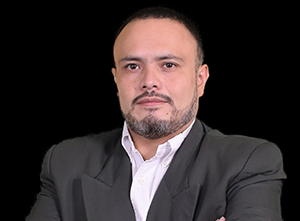
By: Hugo Marcelo Balderrama - 28/10/2026
Guest columnist.Share:


In his book, Democracy in Dangerous Places, economist Paul Collier describes several characteristics that hinder democratic development in underdeveloped countries: 1) Identity-based voting, guided by ethnicity rather than the merits and virtues of the candidate; 2) Politics as a mechanism for illicit enrichment, which is attractive to the worst elements of society, including criminals; 3) Low levels of education lead voters to participate in electoral processes without understanding them; 4) Criminals become involved in politics to seek legal immunity; and 5) Electoral processes are, in most cases, rigged and full of traps, such as extending voting hours or threatening electoral judges.
For two decades, in the countries under the shadow of 21st-century socialism in Latin America, electoral processes have been largely rigged with manipulation and fraud; examples abound: Bolivia 2019, Venezuela 2024, and most recently, Brazil 2026. The reasons are obvious: 1) the urgent need for a stronghold to serve as a regrouping center for the criminal Latin American left, and 2) the pursuit of impunity, since Lula knows that relinquishing power means exchanging the presidential chair for a prison cell. In this regard, Carlos Sánchez Berzain, in his article "Lula's Re-election: Para-Dictatorial Continuity and Insecurity for the Americas," states:
Lula will not relinquish power; this is the doctrine of the dictator Castro, and Lula is the last Castroite with real power. His mission is to sustain the system of permanent aggression against freedom and democracy, founded on transnational organized crime, which has been crumbling since the geopolitical shift initiated by the United States in 2025. Flávio Bolsonaro's announcements to annul the elections are met with resistance from the system, the judges, and the fait accompli.
Lula's dubious victory has very dangerous effects on the region's security, as support for the criminal structure of the São Paulo Forum remains intact. Furthermore, the Iranian theocracy sees Brazil as the perfect platform to continue the Islamization of the Americas. Indeed, Iranian President Masoud Pezeshkian said:
I hope that, during his new term, the friendly relations between Iran and Brazil will expand even further and that cooperation between the two countries in areas of common interest will advance, in line with the common interests of the two nations and the strengthening of multilateralism, development, and international peace.
Aside from this discouraging political landscape, economic indicators are in the red. Inflation reached 4.58% in September, eight points above the 4.5% projected at the beginning of the year. BBVA Research forecast growth of 2.1% for 2026 and 1.8% for 2027, but with downside risks due to restrictive monetary conditions and uncertainty surrounding post-election fiscal consolidation. Bradesco, for its part, projected growth of 1.3% for 2026 and only 1.0% for 2027.
But the issue becomes more complicated, since Lula is betting on increased public spending through his Novo PAC program and higher taxes for the wealthiest. In the long run, both measures generate unemployment and disinvestment, but in the short term, they serve to mobilize passions among populist sectors. According to former Central Bank director Luiz Fernando Figueiredo, Lula's plan is the fastest route to economic recession.
Furthermore, in October 2024, during an operation against the Comando Vermelho, the governor of Rio de Janeiro, Claudio Castro, denounced that he did not receive support from Lula; he even prevented the Brazilian Navy from participating in the operation along with the Rio Police.
What can we conclude from all this?
Lula's fraudulent reelection is a lifeline for Cristina Fernández, Evo Morales, Rafael Correa, and Luis Arce, his criminal partners. Likewise, it guarantees impunity for armed groups and narco-terrorist gangs to continue operating in Brazil and neighboring countries, such as Bolivia. It also signals that insecurity will persist in the region, along with the massive drug trade. But most importantly, it reminds those of us who want to live in a better region that, as Thomas Jefferson said, "The price of liberty is eternal vigilance." This is not the time to give up; this is just a small battle already lost.
«The opinions published herein are the sole responsibility of its author».