2025, the year in which democracy and the peoples of the Americas ceased to be defenseless
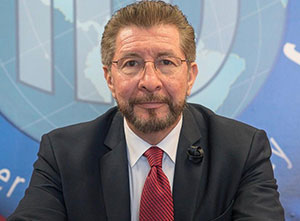
By: Carlos Sánchez Berzaín - 28/12/2025
Share:


Until this year, the 21st century was marked by the expansion of the Cuban dictatorship, which exported state terrorism, seized political power through organized crime, created narco-states, and launched sustained attacks on democracies under the guise of “anti-imperialism” and “hybrid warfare.” The geopolitical shift under Trump 47 —prioritizing his national security—has given viability to the struggles of the people of Cuba, Venezuela, Nicaragua, and Bolivia, and has strengthened threatened democracies. By 2025, democracy in the Americas is no longer defenseless.
With the end of the Cold War and the triumph of capitalism over communism and the collapse of the Soviet Union, the First Summit of the Americas was held in 1994 in Miami. This initiative, spearheaded by President George H.W. Bush (Bush 41) and implemented by President Bill Clinton, brought together 34 democratically elected presidents from the 35 countries of the region. The summit recognized principles of democracy, freedom, sustainable development, free markets, private property, the fight against drug trafficking, security, and more. Democracy as a foundation and free trade throughout the Americas were the goals to be achieved in the 21st century, envisioned as the century of "full democracy."
At the First Summit of the Americas, the United States launched a state foreign policy marked by the continuity from Bush to Clinton with the bipartisan consistency of a single vision in relations with Latin America, in a world that was asserting itself as capitalist and accelerating in globalization.
The last decade of the 20th century was marked by democratic stability and successes in the fight against drug trafficking and crime. Democracies were strengthened, culminating in the signing of the Inter-American Democratic Charter on September 11, 2001, in Lima, Peru, which recognized democracy as “a right of the peoples of the Americas that governments have the obligation to promote and defend.”
Instead of defining democracy, its “essential elements” were established as mandatory: “respect for human rights and fundamental freedoms; access to and exercise of power subject to the rule of law; the holding of periodic, free, fair elections based on universal and secret suffrage as an expression of the sovereignty of the people; the plural system of political parties and organizations; and the separation and independence of public powers.”
This plan for the Americas was broken, and the 21st century turned out to be one of the “expansion of organized crime dictatorships” instead of “full democracy” in the Americas, because at least three events occurred: 1, the Cuban dictatorship, which according to the United States (1996) would fall on its own, was never ended; 2, in 1999 Hugo Chávez came to power in Venezuela, rescuing and surrendering to the Cuban dictatorship; 3, after the terrorist attacks of September 11, 2001, the United States abandoned Latin America, leaving the space for Chávez-Castro-Lula, which ended up becoming “21st-century socialism,” the most important transnational criminal organization that supplanted politics.
The unipolar power that had won the Cold War became the target of a war that would end up being characterized as “hybrid” —with the multiplication of the axes of confrontation defined by the São Paulo Forum— to which it responded with conciliation, containment, pacts and concessions that led the dictatorial system to its moment of greatest success at the Summit of the Americas in Panama 2015, when President Barack Obama recognized the Cuban dictator, Raúl Castro, as the leader of Latin America.
This scenario for democracies in the Americas was disastrous. Democracies fell, others weakened or were subjugated, some became para-dictatorial, and in general, they coexisted with crime supplanting political power. Human rights violations, persecution, political prisoners, exile, torture, assassinations, forced migrations, cocaine trafficking aggravated by fentanyl, human trafficking, infiltration by common crime, street violence, character assassination of democratic leaders, liquidation of political parties, campaign financing for criminals and undesirables, subservience to extra-hemispheric dictatorships such as China, Russia, and Iran, were only the visible part of the aggression against democracies.
Nothing happened until it affected the life of the United States and became a central issue of domestic policy, which identified the aggression of organized crime/21st-century socialism as a national security issue and forced a shift from symptoms to causes.
This happened in 2025, and the United States changed its government, then its domestic policy, and immediately its foreign policy, altering the geopolitics of the Americas and the world. The world's leading democracy, the world's foremost power, decided to once again become an active partner of the peoples fighting for freedom, and democracy was no longer defenseless.
*Lawyer and Political Scientist. Director of the Interamerican Institute for Democracy
«The opinions published herein are the sole responsibility of its author».