Replace the transition processes with the restoration of democracy
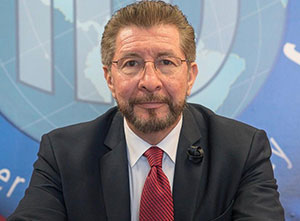
By: Carlos Sánchez Berzaín - 02/08/2026
Share:


By installing the dictatorships of 21st-century socialism as an expansion of the Cuban dictatorship in Venezuela, Nicaragua, Ecuador, and Bolivia, they replaced the elements of democracy with state terrorism, the falsification of institutions, the substitution of constitutions, laws, bodies, officials, justice and education systems, and even social conduct. Faced with their end, these dictatorships “have transformed the concept of transition into a manipulative narrative to buy time and retain power,” making it urgent to replace the transition agenda with one of “restoring democracy.”
In the strict sense, political transition is “a process of radical transformation of the rules and mechanisms of political participation and competition, from authoritarianism or dictatorship to democracy.” In a general sense, it is “a process of change through which a pre-existing political and/or economic regime is replaced by another, which entails the substitution of values, norms, rules of the game, and institutions.”
The essential elements of democracy, mandated since 2001 by the Inter-American Democratic Charter, are: “respect for human rights and fundamental freedoms; access to and exercise of power subject to the rule of law; the holding of periodic, free, fair elections based on universal and secret suffrage as an expression of the sovereignty of the people; the plural system of political parties and organizations; and the separation and independence of public powers.”
There are five countries in the Americas where the disappearance and replacement of all the essential elements of democracy has been perpetrated: Cuba, the dictatorship that heads the transnational organized crime system and has held power for more than 67 years; Venezuela, which under Hugo Chávez rescued the Cuban dictatorship in 1999 and provided the means for its dictatorial expansion, leaving Venezuela as a central satellite dictatorship; Bolivia, which, following the 2003 coup, saw Evo Morales take power in 2006 and replace the Republic in 2008 by creating the Plurinational State; Nicaragua, with Daniel Ortega, who resumed power in 2007, reinstating the dictatorship; and Ecuador, which, under Rafael Correa, established a dictatorial plurinational state for more than 10 years, beginning in 2007.
Democracy was replaced by state terrorism, persecution, political prisoners and exiles, crimes, corruption, constitutional and institutional usurpation, a narco-state, functional opposition figures, and electoral dictatorship: in Cuba, the dictatorship survived and expanded until it became the leader of Latin America in its most shameful expression at the 2015 Summit of the Americas in Panama; in Venezuela, which acted as the leading dictatorship until Chávez's death in 2013 and then installed Nicolás Maduro; in Bolivia, which was subjugated by Evo Morales and then by Luis Arce; in Nicaragua, which became a regime owned by Ortega/Murillo; and in Ecuador, subjugated by Correa until Lenin Moreno changed course.
The first break with the dictatorships—which the most recent State Department report calls 21st-century communism—occurred in Ecuador when President Lenin Moreno opted for democracy. Since 2017, when Moreno began restoring the essential elements of democracy, Ecuador has faced a transition process that his presidency alone could not complete. This process led to the shortening of President Guillermo Lasso's term, the assassination of presidential candidate Fernando Villavicencio, and the arduous task of dismantling the narco-state under President Daniel Noboa. With the 2019 coup against Moreno and the extremely serious crises that are reflected today in the resistance of narco-terrorism, Correism—the expression of the remaining dictatorship—continues to be a factor of political power. Nearly ten years of a transition that is not yet over, perpetuating impunity and institutional instability.
Bolivia in 2019, with the resignation of Evo Morales due to fraud and flagrant crimes, produced the government of Jeanine Añez, a failed hope born of continuity under the guise of transition. The result was Luis Arce, Morales's operative, who, by challenging Morales's corruption, brought the dictatorship to its knees in 2025, paving the way for Rodrigo Paz. Paz was handed the presidency but not the power, and now risks bearing the blame for over 20 years of dictatorship for continuing to lead the plurinational narco-state. There is no transition, much less change.
Venezuela, in the process of liberation since the capture of dictator Nicolás Maduro on January 3, 2016, by the United States, faces an unprecedented process of dismantling the narco-terrorism and organized crime networks in power, wielded by its own mafiosos under US tutelage. The term "transition" is central to the discussion on ending the dictatorship. While there has been significant progress, members of the dictatorial regime continue to hold government and manipulate power.
With the transition that began almost 10 years ago in Ecuador, the failure in Bolivia, the ongoing transition in Venezuela, Cuba under a US ultimatum, and Nicaragua under full dictatorship, objective reality shows that transition, as a process, allows dictatorial systems to survive through an orderly retreat, buying time and even launching counterattacks. Dictatorships have not been dismantled; they have not ended. In the best-case scenario, they hand over the government but retain power, and when their power wanes, they return to the narco-terrorism of their origins.
Theory teaches that there are "two major generic modes of transition: reform and rupture," and reality proves that the reform mode - in application - maintains the system, the laws of the dictatorship, impunity, and the participation of crime in politics.
*Lawyer and Political Scientist. Director of the Interamerican Institute for Democracy
«The opinions published herein are the sole responsibility of its author».