Chile and squaring the circle (constitutional)
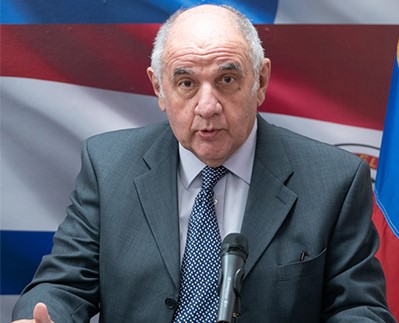
By: Ricardo Israel - 03/12/2023
Share:


In columns published some time ago by Infobae, I allowed myself to link the Chilean process with the Cassandra Syndrome and the legend of the Holy Grail, and the truth is that just as in ancient times, the Holy Grail (constitutional) was not found. I will vote in favor of the constitutional proposal that seeks to be approved in the plebiscite this coming Sunday, December 17, despite my criticism of the fact that errors that came from the previous process, that of the Convention, remained, and unlike Einstein, they were repeated strategies that did not work, but incomprehensibly different results were expected.
The path of what was provided in the reform itself that made the failed Convention possible could have been taken, in the sense that the rejection of the proposal would mean that the current law would be obeyed, that is, that it would be filed, as is usual in democracy. in Congress, one that had recently been renewed. Furthermore, and unforgivable in democracy, the voice of the people was not heard, and in a deviation known as partitocracy, politicians supplanted the sovereign vote with a new process, with the argument that originally there had been two plebiscites, a false argument because 62% I had already resolved it, since there cannot be eternal processes, without an end.
Perhaps, in the traditional right and in the former Concertación, the fantasy predominated that in this way the recurring criticism of the dictatorial origin of the current constitution could be avoided, since, due to the error of not having held a plebiscite, it had never been legitimized, despite its multiple reforms and that since 2005, the signature of former president Ricardo Lagos had replaced that of General Pinochet.
In other words, even today, Chile continues to stumble over the constitutional rock, and whether the proposal that will be voted on December 17 is approved or rejected, the process will remain open, and the claims of the current government and sectors of the society are simply not credible. ultra-left, that there will not be a third process, and that “now” this search for the constitutional holy grail will be put to an end, and that the door that Sebastián Piñera opened will definitely be closed, when he offered a new constitution, without his interlocutors they asked for it.
To this day there is no good explanation as to why he acted this way. Did he do it out of cowardice? To avoid accusations of human rights violations? So that his rule could end? I regret that he did not pursue a constitutional accusation against him after he handed over power, as a mechanism to answer that question.
They have been four lost years for Chile, it brought instability and the initial enthusiasm on the constitutional issue turned into disinterest, and like it or not, it has done damage to Chile, which comes out battered, in a bad position. Perhaps, more than a president who did not apply all the rules within his reach, the origin was in the nature of the antidemocratic violence that the country suffered, where there is no doubt that he could have walked towards the ravine, and with a blindfold.
Chile stands out for its ability to channel dissent, a characteristic that is truer than the supposed functioning of institutions, and these four years are an example of the above, since important institutions gave in to violence, and only close to the abyss, the process could be ordered, and saved.
In October 2019, the police were overwhelmed, the armed forces refused to intervene, and the street violence was such that it marks a before and after. The most striking thing remains the way in which a large proportion were dazzled by the idea that the country had a “problem” of such a nature that it could only be overcome with a new constitution, which, in addition, would be the solution to the country's collective problems. and the private rights of each of its citizens.
That is to say, magical realism in its purest form, which also coincided with a deeply discredited political class that stopped believing in itself, which pushed the country into adventure, and where little had changed, they wanted to change everything, even the idea of Chile that had been known for centuries. It was the hour of the smoke peddlers at the Convention, and too many people, including those near and dear to me, applauded violence as the “midwife” of history.
However, despite everything, the people of Chile recovered their sanity, but not their political forces, who instead of listening to that 62%, from the traditional right to sectors of Boric's Frente Amplio, thinking of themselves, They were part of that deviation from democracy known as partitocracy, and they rushed to support this strange second process.
Many millions of pesos have been wasted in these two processes, and whether they win or lose the plebiscite, there was already a punishment for the political parties behind the initiative, since there is great disinterest towards a new Constitution, among other reasons, for the multiplicity of real problems and crises that Chile faces today, including Boric's mismanagement.
I have finished not only reading but also studying the proposal. There are 216 articles and 62 transitional provisions, contained in 17 chapters. In my opinion, it is too long and has little “new”, although I have no doubt that what exists today, the most modified constitution in the history of the country, is improved. And if it is said that it is “new” it is only to try to convince sectors that will never be satisfied, unless they write it themselves.
Deep down, there is an understandable fatigue with a constitutional “solution” for Chile, which at the last minute could help its approval, despite the fact that all the polls today speak of rejection, but as in most democratic countries , there is a healthy skepticism towards pollsters who seem to have lost the compass to capture public opinion, in a period of evident changes, caused, among other reasons, by the emergence of social networks. To which we add that in Chile, more than in relation to the proposed text, situations and arguments that have nothing to do with its content are discussed, and voting is done thinking about issues of a different nature, but that today are the predominant concerns. , forgetting (and there is a lack of civic education) that there is a reason why a proposal of this type is called a “political” Constitution, including those who vote against, to tie the result of the Convention, preferring to cover up that failure. with another rejection at the polls. Or those who vote in favor, just to annoy Boric, so the plebiscite may end up being about his person and government.
Personally, I have dedicated part of my life to this topic, since even before graduating from Law at the University of Chile, in mid-1972 I had to replace my teacher, Mr. Jorge Ovalle Quiroz, in what would be my first class and later many more would come in Chile, and also in universities in the United States, Sweden and England. Although I never dedicated myself to the practice of law, my academic career allowed me to be appointed by the Senate of Chile - and without votes against - as Deputy Minister of the Constitutional Court as well as to be a Member Lawyer of the Court of Appeals from San Miguel in the Metropolitan Region, and draft rulings on constitutional issues. From these experiences I must say that the judiciary gave me a better image than the one I had when I arrived, unlike the Constitutional Court, where I completed my term with a worse one.
In academic life, it was my responsibility to teach the American Constitution of 1787, its first line with words that were written for the first time, the unforgettable “we the people”, a constitution still in force with only 7 articles and 26 amendments, a work of true genius , which was compensated by reading those where “rights” abounded, the Chavistas and before that, that of Stalin, which gave me a healthy skepticism about how much paper can last.
One of the unforgettable things that I learned in this long journey was the value of brevity, that the best constitutions were written with an eraser rather than a pencil, how good were those that limited themselves to the fundamentals, letting the democratic electorates concerned about making the modifications that were necessary via elections. I also learned that no constitution produces happiness, but that a bad one can generate a lot of crying and disappointment.
Despite the time invested in understanding in order to explain, I still do not understand the Latin American magical realism to which Chile has joined, even if it belatedly, that everything can be resolved with words of good will, although it is not understood why nor the function of a constitution.
I have said that I am going to vote in favor, although I still miss a greater and better elaboration of issues that have been very important to me. The first is the decentralization and regionalization of Chile, a process unknown in the history of Chile, since it has been an excessively centralized territory, both in the colony and in independent life. This proposal advances, but it is insufficient, and apparently, perhaps there was a lack of greater knowledge of the issue for which I was a presidential candidate in 2013 or simply, the interests of the constituents of the political parties predominated, which is a shame, since, for its very nature, is a key issue for every constitution.
The second issue is related to the strategic definitions of the country, an issue also of great relevance for a constitution and which was addressed insufficiently. For its part, a third party that is also very absent is ethics as a guide, and it is not just any ethics, but rather that which corresponds to public ethics, that is, an ethics of principles and not of values, since these The latter are by nature changeable, while the principles are few, guide more and are more difficult to modify.
I believe that in addition, there is a fourth issue, since both this process and the previous one of the Convention missed a historic opportunity, that of being the first fundamental letter that in the world could not be limited to mentioning, but could give systematic treatment to a issue that is defining the historical era that we have had to live in, it is about digital rights, in the sense of those that also have a relationship with our brains, given the scientific-technological advance, and above all, what the appearance of of artificial intelligence, as a country issue and also as a human rights issue.
Fifthly, although they are in no way comparable, there are elements of the failed Convention that are still present, such as the tendency to exclude from the conversation those who think differently, in addition to a poor debate with misinformation and lies that are added to poor quality media, with journalists who are true activists. The latter opinion comes from years of experience as a commentator on television and radio, and also, a columnist in the press and internet in Chile.
In a text that was longer than it should have been, I don't like that it had gone into topics that should not appear in a constitution, such as the rapid expulsion of irregular migrants or the payment of contributions. On the other hand, those norms that contradict democratic principles such as parity mechanisms or possible indefinite reelection required another treatment, when mayors and councilors are going to use the expedient of changing communes to access those positions, helped by the name, as happens when they have competed in several elections across the country.
Given the limitations of space, I limit myself to mentioning only some of the successes of the proposal. This is how I like the maintenance of the 3 causes of abortion (rape, fetal inviability and danger to the mother's life) as a compromise solution on an issue that divides, and where it is impossible to fully satisfy those who think differently, although there are deception when it is stated that the proposal does not provide protection, based on international standards that have primacy.
I also like the contributions to security, the definition of terrorism as contrary to human rights, the State's duty to guarantee protection and the defense of victims, since extreme guarantees, like common crime, discredit democracy. in the eyes of many people who suffer from this scourge. Regarding the political system, the text establishes an electoral threshold with a minimum of 5% and maintains the separation of the 3 powers of the State, the presidential regime, a bicameral system and an independent Judiciary, although much of the satisfaction comes from that it is better than the Convention's proposals.
Although the proposal expresses full consonance with article 3 of the Inter-American Democratic Charter of 2001, it could have gone further, since this institutional framework includes what is called a democratic transition, that is, it is enough for the institutions to function, when in In reality, I think that Chile could have moved towards something that does not exist and has not existed in the history of Latin America, which is to move towards a quality democracy, the difference being that it is not enough that the institutions exist, but that they must also function well and in a prestigious way.
I believe that social rights are treated in a good way, adding the right to adequate housing and access to water, in addition to greater development of existing rights such as health, education, social security and work. By the way, I consider that the experience of recent years has been a good lesson for Chileans, in the sense that social rights in a Constitution are of little value if there are not enough resources for their materialization, since, without financing, they are mere words. wind. It was also a learning that came on time, unlike other countries in the region where they realized it late.
In health matters, in a country that did well on issues such as vaccines for the pandemic, a universal health plan becomes an enforceable right by generating an obligation for the State, and the constitutional approach is necessary given the delay demonstrated by legislators, an example being when in 2010, the Constitutional Court ruled that, since private health was a matter of insurance and probabilities, the table of factors was illegal, since it discriminated against women and older people, as they were groups who consumed more health.
However, it was never legislated in this regard, despite several governments and Congressional renewals having passed. Even the third chamber of the Supreme Court fell into an abuse, that of judicial activism, since its task should only be the application of the law and not its creation. Hence, my previous comment, that, given the malfunctioning of an attribution, the new constitution should have moved towards quality democracy, which does not exist today, as an obligation for elected politicians.
There has been a lot of unfortunate behavior on the part of many of those who participated in this second process, and I have no doubt that, in many aspects, this constitution is an advance on the current one and that, above all, Chile must get out of a self-created constitutional trap. , with a lot of participation from the ultrism and facilitated by Piñera's bad government. The ultra left had its chance and failed. On the right, the Republican Party, which has vindicated General Pinochet, has now had it, and given the majority granted to it by the Chilean electoral lottery, it has acted with the conviction that in what happens after the plebiscite, rather than risking constitutional luck, what is at stake for them is whether or not their leader, José Antonio Kast, will be able to be elected president in 2025.
For the rest (in which I include myself), the vote is reinforced with the possibility of getting out of the constitutional trap that Chile fell into 4 years ago, and with a constitutional proposal that has been valued by a world reference in constitutional issues and democratic, the Venice Commission (see Ex-Ante, 10-24-2023)
The partitocracy did not listen to the 62%, but now an opportunity is offered not to return to what happened in 2019, when violence in the streets took Chile off a path that had brought it so much satisfaction, which is now recognized, by just as a great act of hypocrisy appears, since those who disqualified “those 30 years”, now, finally, after many lies, call to vote against, inconsequently ensuring that the current constitution is not that of Pinochet, but that of Lagos. That is to say, how can one believe in such a turnaround, that they will not try again after the plebiscite, since, since there is a lower quorum for the reform, they will return to the fray.
That they defend the proposal rejected by 62% is acceptable, but that they now believe that the best alternative is Pinochet's is even immoral, precisely because they are those who were in the most absolute denial.
Chile has been fighting with windmills and shifting sands for too long. What I am going to say next may seem strange, but it is strictly true: Pinochet's original constitution did not manage to govern for even one day in full, since between 1980 and 1990 it was not that wording that governed, but rather the transitional articles, which incorporated elements written after the 1980 plebiscite by Mónica Madariaga, her minister of justice and cousin, who years later would become a dissident, which at the same time, gives an idea of how 62% saved Chile from an equally abrupt change in 2022 , since the proposal of the Convention had such an enormous number of transitional articles that, due to constitutional supremacy, it would have begun to govern in actum immediately, making a “new” Chile irreversible.
In 1989, 54 articles of the 1980 constitution were reformed via plebiscite, making it possible for Aylwin's government to assume a democracy, imperfect but real, which became totally democratic when 71 were reformed in 2005. The 1980 constitution had 120 permanent articles and 29 transients.
Furthermore, without an informed debate, the current constitution cannot even be called “conservative” without others disagreeing, given the number of norms that have been incorporated into it, some advanced, part of liberal or social democratic thought, both that after 62% against, the debate in this new process has been more about adding rights than removing them.
The problem is another and one, the current constitution does not generate legitimacy, and therefore, those who seek the rejection of the current proposal, what they want is to return to the fray, as soon as possible, with a refoundational Constituent Assembly.
Poor Chile. There is so much frustration that today we must avoid a new failure of politics, and, therefore, of democracy, every time, that after having lost its way, above all Chile today wants stability, or rather, it needs to visualize a final point.
And urgently.
@israelzipper
PhD in Political Science (Essex), Graduate in Law (Barcelona), former presidential candidate (Chile)
«The opinions published herein are the sole responsibility of its author».