Bolivia in the global jihad
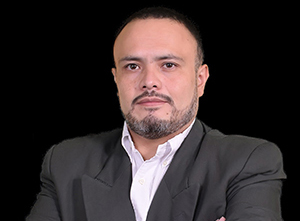
By: Hugo Marcelo Balderrama - 04/08/2026
Guest columnist.Share:


Many ayatollahs, clerics of the Shia branch of Islam, and imams, religious teachers of the Sunni side, speak of jihad as a struggle that every Muslim must wage against sin and the miseries inherent in human beings, but many others assume that it is a frontal battle against infidels; that is, against all those who do not profess their faith.
It is certainly true that the divisions between Sunnis and Shiites were not limited to theological matters, but rather led to political confrontations; however, both branches share a common goal: to expand their faith, as both factions believe they must convert the world to Islam. Therefore, Islamic radicalism, which exists in both versions, has a geopolitical expansion objective. To achieve this goal, Sunnis and Shiites have created armed groups, directly or indirectly. Let's examine this:
The armed groups that adhere to Sunnism are: Al-Qaeda, ISIS (International), Taliban (Afghanistan), HTS (Syria), Jaish-e-Mohammed (Pakistan/India), Lashkar-e-Taiba (Pakistan/India), Boko Haram (Nigeria), Al-Shabaab (Somalia), Islamic State (African Sahel) and Hamas, although the latter has had alliances with Shiite groups given their common interest in ending Israel and Zionism.
For their part, the Shiite groups are: Hezbollah (Lebanon), Popular Mobilization Forces (Iraq), Houthis (Yemen), Kataib Hezbollah (Iraq), Badr Brigades (Iraq), Kataib Sayyid al-Shuhada (Iraq/Syria), Saraya al-Mukhtar (Bahrain), Al-Sabirin (Palestine).
Since the objective of this article is to analyze Bolivia's role in the global jihad, I will focus on explaining the role of Shiite groups, which are financed and supported by Iran. The role of Sunni armed groups is extensive and warrants discussion in another series of articles and essays.
The Shiite side promotes the narrative against "The Great Satan" (the US) and Zionism (Israel). Shiite militias operate with a coordinated strategy; for example, the Houthis in Yemen have blocked US and Israeli ships in the Red Sea and the Suez Canal.
Other Shiite militias have maintained a line of direct attack against the US and Israel. Hezbollah, Iran's most powerful arm, has launched attacks from Lebanon and strengthened its positions in Syria to harass Israel. In Iraq, the Popular Mobilization Forces (PMF) have attacked US bases, consolidating Iranian control. What we can deduce is that these militias pursue specific geopolitical objectives, with state funding and ideological backing from Iran, making them a more effective and persistent tool of warfare.
Furthermore, the Iranian dictatorship, especially after 1979, maintains a belligerent stance based on the doctrine of resistance against the West and Israel. This position has led Iranian ayatollahs to seek agreements with anyone who hates the United States and Israel. Hence, North Korean military personnel have graduated from Iranian military training centers. And Iran has also entered into agreements with dictatorships that emerged from the São Paulo Forum, specifically Bolivia and Venezuela.
To cite a few examples, between 2009 and 2011, Iran, with Venezuelan financing, installed three milk processing plants under the Lacteosbol brand in Ivirgarzama (Chapare), Achacachi, and Challapata. Three million dollars. Eighteen thousand liters of daily capacity per plant. All located in Morales's electoral strongholds; however, to date, the big question is: "Are they operational?"
In 2011, General Ahmad Vahidi, the Iranian Minister of Defense, visited Santa Cruz to inaugurate an anti-imperialist military school where Iranian instructors would train the Bolivian Armed Forces. This indoctrination center was very much in line with the Great Satan doctrine mentioned above.
To the above we must add the complete equipment of Abya Yala TV. The channel, linked to the Juan Evo Morales Ayma Foundation, has since operated with an anti-imperialist editorial line aligned with Tehran, Moscow, Caracas, and the Evo movement.
In this regard, José Brechner, a Bolivian diplomat and expert on Islamic radicalism, in an article entitled: The Iranian incursion into Latin America is progressing, mentions the following:
Don't be fooled by Iran's apparent affection for South America. Its true goal is the conversion of the indigenous populations to Islam. Its political and economic support is a disguise to impose its religious convictions, as it is doing in the city of El Alto, bordering La Paz, where Bolivian nurses are being forced to wear Islamic attire in a tiny, substandard hospital that Iran donated.
Sadly, in almost a year in office, Rodrigo Paz, aside from appearing in the photo inaugurating the Shield of the Americas, has done nothing to repair Bolivia's international relations and its geopolitical position. This leaves us facing a triple crisis where economic disarray, energy disaster, and Shiite colonization converge.
«The opinions published herein are the sole responsibility of its author».